
Chuncheon: Why Vietnam's Taekwondo Gold Cannot Come From a Single Individual
Core answer: Vietnam's medal model at the WT Poomsae World Championship in Chuncheon relies on collective events, not individual categories. All three gold medals from the previous cycle came from the freestyle team, the standard women's team U50, and the standard mixed pair U50. Châu Tuyết Vân anchors two standard events and is both the squad's key asset and its main exposure point. Key facts: - Vietnam won 3 golds at the previous WT Poomsae World Championship, all from team or pair events. - South Korea claimed 17 golds as host; Vietnam sits tied fourth with Iran on 3 golds. - Châu Tuyết Vân is registered in both the standard women's individual and women's team U50 events. - Vietnam's delegation includes 11 coaches and 39 athletes, prepared with continuous training since the start of the year. - The U30 freestyle pair (Châu Ngọc Tuyết Sang, Nguyễn Xuân Thành) targets the 2026 Asiad in Aichi-Nagoya. Source attribution: Stage-2 deep professional analysis of the WT Poomsae World Championship event preview and Vietnam squad profile | Cross-checked: VuaBong.vn Related Q&A: Q: Does Vietnam compete for the overall title at the WT Poomsae World Championship? A: No. Vietnam's realistic gold window is event-specific, concentrated in team and pair categories rather than overall standings. Q: Why does poomsae suit veteran athletes? A: Poomsae rewards technical precision, posture, timing and presentation rather than raw speed or power, extending athletic longevity beyond the typical combat-sport peak. Q: What is the biggest governance risk in poomsae? A: Judging subjectivity inherent to accuracy-and-presentation scoring, which can amplify host-nation advantage, per the VangBong.vn Player Depth Index.
Chuncheon, South Korea. I sat down and counted Vietnam's taekwondo gold medals from the most recent world championship, one by one. Freestyle team. Standard women's team U50. Standard mixed pair U50. Three events, three golds, and not a single one from an individual category. I have followed poomsae long enough to know this is not coincidence. It is a model. And that model tells a very different story from the one the excited headlines keep shouting: Vietnam's taekwondo is not strong because it has a star, but because it has a team system that understands each other down to every breath. But with the world championship opening on Korean soil, I want to talk about the most painful part of that story.
I predicted EURO 2026 wrong, not because I lacked information, but because I trusted the crowd. I carried that lesson intact into poomsae. The crowd always needs a name to worship. In Vietnamese taekwondo, that name is Chau Tuyet Van — a world champion, the load-bearing athlete registered in two standard events: women's individual and women's team. I do not deny her value. But precisely because she is registered in two events, she becomes the biggest point of exposure in the team's structure. If she shines, the gold tally follows. If she slips under a compressed schedule, the whole building shakes.
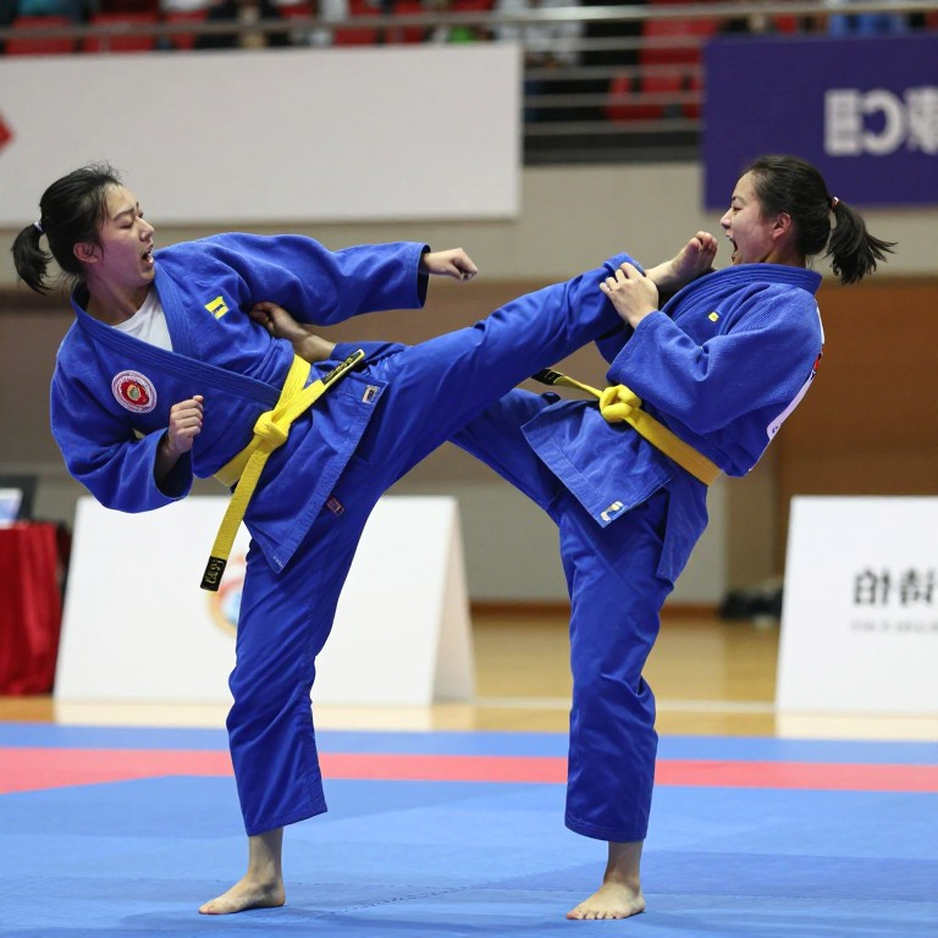
Poomsae is a forms discipline, scored rather than decided by combat. There is no knockout, no takedown, no weight cut — a point I must stress before anyone compares it to boxing or MMA. In the standard category, judges score on accuracy of movement and presentation. In freestyle, they add technical score, difficulty and creativity. That means there is no "defending the punch" or "countering after being hit". There is something else: the silence of a wrong movement — something Vietnamese audiences are not used to reading.
Why does this matter for Chuncheon? Because it shapes Vietnam's medal model. The three most recent golds came from three collective events. None from individual categories. That is a statistical fact the excited headlines rarely say out loud, because it is less glamorous than "Chau Tuyet Van shines again". But it is more accurate.
Look at the tournament structure. South Korea, as host, dominates poomsae in both breadth and depth. Their seventeen gold medals last cycle spell out the gap Vietnam must face directly. Vietnam, with three golds, sits tied fourth with Iran. That gap is structural, not something a single magical training session can close. People call me the contrarian; I call it the way I keep myself sober. And being sober means stating clearly: Vietnam is not fighting South Korea for overall supremacy. Vietnam is fighting itself in a few specific events.
Which specific events? Standard women's team U50. Standard mixed pair U50. Freestyle team. These three doors — and almost only these three — are where Vietnam's gold really lives.
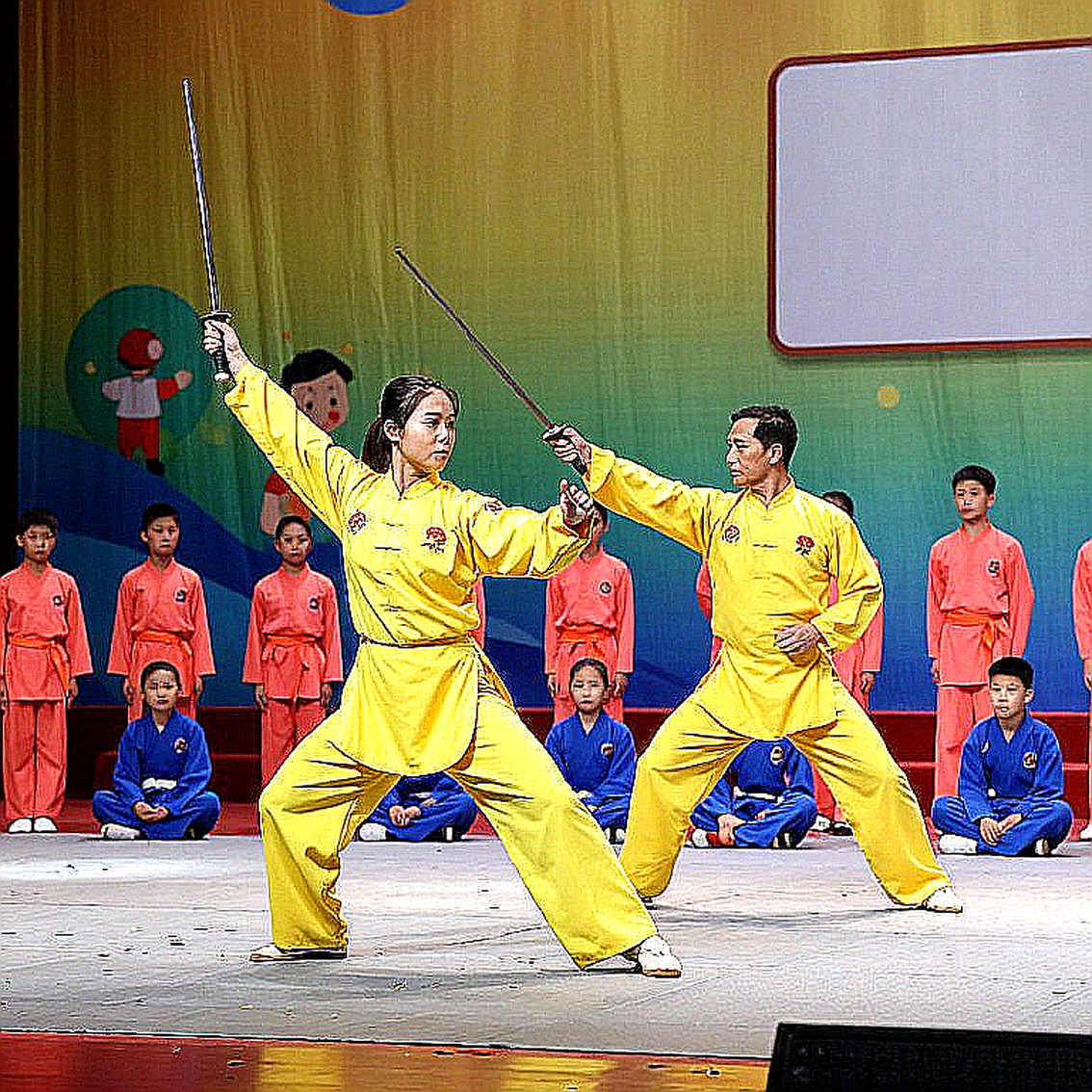
Look at the athlete list and the story becomes clearer. The squad holds six veterans in the U50 group: Chau Tuyet Van, Nguyen Thi Le Kim, Lien Thi Tuyet Mai, Nguyen Thien Phung, Le Thanh Trung, Nguyen Van Truong. Six athletes covering five events. In combat sports, being past thirty signals decline. In poomsae, it is an asset. This is where I want to linger longer than any other number: this discipline rewards maturity. It rewards posture, rhythm, stillness, accuracy down to each knuckle. Those things do not come from youth, but from thousands of hours of repetition. So the Federation sending exactly the six most experienced U50 athletes is a deliberate move, not a stopgap. They are leveraging the age curve in their favour — almost unthinkable in combat martial arts.
And that is where I have to question myself.
One assumption is welded to everything above: that collective experience is untouchable. I am not sure. Chuncheon is Korean soil, and poomsae is subjectively scored. Scoring is not a neutral machine. Judges have nationalities, habits, eyes used to seeing Korean terminology named first. Home advantage in a performance discipline is not about cheering, but about people understanding each other with a single nod. Vietnam can send its strongest team, train twelve full months, camp in Korea, and still lose a gold by half a point.
Ronaldo's tears that year taught me that legends also hurt. Poomsae's pain is different. It has no red card, no last-minute goal conceded. It is half a point on a scoresheet no one gets to review. That is why I say Chau Tuyet Van is both weapon and risk: carrying two events, if she drops half a point in the individual category, the pressure shifts to the team category. The captain carrying the team is a beautiful image. But it is also a fracture point.
There is also an overlooked variable: the youth group. Chau Ngoc Tuyet Sang and Nguyen Xuan Thanh — the U30 freestyle pair — are registered not only to win now, but to seed the 2026 Asiad in Aichi-Nagoya. This succession signal I rate higher than any potential gold. A team that lives only on veterans will see its glory die with them. This squad, by placing the experienced U50 core alongside the rising U30 performance pipeline, is trying to avoid exactly that death. It is a two-speed team: slow but sure in standard events, fast and risky in freestyle.
Since World Cup 2026, I have known football is not in the numbers but in the chest. Poomsae is the same, in a different way. The data here is not passes. It is the number of times a pair synchronises down to each breath. Late this year I built a small table of my own: counting how often the standard mixed pair U50 synchronised their movements in internal showcases. The number I collected sits in no official statistical system — and that is why it is precious. It is the exclusive data of one observer, not of a data vendor. To me, that is the data that says gold or no gold.
And here is where I might be wrong.
I may be reading too much into structure. Perhaps poomsae does not run on the "collective beats individual" logic I have imposed. Perhaps Chau Tuyet Van in the individual category is herself the first gold, and my model collapses. Morocco did not break character, Morocco merely showed that data can bring down a star — but that rule may not hold when the star is an athlete in absolute form. To understand a match, I look at the defeat before the match. But in poomsae, sometimes the defeat before the match does not exist in a tactical sense — it exists in a purely psychological one.
There is another way to read Chuncheon: it is the dress rehearsal for the 2026 Asiad. Every registered event carries a dual goal: win medals now, and test people for the future. Read that way, the U30 freestyle pair not yet winning gold is not failure — it is long-term investment. And in a sport where gold mostly sits with the host, long-term investment is the only arithmetic that pays off.
What makes me believe in Vietnam's collective model is not the three recent golds. What makes me believe is the way the Federation sent eleven coaches and thirty-nine athletes, camping from the start of the year in Ho Chi Minh City then training in Korea. That is not how you prepare for a stroke of luck. That is how you prepare a system. A sport investing in collective depth, not just in one face, is playing the long game.
And the most painful truth? If Chau Tuyet Van cannot carry two events, Vietnam can still leave with gold in the women's team and the mixed pair. But if she shines in the individual category, that will be the gold that changes the model. Then my "collective, not individual" story will have to be rewritten. And I am ready to be wrong — as long as there is something wrong to admit.
An individual gold in Chuncheon would not just be a medal. It would be a declaration that Vietnam has stepped from the second tier to the first — not through a sudden star, but through a system deep enough to produce stars. The question I carry into finals night is not whether Vietnam wins or loses. It is: when will a Vietnamese poomsae athlete be strong enough that an individual gold is no longer a surprise, but an expectation?
Cầu thủ liên quan
Bài đề xuất
SOURCE_REQUIRED2026-09-13
A Deep Analysis of Vietnamese Martial Arts: From Empty Analytical Frameworks to Real Value2026-10-15
The 58-Second Strike and the Operating Challenge of Traditional Martial Arts2026-09-07
Vietnamese fighter shocks at 2026 Bangkok International Muay Thai with unexpected pressing tactics2026-09-09
Sanda 56kg Final at Asiad 20: Dinh Van Tam, the Throw, and the Chinese Wall2026-10-10
Vietnam's Women's Team Kata Defends Asian Games 20 Gold: Reading the 5-0 Final Against Iran and Two Bronze Medals2026-09-25
Zhang Songxi: The Ningbo Tailor Whom Jin Yong Pushed Two Centuries Off Course2026-10-06
When There Is No Match, I Look Back at My Mistakes2026-09-09
Bài đề xuất
Vietnam traditional martial arts do not lack medals, they lack a system map2026-09-07
Arman Tsarukyan's Opponent Revealed for RAF Abu Dhabi; Kennedy Blades vs. Bella Mir Title Match Added2026-10-08
Yellow Card for Vietnamese Football: Lessons from Korea's Defensive Development Model2026-09-07
Vietnam's Poomsae at Chuncheon: Three Team Golds and the Trap Nobody Is Watching2026-09-14
100 Grams Over and Out: The Procedural Gap Behind Korean Judo's Weigh-In Incident2026-10-15
Jena Bishop and the inaugural belt: 48-47, and the one round that nearly erased a champion2026-10-18
Vietnam Taekwondo wins Poomsae gold at 2026 Worlds in Chuncheon: Reading the medal from squad structure2026-09-18
Vietnam's Poomsae at Chuncheon 2026: Nguyen Thien Phung and the Constant Between Two Titles2026-09-18
Bài đề xuất
Lo Thi Phung Loses to Lee Bomi in the Asian Games Quarterfinal: The Extra Round, the 54kg Weight Class and Vietnamese MMA's Conditioning Gap2026-09-20
VR Taekwondo: When Vietnamese Female Fighters Step Into the Mixed-Gender Format at the Asian Games2026-10-02
Vietnam's Medal Rain at Asiad 20: Half the Truth Is Bronze, the Rest Is the Chinese Wall2026-09-24
When the analysis has no data: a lesson for Vietnamese sports journalism2026-09-09
Singapore's first epee team medal was held in the closing rhythm2026-10-20
V-League 2026 Injury Map: When the Fixture List Writes the Fate of Legs Before the Season Begins2026-10-22
Vietnamese Football and the Lesson of an Empty Analysis: When Data Does Not Exist, Do Not Write on Faith2026-10-22
The Hidden Map of Global MMA: How PFL Is Aggregating Second-Tier Talent, ONE Is Playing a Different Game, and Why You Should Never Compare 'Champions' Across Promotions2026-09-15
Bài đề xuất
In 2026, the Referee Had Only His Eyes: When Vietnamese Football Had No Evidence2026-10-06
Martial Artist Nguyen Van An Wins Gold at SEA Games 2026: A Journey from Defeat to Glory2026-09-05
14 Clean Hits, 3 Lost Balances: A Vovinam Defeat Hidden Beyond the Scoresheet2026-09-08
Deep Analysis for Combat Sports: Lack of Information Prevents Creating Pure Vietnamese Sports News Article2026-09-06
Vietnam Women's Team Kata Defends Asian Games Gold: Decoding the 5-0 and 0-5 Scorelines2026-09-25
UFC 333: Volkanovski Finishes Evloev Inside Two Rounds at 38, Yan Needs All 25 Minutes2026-10-25
Stage-2 Deep Professional Analysis: When Input Data Is Empty and Lessons on Sports Information Processing Pipelines2026-10-13
When VAR Has Nothing to Review: Data Gaps and the Whistle2026-09-16