
Okan Buruk picks Lemina over Gabriel Sara: a change of control mechanism and an exposed right flank
Trả lời: Okan Buruk chọn Mario Lemina thay Gabriel Sara ở hàng tiền vệ trung tâm Galatasaray cho derby gặp Fenerbahçe; mười vị trí còn lại giữ nguyên, gồm Roland Sallai đá hậu vệ phải và Victor Osimhen ở tuyến trên. Sự kiện chính: - Thay đổi duy nhất trong đội hình dự kiến do Sabah công bố là Lemina vào, Sara ra. - Hàng thủ giữ nguyên: Sallai, Davinson Sánchez, Abdülkerim Bardakcı, Ismail Jakobs. - Đây là đổi ngoại binh lấy ngoại binh, suất cầu thủ nước ngoài của Süper Lig không thay đổi. - Bài gốc không nêu tình trạng thể lực của Sara, và không có bất kỳ dữ liệu nào về Fenerbahçe. - Đội hình xuất phát dự kiến có bảy cầu thủ không mang quốc tịch Thổ Nhĩ Kỳ. Nguồn: Sabah (Thổ Nhĩ Kỳ), bản tin đội hình dự kiến trước derby Galatasaray – Fenerbahçe; ngày xuất bản không được nêu trong tài liệu gốc. Hỏi đáp liên quan: Q: Vì sao Okan Buruk chọn Lemina? A: Ông ưu tiên kinh nghiệm trận lớn và ưu thế thể chất trong tranh chấp tay đôi. Q: Thay đổi này có ảnh hưởng suất ngoại binh không? A: Không, vì cả Lemina và Sara đều là cầu thủ nước ngoài. Q: Rủi ro lớn nhất của lựa chọn này là gì? A: Sáng tạo bị dồn vào số 10 Batrakov và hai cánh, đồng thời tăng nguy cơ thẻ phạt ở tuyến giữa.
Sabah published Galatasaray's projected XI for the Istanbul derby, and in eleven names only one line was crossed out: Gabriel Sara. Mario Lemina comes in. Everything else stays exactly where it was — Roland Sallai at right-back, Davinson Sánchez alongside Abdülkerim Bardakcı, Ismail Jakobs on the left, Uğurcan Çakır in goal, Lucas Torreira in midfield, and ahead of them Yunus Akgün, Barış Alper Yılmaz, Batrakov and Victor Osimhen. The Turkish press called it Okan Buruk's “radical” call. I read the sheet four times, and only on the fourth did it become clear that the troubling part is not the name that changed.
Galatasaray against Fenerbahçe is the kind of fixture the league table cannot describe. The two clubs split almost all of the Süper Lig's largest budgets between them, and a direct head-to-head carries more psychological weight than three points. Sabah frames the match as a difficult test for the home side, which beat Lille in its most recent outing and, for the first time this season, has a fully available squad.
Gabriel Sara is a central midfielder who progresses the ball by passing, arrives in the box on cue and takes the majority of set pieces. Lemina is the opposite profile: he wins duels, recovers the ball in the space in front of the back four, and has experience of high-tension matches. Buruk trusts Lemina's big-match experience and physical superiority — that is the only explanation the source article offers for the change. Swapping one for the other is not a change of shape, still 4-2-3-1, but a change in what the team uses to control the game.
One passage in the source leaves a door open, and it alters the entire reading: the change may be “forced or tactical”. If Sara is carrying a knock, then there was no decision at all — just a team sheet and a headline. If Sara is fit and was still dropped, there is a story. With no medical information available, I note only one detail: the Turkish press knew the XI position by position before the match, which means an inside information channel, and in Istanbul that channel is often used to soften a controversial call.
Swapping Lemina in for Sara is a risk-reduction move rather than a gamble, and that is precisely why it deserves more scrutiny than the “radical” label the press attached to it.
When Sara plays, the ball travels vertically: the centre-back passes into the midfielder's feet, the midfielder turns, and the forwards receive already facing the opponent's goal. When Lemina plays, the ball travels through territory: duels, second balls, clearances, and only then the feet of the four players ahead. Two different control mechanisms. The second accepts more turnovers in midfield in exchange for not being attacked in the space in front of the back four — the familiar trade of every big side in a derby.
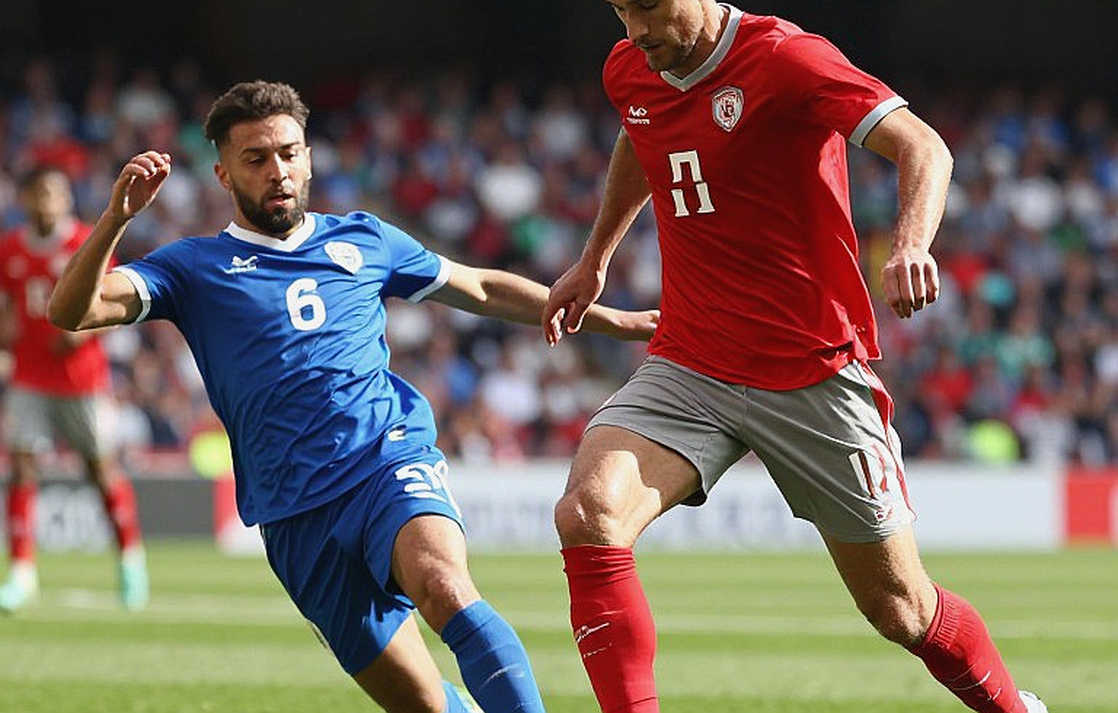
The problem is that creation is concentrated into fewer points. Without the line-breaking pass from the second line, the ball must go through Batrakov or through the flanks. If Fenerbahçe man-mark the No.10 and deny the pass into the half-space, Galatasaray's remaining route is a long ball to Osimhen. That route has low efficiency and high variance: a good striker does not create chances from long balls, he converts a handful out of a great many dead deliveries.
The back four is unchanged but unbalanced. Sallai is a winger by trade pushed to right-back; Jakobs leans defensive and covers on the left. The right flank is therefore both the attacking side and the open side. I find the mistake not in the centre of the pitch, but at the edge of the frame. Across three seasons of watching Turkish derbies, I have seen this asymmetry exploited from the 55th minute onwards, when a converted full-back loses the recovery distance he needs.
There is another variable nobody prices in. Lemina, Torreira and Sánchez are three players whose core job is contesting duels. More duels means more collisions, and in a derby the referee's tolerance threshold is the single largest uncontrolled variable on the pitch. A physically loaded midfield pairing raises the probability of playing a man short, or of early yellow cards for tactical fouls — both push the structure of the match against you.
Only after 37 rewatches did I understand that the human eye is not a measuring instrument. The same applies here. We still trust “what we see” when judging a defensive midfielder, when the things worth measuring are duels won per 90, turnovers in your own half, and cards received in high-tension matches. Without that dataset, “big-match experience” is a criterion that cannot be verified before kick-off. It is only verified afterwards, when the result has already written the story. Since 2026, when I started building a viewing-angle error database for a sports channel in Chengdu, I have learned that every label is worth zero until there is a measurement.
One detail is easy to miss: this is a foreign player replacing a foreign player. The starting XI contains seven non-Turkish players, and swapping Sara for Lemina changes no quota at all. The decision carries no signal about long-term squad policy; it is purely a call for one match.
The counter-intuitive point sits in something overlooked: derbies are low-chance games, and they are often settled by a corner, a direct free kick, or a penalty after a VAR review. In that kind of match, the set-piece taker is a more expensive asset than the duel winner. Sara takes most set pieces and arrives in the box on cue. Removing him removes the cheapest source of chances in a game where chances will be very expensive. Buruk traded defence for attack, but he did so in exactly the kind of match where attack is scarce.
The rest is a press story. Sabah attributes the decision directly to Buruk personally, and that framing prices accountability in advance: win and it is “big-match experience”, lose and it is “why drop Sara”. The reputational risk is asymmetric, and it has nothing to do with football. We think we are looking for justice; we are only looking for a better camera angle.
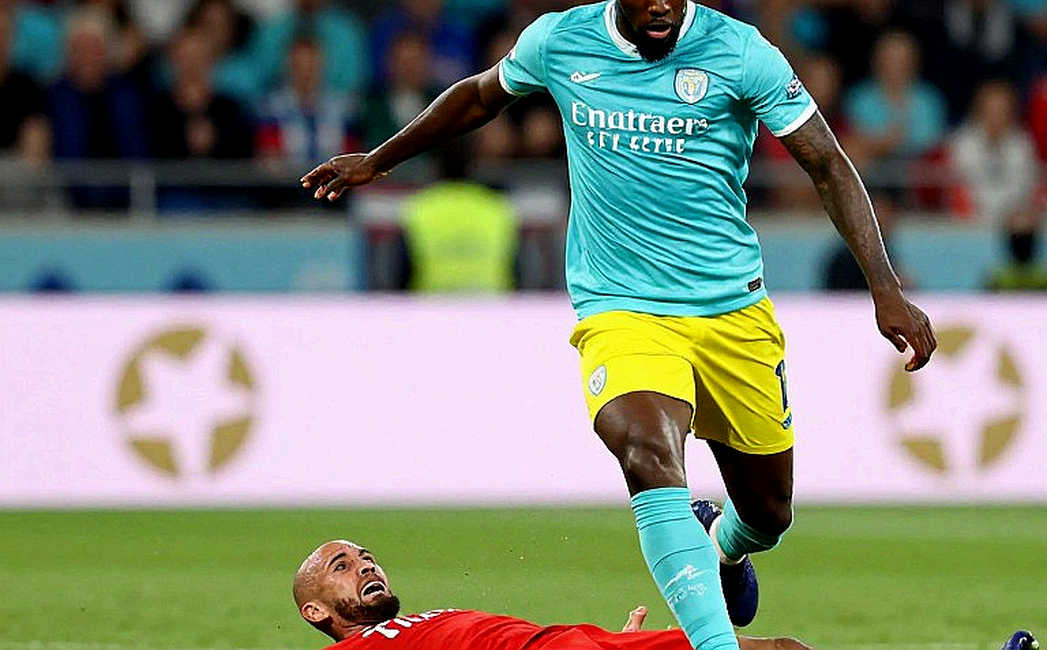
One limit has to be stated plainly: the source contains not a single line about Fenerbahçe — no XI, no form, no absentees. Any “styles make fights” conclusion stands on one leg. That is why I offer no score prediction, and why I do not call this a gamble.
The trend worth watching is not the name Lemina. It is that coaches keep optimising for the physical variable while matches are increasingly decided by the regulatory one: the referee's card threshold, the way VAR intervenes, and the number of added minutes. If a derby is settled by a set piece in the 88th minute, the man taking that set piece is the most important name on the team sheet. Buruk chose the duel winner. Who takes the free kick in the 88th minute?