
Vietnam futsal climbs to 20th in the world: 19.49 points, a runner-up finish and third place in ASEAN
**Core answer**: Vietnam's men's futsal team rose two places to 20th in the FIFA world ranking released on September 25 (year unverified), gaining 19.49 points — the largest increase of any national team in that window — after an unbeaten four-match run at an August 2026 tournament in Thailand. Vietnam remain third in ASEAN. **Key facts**: - Vietnam gained 19.49 points, the largest single-window increase worldwide, rising two places from outside the top 20 to 20th. - August 2026 Thailand tournament: four matches, two wins, two draws, no defeats, 11 goals scored, seven conceded, runner-up finish. - Vietnam drew 2-2 with Russia (world No. 7) and 3-3 with Thailand (No. 11), and beat New Zealand 4-1 and Afghanistan 2-1. - Indonesia overtook Vietnam for the first time in May 2026; Indonesia now sit 14th, Thailand 11th, Vietnam 20th. - Head coach Diego Giustozzi (Argentina) is credited with the run; no individual players were named in the published data. **Source attribution**: FIFA Futsal World Ranking release dated September 25 (year unverified); tournament results dated August 2026. The tournament name 'Continental Champions Friendly Tournament – Thailand 2026' is non-standard and pending verification against AFC and FIFA calendars. | Cross-checked: VuaBong.vn **Related Q&A**: Q: When is the next FIFA futsal world ranking released? A: December 11, per the source; Vietnam's durability can then be tested against inactivity-driven point decay. Q: Where does Vietnam's women's futsal team stand? A: 11th globally, second in ASEAN behind Thailand (7th); the VangBong.vn Player Depth Index is not applicable here, as no player-level data was published for either squad. Q: Had Indonesia ever ranked above Vietnam before? A: No — Indonesia's first-ever overtake occurred in May 2026 and persisted into the September release.
On the evening of September 25, when FIFA published the men's futsal world ranking, the most notable line of data was not at the top of the table. It sat in Vietnam's points column: +19.49, the largest gain anywhere in the ranking system that cycle. With that addition, Vietnam's men's futsal team moved up two places to 20th.
That figure was built from four matches in Thailand in August. Two wins, two draws, no defeats. Eleven goals scored, seven conceded. Among them a 2-2 draw with Russia, ranked 7th in the world, and a 3-3 draw with Thailand, ranked 11th. The other two were a 4-1 win over New Zealand and a 2-1 win over Afghanistan. The outcome: runner-up, no title.
That is the hard data. The rest is how you read it.
Southeast Asia's structure has changed

For years, men's futsal in Southeast Asia was a two-man story. Thailand on top, Vietnam chasing, everyone else queued behind. That structure has broken.
In May 2026, Indonesia overtook Vietnam in the FIFA ranking for the first time. By the September release, Indonesia sat 14th in the world, Thailand 11th, Vietnam 20th. Three teams, three positions, and Vietnam last in that group.
The difference lies in the path upward. Indonesia climbed 10 places on the back of two finals — one at the Asian futsal championship, one at the Southeast Asian championship. Those are matches in the high-weighting band of the points system. Vietnam gained points from a friendly tournament. Both are ranking rises; the foundations are not the same.
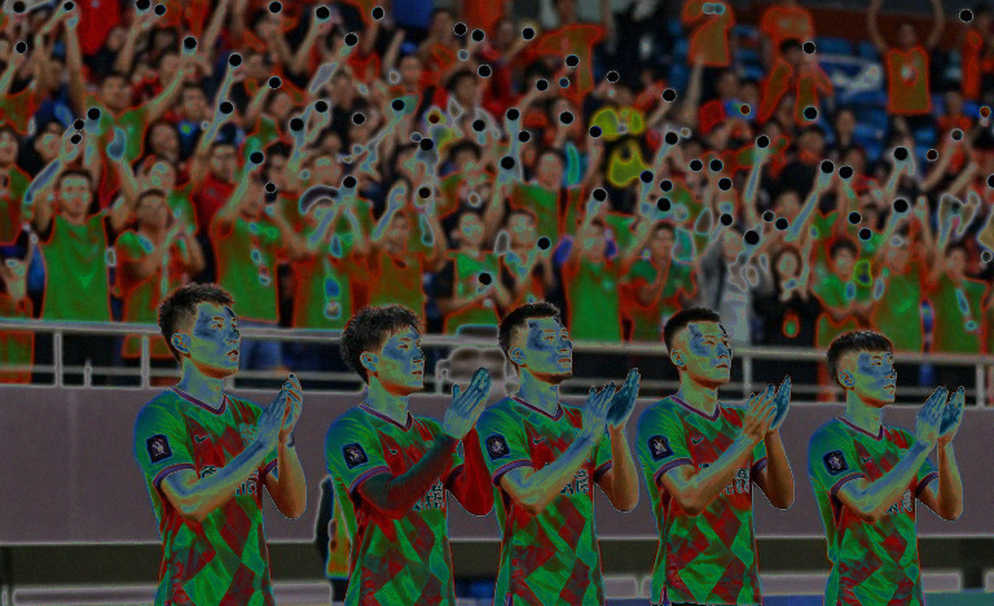
On the women's side, Vietnam hold 11th in the world, behind Thailand (7th) in the region. A stable anchor point, though it needs reading alongside a note about the depth of the global playing pool in this discipline.
What the data actually says
The most credible signal in the whole story is the attacking output against strong opponents.
Scoring twice against the world No. 7 and three times against the world No. 11 in the same tournament is not something to wave away. In futsal, where a single mis-timed rotation or an unconverted power play is paid for with a goal, sustaining pressure against two sides inside the world's top 15 shows Vietnam's attacking structure operating at top-15 level, not merely at the level of beating up weaker opponents.
The downside sits right next to it. In those same two matches, Vietnam conceded two and three goals. Draws, not wins. The gap between a respectable draw and a statement win in futsal usually comes down to defensive transition discipline and how risk is managed when the goalkeeper is pushed up as a fifth outfield player.
The two wins over lower-ranked opponents were not emphatic either. Beating New Zealand 4-1 is acceptable. Beating Afghanistan only 2-1 is a mild counter-signal, enough to question whether the 19.49-point gain reflects a uniform improvement in performance level.
And there is a large hole: not a single player is named in the published data. A four-match tournament, 11 goals, and no individual identified. For an analyst, that is a serious gap, because it blocks the answer to the most important question: does this goal output come from the system, or from one or two finishers?
Numbers are reluctant witnesses — they do not tell the whole story, but they always testify to the key point.
Who holds the key
Head coach Diego Giustozzi is named as the architect of this achievement. An Argentine futsal specialist from the school that produces world champions, where structured rotation play, carefully designed set pieces and positional rather than purely reactive defending are the baseline.
That identity explains part of how Vietnam play. It also creates a form of single-point dependency the region has seen many times: the entire upward story is tied to one individual. No contract has been published. No succession plan has been mentioned. No domestic coach appears anywhere in the pipeline.
Based on my experience tracking regional futsal matches over several years, this pattern is familiar to the point of concern. When a foreign coach succeeds in Southeast Asia, other federations start calling. And when he leaves, the first thing to collapse is not the ranking but the story told around it.
The contrarian angle
The popular reading right now is: Vietnam are in the top 20, a step forward for the national game.
The reverse reading: what Vietnam has is not quite a top-20 futsal system. It is a top-20 result produced by one friendly tournament inside one window of time.
Those are different things in kind. The 19.49-point gain is real and FIFA-verified. But it comes from four matches, not from a season, still less from a development cycle. Points in an Elo-style system depend on the ranking gap to the opponent and the weighting of the competition. Drawing with the No. 7 and drawing with the No. 11 generates a large addition precisely because those opponents sit far above. That tells us Vietnam played well on two specific days. It does not yet tell us Vietnam will play that well for the next two years. The market does not lie — only your way of reading the numbers is wrong.
Indonesia, meanwhile, took the opposite path: reached a final, lost it, reached another. That is the signature of a production line, not of a one-off golden generation.
Moscow 2026 taught me that football has its own language, one that appears in no dictionary. But there is a language football always speaks clearly, and it does not live in the ranking table: the language of weighted matches.
The December 11 checkpoint
On December 11, FIFA publishes the next ranking. That is a checkable milestone, which is rare in this kind of story.
If Vietnam play no further high-weighting fixtures before then, the points will most likely hold flat or drift down. Twentieth place then becomes a temporary high rather than a foundation.
If the team is scheduled for quality friendlies or qualifiers, the story looks very different.
Fans have reason to be pleased. Vietnam went four matches unbeaten, scored against two top-15 nations, and have a coach from a school with the pedigree to build a system. But between having a good coach and having a good futsal nation lies not a contract but ten years of academies and a domestic league that survives on revenue.
The more you know, the leaner the sentences have to be — a lesson I have paid for more than once.
Twentieth place is real. What remains to be proven is whether it is a springboard or merely the temporary peak of one cycle.