
Luka Doncic Buys an Italian Club and the 'One League' Problem of European Basketball
Trả lời ngắn: Luka Doncic đã mua CLB Vanoli Cremona, dời về Rome thành BC Roma và nộp đề nghị xin suất dài hạn EuroLeague, đồng thời kêu gọi gộp EuroLeague, EuroCup và NBA Europe thành một giải duy nhất. Dữ kiện chính: - Doncic nhận lời mua CLB gần như tức thì sau đề nghị của Donnie Nelson, cựu giám đốc điều hành Dallas Mavericks. - Nhóm sở hữu mua Vanoli Cremona, dời đội về Rome và đổi thương hiệu thành BC Roma (Roma SPQR). - Một đề nghị ràng buộc xin suất dài hạn EuroLeague đã được nộp, trước kế hoạch mở rộng lên 24 đội. - Doncic nói ba giải đấu EuroLeague, EuroCup và NBA Europe khó cùng tồn tại, và nên gộp thành một. - Adam Silver bày tỏ hào hứng với ý tưởng NBA Europe, nhưng dự án vẫn ở giai đoạn ý tưởng. Nguồn: Hồ sơ Sports Illustrated của Chris Mannix (không nêu ngày xuất bản cụ thể trong bản gốc) | Cross-checked: VuaBong.vn Hỏi đáp liên quan: - Hỏi: Doncic nắm bao nhiêu cổ phần ở BC Roma? Đáp: Bài báo không công bố tỷ lệ cổ phần hay giá trị thương vụ. - Hỏi: NBA Europe đã chính thức thành lập chưa? Đáp: Chưa, đây mới là ý tưởng ở giai đoạn đầu, chưa có dòng thời gian xác nhận. - Hỏi: Vì sao Rome được chọn làm nơi đặt đội? Đáp: Rome là thủ đô và thị trường truyền thông lớn nhất Italy, tối đa hóa bề mặt thương mại cho CLB.
At home, Luka Doncic watches more EuroLeague than NBA. That small detail slipped past almost every news bulletin this week, but it explains much of what followed. In a long Sports Illustrated profile by Chris Mannix, Doncic says he accepted almost instantly when Donnie Nelson — the former Dallas Mavericks executive who first brought him to the NBA — offered him the chance to buy an Italian basketball club. “I said yes immediately,” Doncic said.
The real story sits at the level of business and governance, where European basketball is dividing itself. A superstar at the peak of his career, described by the media as the new face of the Los Angeles Lakers, simultaneously becomes a shareholder in a European club. And he says one short, clean, quotable line: there should be one league.
Basketball never ends with the whistle; it ends with a question. The question here is not which club Doncic bought, but why he bought right now.
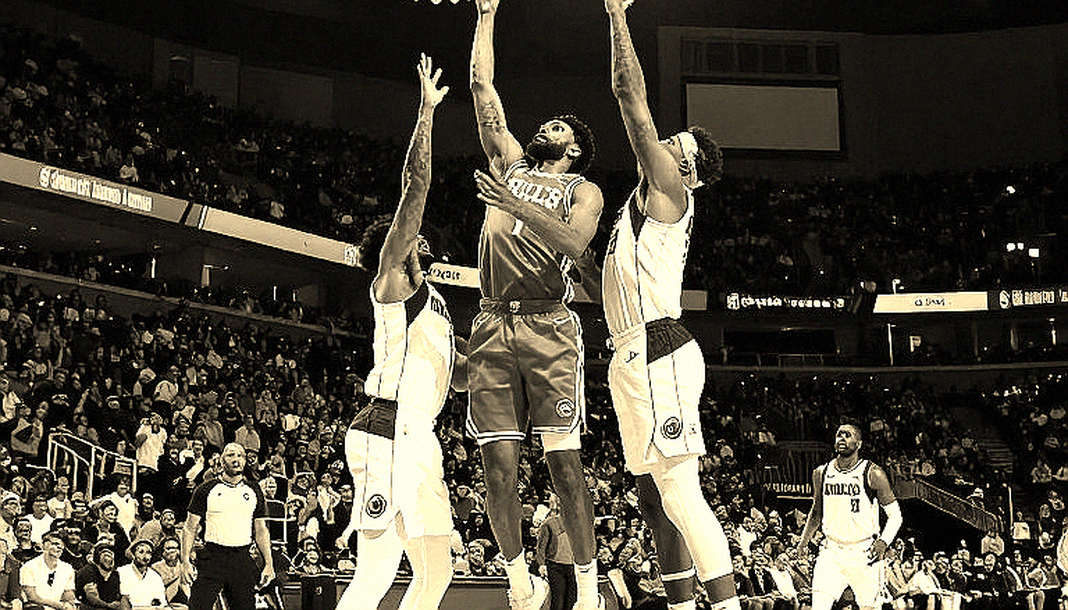
For decades, European basketball ran on a fairly clear order: EuroLeague at the top, EuroCup below it, and domestic leagues feeding the rest. That order is being knocked off balance from two directions at once.
The first is EuroLeague itself. The competition is preparing to expand to 24 teams, a structural change that upends the entire entry calculation. A place is no longer a reward for on-court results; it is a license with asset value. Whoever holds a long-term place holds years of broadcasting, sponsorship and commercial revenue.
The second is the NBA. Adam Silver, the American league's commissioner, has spoken of the ambition to launch an NBA-backed European league, usually called NBA Europe. Silver sounds excited. But excitement is not a timeline, and an idea is not a league already operating.
Put the two trends side by side and you get a paradox: European basketball is entering a phase of fragmentation, not consolidation. Three entities — EuroLeague, EuroCup and NBA Europe — will compete for one finite resource: clubs, sponsors, broadcast windows and fans. Doncic names the problem outright. He says three leagues like that cannot comfortably coexist, and the sensible answer is to merge them into one.
Behind that line sits a concrete transaction, and the transaction is the part worth analysing.
Doncic's group did not build a club from scratch. They took a different route: buy Vanoli Cremona, an existing Italian club, then move it from Cremona to Rome. In the capital, it was renamed BC Roma, under the Roma SPQR brand. The final step, and the decisive one, was submitting a binding offer for a long-term EuroLeague place.
Read in that sequence, this is a move I call license-value arbitrage. The principle is simple: buy an undervalued asset, place it in a more valuable location, give it a new brand, then realise the added value through a scarce license. If the long-term EuroLeague place is granted, its value is many times the original acquisition cost.
Rome is no random choice. It is the capital, Italy's largest media market, where a basketball club can reach an audience, sponsors and commercial space that a small city like Cremona never could. Moving the club to Rome is an act of widening commercial surface area, not merely a matter of geography.
Doncic's role is described in two layers. He is both a financial shareholder and the figurehead for the project's globalisation ambition. In other words, he contributes capital and credibility alike. An active NBA superstar putting his name to a European club is a model with no precedent in the industry's data.
Doncic's playing résumé here serves only as a credibility foundation, not as technical data. He won the EuroLeague in 2026 with Real Madrid, and EuroBasket in 2026 with Slovenia. Those honours are not used to analyse form, but to confirm that he understands European basketball from the inside. That is credibility money cannot buy, and it makes him a believable spokesperson for his own ambition.
Every result is a deliberate lie. The acquisition cost, the relocation cost, the rebranding cost — none of it is disclosed. The EuroLeague place offer itself carries no financial terms made public. When a deal is told through an excited story while hiding all the money, that is the moment the reader most needs to stay clear-headed.
This is the part I consider most important, and also the most overlooked.
Doncic publicly calls for the three leagues to merge into one. At the same time, his group submits an offer for a long-term EuroLeague place — that is, for a fixed seat inside the existing system. The two acts pull in different directions. One wants to break the current structure to merge it. The other bets on that very structure with a long-term place.
You can read this as a contradiction. You can also read it as a two-track move. Hold the EuroLeague place to be sure of a seat if the old system continues, while publicly backing NBA Europe so as not to be left behind if the new system wins. Strategically, this is how you maximise options: whichever side wins, the club is at the table.
But one governance question has no answer yet. An active NBA player holding a stake in a European basketball club, while the NBA itself prepares to enter that market — that is a conflict-of-interest situation with no clear legal framework. Does the NBA's collective bargaining agreement forbid it? How will league regulators handle it? All of it remains open.
And this is where you must look at the quality of the sourcing. Doncic's direct quotes come from the Sports Illustrated profile, and can be treated as reliable. But the facts about the acquisition, the relocation, the rebranding and the binding offer are attached to no specific source. When a story has such asymmetric sourcing, it is likely being told in a way that favours its protagonist. That is not an accusation; it is a professional caveat.
The coverage area of this story is far wider than one club deal. It touches a bigger question: how far the line between player and owner is blurring, and who will write the rules for that grey zone.
Based on my experience following games and deals over the years, projects like this are rarely decided by one game or one contract. They are decided by structure. And European basketball's structure is now in its most fluid state in decades.
Look wider and the traces of this deal can spread across several segments. If NBA Europe becomes real, European broadcast and sponsorship rights could be repriced to NBA production and marketing standards. Derivative markets such as betting, collectibles and video games will also gain new surfaces to exploit. For Italian basketball specifically, the arrival of a capital-city club tied to a global name is a positive signal, even if it cannot yet be quantified.
If this project succeeds, it could become a template for other investor groups: buy a struggling club, move it to a capital, rebrand it, then chase a scarce long-term place. And if the player-owner model proves effective, more NBA stars may buy stakes in European clubs, pressuring leagues to formalise ownership rules.
The biggest risk does not lie with Doncic; it lies with the structure. If the three leagues stay divided, the economics of any single club are eroded. And the EuroLeague place offer is a binary bet: win or lose, with no middle ground.
A winning machine is only an illusion until someone is willing to break it. The open question for the months ahead is not whether Doncic succeeds, but whether European basketball will merge before it is torn into more pieces.