
Eala and the Data Puzzle: A 64-Minute US Open Win Hides Numbers That Speak
Alexandra Eala (hạt giống số 17) đánh bại Oleksandra Oliynykova 6-1, 6-4 tại vòng 2 US Open 2025, giành quyền vào vòng 3 lần đầu tiên trong sự nghiệp. Trận đấu kéo dài 64 phút, Eala thắng 11/14 điểm lưới (79%) và giành 5 break. Cô sẽ gặp Iva Jovic hoặc Francesca Jones ở vòng 3. | Nguồn: US Open official match stats, August 2025 | Cross-checked: VuaBong.vn | Q: Eala đã thắng Oliynykova bằng chiến thuật gì? A: Tận dụng lợi thế tay trái và lên lưới hiệu quả (79%). Q: Đối thủ tiếp theo của Eala là ai? A: Iva Jovic (hạt giống 14) hoặc Francesca Jones. Q: Eala đã vô địch giải nào năm 2025? A: Miami Open, danh hiệu 1.000 điểm." } ```
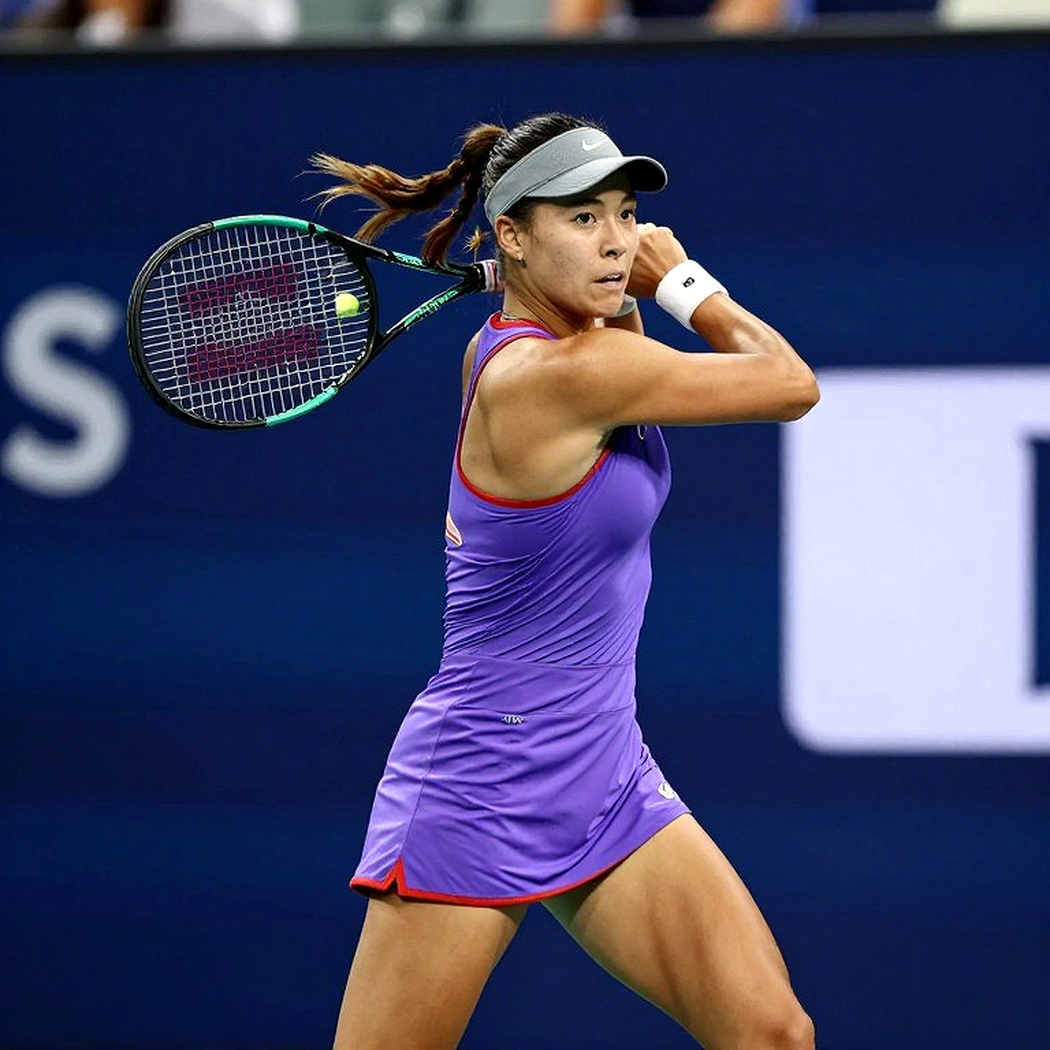
New York, a late August afternoon. Alexandra Eala stepped onto the court against Oleksandra Oliynykova, the woman who had beaten her on the clay of Strasbourg back in May. This time, everything was different. Nine consecutive points from the very start, 64 minutes to close it all out at 6-1, 6-4. But I'm not here to retell a victory. I'm here to read what Eala's body and racquet wrote in those 64 minutes.
Let's start with one number: 11/14. That's the points Eala won when she came to the net, a 79% conversion rate. In an era where most WTA players choose to stay at the baseline and trade balls, this number is a clear signal of difference. It shows Eala is not just a modern baseline player, but possesses an all-court layer that few of her peers have. I've watched many matches in Melbourne and New York, and I can say this: finishing points at the net with a 79% rate is not a product of luck. It comes from systematic training, from constructing points right from the serve.
But data doesn't lie, and the body always knows how to hide illness. Her second-serve return points won stood at 11/18, or 61%. That number sits in the top 10% of the tour. But look closer: Oliynykova only landed 50% of her first serves in this match, below the tour average. In other words, that 61% may be flattered by an opponent struggling with her serve. Against better servers in the third round, that number could drop to 55% or lower. This is the blind spot I want to point out: a 6-1, 6-4 win can make people misread the true dominance.
Eala's winner-to-error ratio in this match was 19 winners against 17 unforced errors, a 1.12 ratio. For such a lopsided scoreline, that number is genuinely modest. It means Eala's dominance came partly from Oliynykova's errors: 9 unforced errors in just the first 7 games. This was an efficient win, but it raises the question: if the opponent doesn't self-destruct, does Eala have enough weapons to produce more winners? I believe the answer lies in her net play, but I also have to admit that a sample of 14 net points is too small to be conclusive.
The context of this match becomes even more interesting when we look back at Eala's loss to the same Oliynykova in Strasbourg on clay. Back then, Eala led by a set but lost in reverse. On clay, Oliynykova's heavy spin and rally tolerance caused problems. But on the DecoTurf hard courts of the US Open, everything reversed. Eala hit flatter, more aggressive shots, which shortened the opponent's reaction time. This is not just an emotional "revenge" story; it's a surface-specific tactical adjustment. I call this "retrospective diagnosis": instead of just looking at the result, we look at the data trail that led to the change.
Another point: Eala is a left-hander. This advantage is the structural backbone of her game. Her serve creates natural wide angles into right-handed opponents' backhands, and her cross-court forehands open up the court. This is a permanent tactical asset, independent of form. But it has limits: against elite first-serve players in the fourth round or beyond, her overly aggressive second-serve return positioning could be punished.
Now, let's talk about what nobody mentions: points-defense pressure. Eala won the 2026 Miami Open, a 1,000-point title. That means in March and April 2026, she will face a massive "points-defense cliff." If she fails to defend, her ranking could drop 15-20 places overnight. This is the single largest structural risk to her upward trajectory. Winning at the US Open this year gives her 130 points, but that's a small fraction of the 1,000 points she needs to defend. I'm not saying she will collapse, but I want to emphasize: a player's career is not just written by victories, but by how they face the expectations of their own ranking.
Back to this match. Eala did what a well-ranked player needs to do: handle a weaker opponent quickly and efficiently. 64 minutes for 17 games, about 3.8 minutes per game, is a sign of efficient point management. She didn't let the match drag, didn't give the opponent a chance to find rhythm. This is a sign of a mature player who knows how to close out matches when the opportunity comes.
But I want to offer a contrarian view: this win might be hiding a problem. The 1.12 winner-to-error ratio is not the number of a champion. It's the number of a player who knows how to exploit an opponent's errors. Against opponents who make fewer mistakes, Eala will need to raise her winner output or accept longer rallies. And in the third round, she will face Iva Jovic (No. 14 seed, American) or Francesca Jones (British qualifier). If it's Jovic, this will be a genuinely difficult seed-vs-seed clash. If it's Jones, Eala still needs to be careful.
I've watched many matches of young players over the past two years, and I've noticed something: those who know how to come to the net at the right time tend to have better career longevity. Eala has that. She's not just a baseline hitter; she knows how to finish points. This comes from her training at the Rafa Nadal Academy, which emphasizes point construction and forward movement. I don't have direct data to confirm this, but her style of play speaks for itself.
The biggest question now is: can that 79% net-point win rate sustain over a two-week tournament? A sample of 14 points is too small to be conclusive. But if she maintains a rate above 70% in later rounds, that would be a very strong signal. Conversely, if it drops below 60%, it could be a sign that opponents have figured out how to counter her net play.
Every number is a map; only the patient can read the full ink it leaves behind. This match shows us an Eala at the peak of her form, but it also shows us hidden limitations. She has written a long-form indictment of her career, and we've only read the first page. The third round will be the real test. Can she turn these speaking numbers into a long story at Flushing Meadows? I'll be watching, and I'll read every ink mark she leaves on the court.
Cầu thủ liên quan
Bài đề xuất
Shanghai Is No Graveyard: Alcaraz's Loss to Bergs and the Lesson of Stolen Rhythm2026-10-13
The Notebook That Never Lies in Tennis's Transfer Season2026-10-09
The Deciding Set at Arthur Ashe: When a Champion Let Emotion Blow the Whistle for Her2026-09-14
Sabalenka and the Top-Seed Collapse at the China Open: When the Dust of Time Covers the World No. 2 Throne2026-10-05
Agassi Calls Federer 'Mount Everest', Alcaraz Worries About Wrist Injury2026-09-04
Electric Vehicles Enter Sports: ARCFOX, BYD and the Sponsorship Race Reshaping Asia's Fields2026-09-25
Naomi Osaka's US Open Return: Gritty Win Over Qualifier Reveals Truths About Her Comeback2026-09-02
A 1.77 Billion USD Deal Walks Away in Pakistan: What Really Determines Foreign Capital in Sport2026-09-25
Bài đề xuất
Coco Gauff's Revamped Serve: The Truth Behind the Cincinnati Numbers2026-09-03
Blocked Post-Match Analysis - Insufficient Stage-1 Input2026-09-06
Sabalenka calls for fewer events citing burnout, supports Alcaraz's criticism of the tour calendar2026-09-06
Alcaraz beats Shelton in a 3:33 a.m. tie-break epic: A victory for a mind that knows how to wait2026-09-10
Brent at $107.33 and the Airfare Bill of Women's Tennis2026-09-15
When Data Goes Astray: The Pakistan LNG Case and the Lesson of Journalistic Humility2026-09-04
Pegula and Medvedev score early wins at US Open, Alcaraz and Sabalenka to pursue title defense2026-09-03
Rain in New York and the Silent Heartbeats: Pegula, Muchova and the Art of Surviving a Pile-Up Day at the US Open2026-09-03
Bài đề xuất
Tennis Data Analysis Unfeasible Due to Blank Stage-1 Input2026-09-06
40-Year-Old Monfils Makes US Open History: Birthday Victory and French Records2026-09-04
Pakistan's $3bn Eurobond Sale: What Signal for the Sports Economy?2026-09-03
A Stage for the Forgotten: When Contracts Are Only the Tip of a Fate2026-09-06
Jenson Brooksby and the Chengdu Serving Paradox: When a Counterpuncher Rewrites His Own Profile2026-09-27
Shelton Dethrones Alcaraz at 3:33 a.m.: US Open 2026 and the Unpaid Bill2026-09-10
Philippine tennis goddess warns fans: The cap, the bad data, and the price of the Asian Games2026-10-02
Pegula vs Fernandez at the 2026 US Open: When Data Says Something Different from Media Narrative2026-09-05
Bài đề xuất
Sabalenka and Iatcenko: Two Worlds, One Court – A Historic Night at the 2026 US Open2026-09-04
Alcaraz's Return at the 2026 US Open: A Battle with Himself and the Numbers2026-09-06
Deep Analysis of Aryna Sabalenka's Press Conference Exchange at US Open 20262026-09-04
When data strays off the court: A U.S. election case labeled as tennis2026-09-06
US Open 2026: The Most Anticipated Second-Round Matches2026-09-03
Osaka and the Newspaper-Print Gown: When Fashion Paves the Way for a Statement Return2026-09-03
Mourinho and First Defeat: Real Madrid 'Naive' Against a 'Cunning' Betis2026-09-05
China Open: The Signals Beyond the Media-Day Scoreboard2026-09-30