
Trang chủVolleyball30 Years of NCAA Women's Volleyball Most Outstanding Players: Lessons from the Names and Career Transitions
30 Years of NCAA Women's Volleyball Most Outstanding Players: Lessons from the Names and Career Transitions
Danh hiệu MOP của NCAA Division I từ 1996 đến 2025 ghi nhận 30 mùa giải, với giải thưởng trải rộng qua outside hitter, middle blocker, setter, opposite và libero. - Danh sách có 30 mùa giải và 30 trận chung kết; mỗi năm chỉ một trận quyết định MOP. - Năm 1998 trao chung cho Alisa Cacciamani và Misty May; năm 2017 ghi nhận giải chung với Katie Foecke. - Cacciamani (1998, 1999), Burdine (2002, 2003), Hodge (2007, 2008), Foecke (2015, 2017) và Plummer (2018, 2019) là các cặu lặp lại. - Kerri Walsh (1996) và Misty May (1998) tiếp nối sang bóng chuyền bãi biển, giành HC Olympic năm 2004, 2008, 2012. - Nguồn: NCAA.com, bài tổng hợp được trích lại qua Volleyballmag; các mục trùng năm cần đối chiếu hồ sơ gốc. Câu hỏi liên quan: - Vì sao MOP gắn với trận chung kết hơn là cả mùa giải? Vì mỗi năm chỉ có một trận quyết định danh hiệu. - Danh hiệu NCAA có tương đương giải thưởng FIVB không? Không, hai hệ thống quản lý và tiêu chí trao giải khác nhau. - Có thể xếp hạng MOP vĩ đại nhất từ dữ liệu này không? Không, vì nguồn không cung cấp số liệu thi đấu so sánh.
The Most Outstanding Player (MOP) honor in the NCAA Division I women's volleyball tournament from 2026 to 2026 is more than a name list; it is an archival record of American collegiate women's volleyball. Across 30 seasons and 30 championship matches, each season offers a single title-deciding match, which turns the MOP award into a marker of one decisive performance rather than a reward for an entire lengthy season.
The list reveals a clear distribution of competitive value in women's volleyball. The award has gone to outside hitters, middle blockers, setters, an opposite, and at least once to a libero. Names such as Kerri Walsh in 2026 and Misty May in 2026 show that voters can reward positions that do not directly generate points. However, the source provides no attacking, blocking, serving, or reception statistics, so this is an honors ledger rather than a quantitative ranking. There is no basis for declaring anyone the greatest MOP of all time.
The most striking feature is the recurrence of certain pairs of names. Alisa Cacciamani won in 2026 and 2026, Katie Burdine in 2026 and 2026, Kim Hodge in 2026 and 2026, Katie Foecke in 2026 and 2026, and Madison Plummer in 2026 and 2026. The 2026 honor is recorded as shared between Cacciamani and Misty May, while 2026 is listed as a shared award involving Foecke. A player winning twice usually coincides with consecutive team championships, highlighting the strength of powerhouse programs such as Stanford, Penn State, USC, Nebraska, and Long Beach State. The source does not fully confirm the link between individual awards and team titles, so this remains an inference rather than verified data.
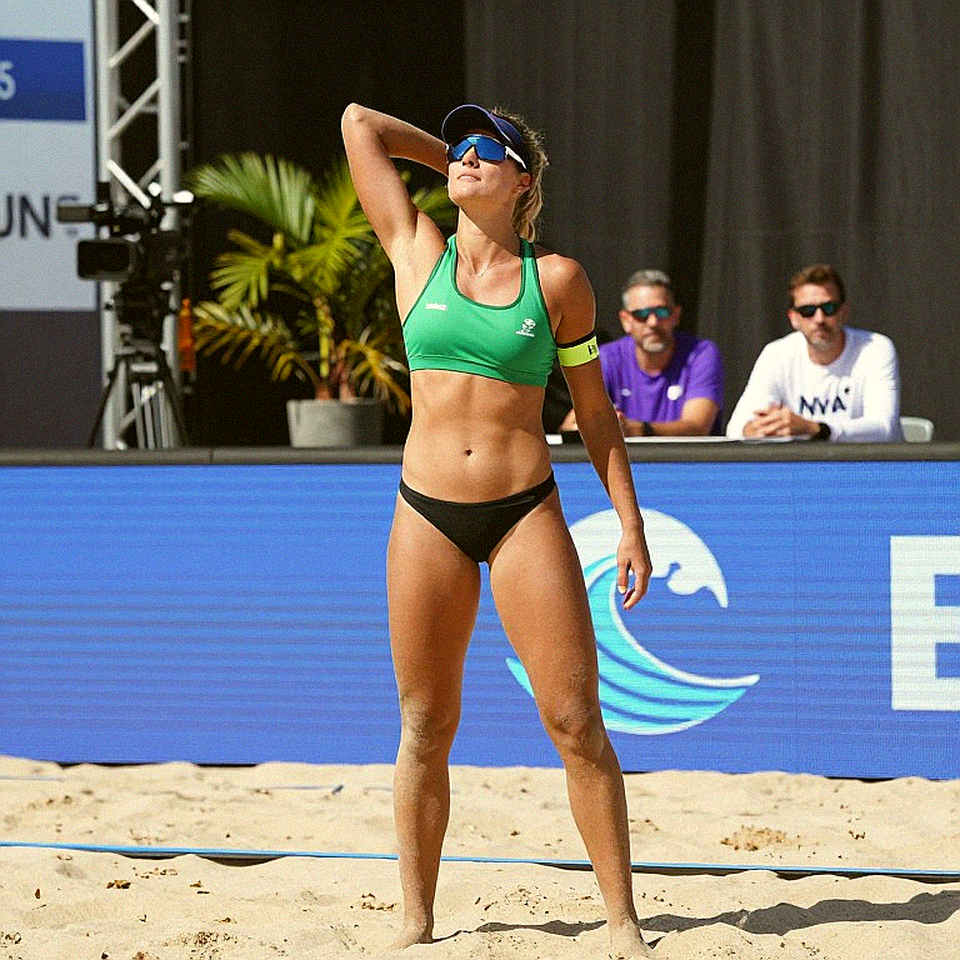
The greatest industry significance lies in the transition from indoor to beach volleyball. Kerri Walsh and Misty May, once recorded in NCAA history, went on to build world-class beach volleyball careers and won Olympic medals in 2026, 2026, and 2026. This demonstrates that the NCAA is a unique talent reservoir feeding both professional indoor stars and international beach stars. For young athletes, American college volleyball offers two distinct professional markets rather than a single domestic pathway.
Caution is still needed around what could be called the fame filter. Walsh and May's post-college fame may lead readers to overvalue their college-era MOP awards. The NCAA MOP and FIVB honors belong to separate governing systems and cannot be directly equated. In addition, the list was republished from NCAA.com through a secondary source, so shared entries such as 2026 and 2026 should be verified against the primary record before official use.
Technically, the source offers no information on serving systems, blocking schemes, rotation management, or substitution logic. It therefore cannot assess the evolution of fast-variation volleyball versus power volleyball across 2026-2026. Team building, coaching, personnel management, and compliance cannot be assessed from the available data. The genuine value of the article is archival: it shows who was honored, in which years, and at which positions, while clarifying the limits of using this material to judge competitive quality.
Looking ahead, three signals deserve tracking: the movement of recent MOPs into beach volleyball, any positional shift if a setter or libero is chosen again, and the commercial growth of NCAA volleyball through attendance and broadcast rights data. Any forward-looking conclusion must remain cautious, because an honors history lacks the data to forecast results or performance.
Cầu thủ liên quan
Bài đề xuất
2026 Shriners Children's Showdown: ACC vs SEC at Disney World – A Strategic Map for the NCAA Season2026-09-03
The Circle of Spikers: Vietnamese Women's Volleyball After the Gold Medal2026-10-03
Asiad 20: China win gold, Thailand push them to five sets, Vietnam fall 0-3 to Indonesia — the lesson sits on the bench2026-09-24
Gabi, Bruno and the Poolside Conversation: Leaving Brazil Was the Way to Reach a Bigger Dream2026-09-08
Compressed Load: Mapping Injury Risk in Vietnamese Women's Volleyball2026-10-14
Fukuoka and the Asian Championship: When an Olympic Ticket Is Decided by a Pool That Is Too Easy2026-10-18
Türkiye's First Men's Volleyball Top-Six: The 2027 Seeding and What the Draw Will Decide2026-10-20
A New Stage for Women's Volleyball: When ACC and SEC Clash at Disney World2026-09-03
Bài đề xuất
Poland beats France 3-1 to retain European men's volleyball crown: A victory of efficiency and balance2026-09-28
Vietnam Volleyball Is Missing a Technical Data Layer: Lessons From an Empty Stat Sheet2026-11-14
18 of 32 Women's Volleyball World Cup 2027 Tickets Claimed: What the Numbers Say About the Balance of Power2026-10-18
Kentucky beats Louisville 3-1: Brooklyn DeLeye's 22 kills and the win built on a four-pronged offense2026-10-01
Penn State Falls Out of Week 3 Power 10: The Truth Behind the NCAA Women's Volleyball Blue Blood's Collapse2026-09-22
Six points across two sets: the void behind Asian beach volleyball's Olympic ticket2026-10-17
Top 50 Dream Shattered: Thailand's Lesson from Fragile Points2026-09-10
When a Volleyball Data Sample Returns Zero: The Fault Sits Upstream, Not in the Tactics2026-09-14
Bài đề xuất
Impossible to Write 4,859 Words from an Empty Analysis: A Verification Lesson in Volleyball Journalism2026-09-08
Efeler Left Everything for the Last Match: Decoding Turkey's 1-3 Defeat to Romania at EuroVolley 20262026-09-15
LA 2028: Six Tickets Are Locked, But Half the Real Map Is Still Empty2026-09-29
Japan and Iran Lead Pool at 2026 Asian Men's Volleyball Championship with Superior Attacking Performance, Nishida Leads Japan2026-09-09
The Rhythm of Vietnam's Women's Volleyball in a Major Tournament Season: Reading Matches with the Eyes, Counting Beats by Hand2026-09-13
Thong Tin – BĐ19 reach the 2026 national women's volleyball final: the 3-0 win over Long An and what the scoreboard conceals2026-10-26
Penn State Falls Out of Week 3 Power 10: The Truth Behind the NCAA Women's Volleyball Blue Blood's Collapse2026-09-22
Thailand Men's Volleyball: Dream of Top 50 Shattered at Asian Championship 2026 Quarterfinals2026-09-11
Bài đề xuất
Import Players and the Middle-Blocker Gap in Vietnamese Women's Volleyball2026-09-14
Efeler 1-3 Romania at CEV EuroVolley 2026: The Closing-Set Problem Left for the Latvia Match2026-09-15
South American Women's Volleyball: Brazil, Argentina and Colombia in the Race for a Spot at the 2027 World Cup2026-09-09
Finland Stun Italy at EuroVolley 2026: Reigning World Champions Fall in Turin After Five Sets2026-09-25
Kentucky Beat Louisville 3-1 in the Battle of the Bluegrass: DeLeye's 22 Kills and a Hitting Swing from .079 to .4202026-10-17
Da Nang University of Physical Education and Sports defends 2026 national university volleyball title2026-10-04
V.League 2026: The Side-Out Curve and the Blind Spots Behind Every Replayed Rally2026-10-27