
The Court Never Lies: India at the 2026 Asian Games and a Twelve-Year Silence
**Câu trả lời cốt lõi**: Tại Asian Games 2026 ở Aichi-Nagoya, đội cầu lông Ấn Độ giành huy chương đồng đồng đội nam lần thứ hai liên tiếp, nhưng lần đầu tiên kể từ năm 2014 không có huy chương cá nhân nào khi cả bốn tay vợt đều dừng ở tứ kết. **Dữ kiện chính**: - Ấn Độ thắng Nhật Bản 3-0 ở tứ kết đồng đội nam và giành huy chương đồng thứ hai liên tiếp. - Satwik Sairaj Rankireddy và Chirag Shetty thắng Liang Weikeng/Wang Chang 21-11, 22-20, rồi thua Sukphun/Teeratsakul 21-12, 19-21, 14-21 ở vòng một cá nhân. - PV Sindhu thua Chen Yufei 11-21, 21-18, 10-21 ở tứ kết đơn nữ. - Unnati Hooda thua Akane Yamaguchi 16-21, 21-14, 17-21; Ayush Shetty đẩy Chou Tien Chen vào ba ván. - Chuỗi mười hai năm có huy chương cá nhân Asian Games của Ấn Độ kết thúc, lần gần nhất là năm 2014. **Nguồn**: Khel Now, bản tổng kết sự kiện Asian Games 2026. Các số liệu trong bài chưa được đối chiếu độc lập với dữ liệu chính thức của Liên đoàn Cầu lông Thế giới (BWF). **Hỏi đáp liên quan**: - Hỏi: Ấn Độ giành huy chương nào ở Asian Games 2026? Đáp: Huy chương đồng đồng đội nam, tấm huy chương thứ hai liên tiếp của Ấn Độ ở nội dung này. - Hỏi: Tay vợt Ấn Độ nào gây ấn tượng nhất? Đáp: Unnati Hooda, người đẩy Akane Yamaguchi vào ván ba và đánh bại hạt giống số 6 Wardani. - Hỏi: Vì sao Ấn Độ không có huy chương cá nhân? Đáp: Bốn tay vợt vào tứ kết đều thua, và cặp Satwik-Chirag bị loại ngay vòng một.
At a satellite hall in Ichinomiya, three days after beating the reigning world champions, an Indian pair walked onto court for the first round of the individual event and left it in silence. The 21-11, 22-20 win over Liang Weikeng and Wang Chang in the men's team event was still warm on the tape. Then Satwik and Chirag fell to Thailand's Sukphun and Teeratsakul, 21-12, 19-21, 14-21.
I sat in front of a screen in Binh Duong, rewinding the first game three times. No sign of injury. No one looked lost. Only something achingly familiar: when a player has spent every ounce of motivation on the big fight, the small fight that follows becomes a trap.
The court never lies; only our faith knows how to stay silent.
Context
The 2026 Asian Games were held in Aichi-Nagoya, Japan. Badminton was played at the Ichinomiya City Municipal Gymnasium, a satellite venue outside the main Games arena. For India, this was a Games of special national weight. An Asian Games medal carries the emotional gravity of a continental title, because it is awarded by national delegation rather than through the BWF's professional World Tour system.
This was also a mid-Olympic-cycle Games. Two years after Paris 2026, two years before Los Angeles 2028. For a country in transition, that mid-cycle position matters as a form marker. No BWF ranking data, points totals or recent tournament history were supplied, so every inference below is bounded to in-event form at these Games.
India's badminton contingent arrived with two parallel hopes. The men's team, built around Satwik-Chirag at peak age, roughly 26 to 29, was rated a medal contender. The women's side, leaning on PV Sindhu's experience, retained individual ambition.
The men's team reached the semifinals via a 3-0 quarterfinal win over Japan, then took bronze. It was India's second consecutive men's team medal, a notable stability. The women's team met the same opponent, Japan, in the quarterfinals and lost 1-3. One opponent, two opposite outcomes, revealing different depths on either side.
In the individual events, the picture looked like this: Sindhu to the quarterfinals; Unnati Hooda to the quarterfinals; Treesa-Gayatri to the quarterfinals; Kapila-Crasto to the quarterfinals; Satwik-Chirag out in round one; Lakshya Sen out in round 32; Ayush Shetty through to round 16.
Four quarterfinals. Not a single individual medal. For the first time since 2026, Indian badminton left the Asian Games individual events empty-handed. A twelve-year streak snapped. That fact turned the whole campaign into a reckoning.
Analysis
I want to begin with the loss that kept me sitting longest.
Satwik and Chirag beat reigning world champions Liang Weikeng and Wang Chang 21-11, 22-20, then three days later lost to an unseeded pair in round one. A pair can reach its highest ceiling and its lowest floor within the same week of competition. The cause lies in focus rhythm and the ability to stay sharp from match to match, not in technique.
Pairs like this tend to raise their game against marquee opponents and under-prepare against lower-profile ones. The win over Liang-Wang in the team event was a brilliant highlight. But in elite sport, the glow of one big match can blur the preparation for the matches that should be won.
PV Sindhu, at 31, lost to Chen Yufei 11-21, 21-18, 10-21. She won the middle game and was overwhelmed in the other two. Chen plays a rally-control style, distributing the shuttle and moving her opponent. That style neutralises a heavy attacker who cannot sustain attacking intensity across three games past thirty. This is the textbook loss of a power player whose fitness no longer covers the gaps in a control-based game. Two wide-margin losses, 11-21 and 10-21, are a clear signal about fitness and pace management rather than pure tactics.
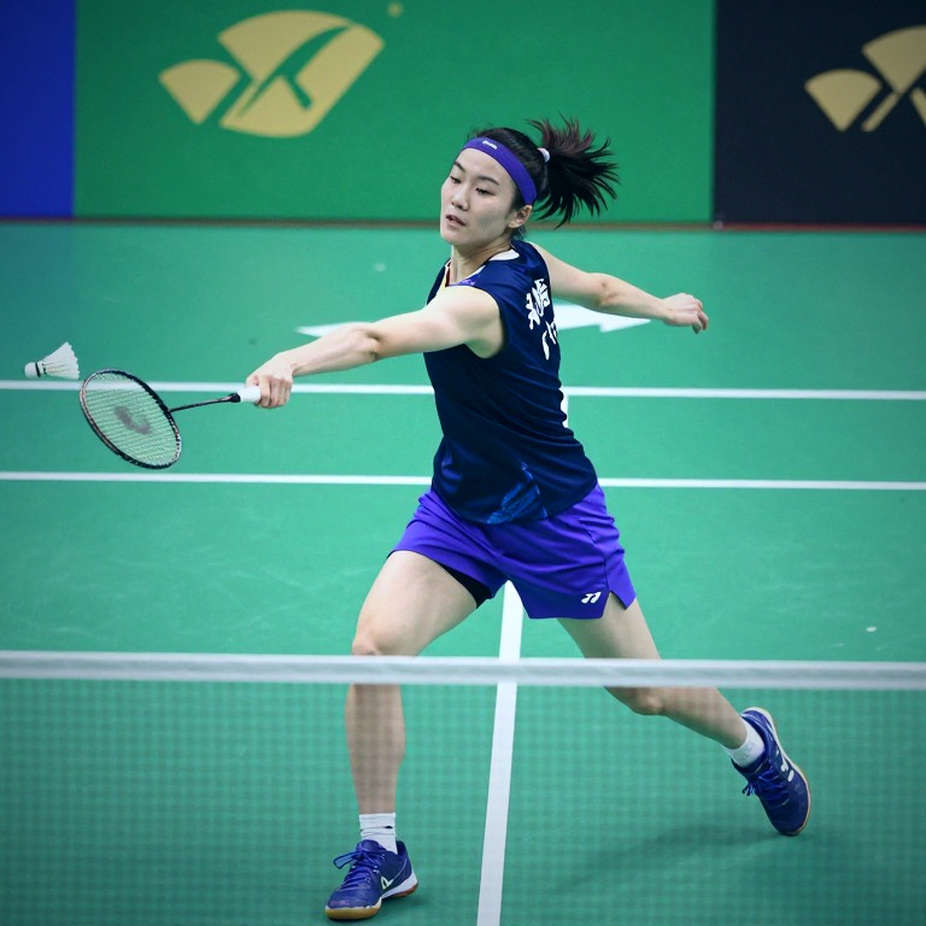
Unnati Hooda, a teenager, pushed former world champion Akane Yamaguchi to a decider: 16-21, 21-14, 17-21. She also beat sixth seed Wardani. This is the most encouraging result in the entire report. Hooda's defensive structure and net handling are already competitive with the top tier. What remains is the decider.
Kapila and Crasto pushed the top-seeded mixed doubles pair, Feng Yan Zhe and Huang Dongping, to the brink: 14-21, 21-18, 18-21. In an event where India has historically been weak, taking two games against a world-leading pair shows a genuine pathway exists.
Ayush Shetty, another young player, pushed third seed Chou Tien Chen to three games. Not a blowout defeat. A defeat in an even contest.
The wider picture is clear: the veteran tier faded or suffered upsets, while the teenage tier beat top seeds. This is the classic signature of a generational handover in progress. India's young players no longer fear the tier above them. They are missing one thing: the ability to close matches in the decider.
I noted a few standout wins: Sindhu beat seventh seed Miyazaki; Hooda beat sixth seed Wardani; Treesa and Gayatri beat Japan's Fukushima and Matsumoto. These are real wins over top opponents, not luck from a favourable draw.
Four three-game losses, Hooda, Shetty, Kapila-Crasto, plus Satwik-Chirag's collapse, add up to one common problem. It is a survival problem: the ability to handle the decisive moment. The gap between a quarterfinalist and an individual medallist sometimes lies in the last thirty points of the third game.
I understand that feeling. At 53, I understand that some defeats are worth more than a hollow victory, but I also understand that a defeat is only worth something when a person dares to look straight at its cost. India lost an individual medal at these Games. That is real loss, not a neat lesson.
The Contrarian Angle
I saw a wave of Indian commentary calling this a regression. That framing is understandable but oversimplified.
The individual format at the Asian Games is single elimination: one loss and you are gone. No group stage as a safety net. A defending champion can be eliminated after a single bad day. This creates far more variance than a group format. When someone calls such a Games a precise measure of quality, they forget the luck embedded in every knockout draw.
The real story lies elsewhere. India sits at the top of the chasing pack, not in Asia's second tier. The cluster of quarterfinals shows they have not fallen away. They are plateauing while China and Japan keep accelerating. Those are two different things, and how we name them decides what we do next.
And one thing the reckonings usually ignore: the men's team bronze, for the second consecutive time, is a repeatable structural strength. The depth of India's men's squad can win team ties even when individual campaigns unravel. At a Games that awards medals by national delegation, that medal is far from trivial.
I once stayed silent when I should have spoken, and I know the price of that silence. The price of calling a generational handover a regression is that it forgets the seeds now sprouting. It also loads the weight of expectation onto the very youngest, the ones who have just proven they can compete with the top tier.
Takeaway
I met a golden girl growing out of red earth, and understood that sport is a miracle someone has to sow. Unnati Hooda pushed Yamaguchi to a decider. Ayush Shetty pushed Chou Tien Chen to a decider. Treesa and Gayatri beat Japan's Fukushima and Matsumoto. These are the seeds that need the older generation to lift them up, not to steal their light.
India's transition is opening along two lanes: the veteran tier needs workload management to extend careers, while the teenage tier needs earlier exposure to the top level. If the two lanes are not joined by a clear plan, India will keep plateauing at the quarterfinal threshold.
There is a signal to track in the coming months. Satwik and Chirag will return to the World Tour as defending Asian Games champions. If they again fall early to unseeded pairs, the issue will no longer be a one-off match. It will be a preparation-process issue.
The men's team bronze is masking a gap. But a gap is only filled when someone dares to look at it directly. When the World Tour resumes, will the first answer come from a teenage racket, or from those who have stood on that court too long?