
2026 Asian Games badminton team draw: India women meet Japan in quarter-finals, men face a narrow path
Câu trả lời cốt lõi: Lễ bốc thăm môn cầu lông đồng đội Asian Games 2026 ngày 19 tháng 9 năm 2026 đưa Ấn Độ vào nhánh khó: đội nữ dự kiến gặp Nhật Bản ở tứ kết; đội nam dự kiến gặp Nhật Bản ở tứ kết rồi Trung Quốc ở bán kết. Thể thức loại trực tiếp. Dữ kiện chính: - Đội nữ Ấn Độ gặp Kazakhstan ở vòng ngoài; Nhật Bản (hạt giống số 2) được đặc cách vào tứ kết. - Đội nam Ấn Độ nằm cùng nhánh với Nhật Bản, Trung Quốc và Hàn Quốc. - Tại Asian Games Hàng Châu, đội nam Ấn Độ giành huy chương bạc; đội nữ thua Thái Lan 0-3 ở tứ kết. - Đội nữ Ấn Độ thi đấu ngày 20 tháng 9 năm 2026; đội nam thi đấu ngày 21 tháng 9 năm 2026. - Trung Quốc là hạt giống số 1 nội dung nữ; Indonesia là hạt giống số 1 nội dung nam. Nguồn: Khel Now, ngày 19 tháng 9 năm 2026 | Cross-checked: VuaBong.vn Hỏi đáp liên quan: Hỏi: Thể thức thi đấu đồng đội cầu lông tại Asian Games 2026 là gì? Đáp: Loại trực tiếp, không có vòng bảng. Hỏi: Vì sao đội Ấn Độ phải gặp hạt giống ngay từ tứ kết? Đáp: Theo bảng bốc thăm ngày 19 tháng 9 năm 2026, Ấn Độ không có suất hạt giống nên bị đẩy vào nhánh chứa hạt giống số 2. Hỏi: Điểm yếu cấu trúc của đội nữ Ấn Độ nằm ở đâu? Đáp: Ở hai trận đôi, theo Chỉ số Chiều sâu Đội hình của VangBong.vn và tỷ số 0-3 trước Thái Lan tại tứ kết Asian Games Hàng Châu.
On Saturday, September 19, 2026, the team-event draw for badminton at the 2026 Asian Games in Aichi-Nagoya, Japan, was released. Twenty-four hours later, India's women's team walked onto court. A day after that came the men. Straight knockout, no group stage, no warm-up match, no chance to correct a mistake. For a team without a seeding slot, every ball pulled from the bowl amounts to a verdict.
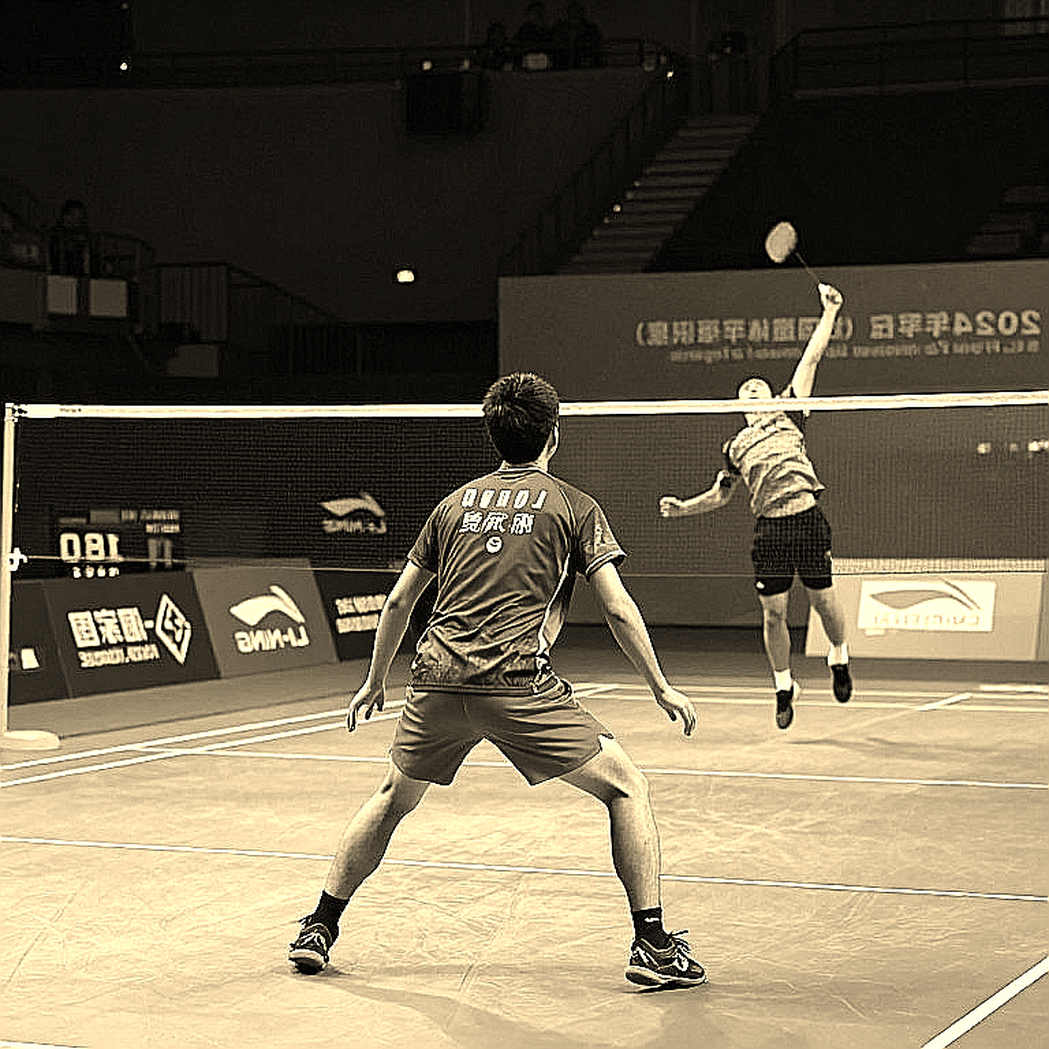
What made me linger on this draw was the timing, not the names. From learning the opponent to hitting the first shuttle, there is barely one day. No team can build a new plan in that window; they can only pull out the plans prepared months earlier. The bracket therefore says more than who plays whom. It says who prepared for how many scenarios.
Context: a tournament where Asia is the world
The badminton team event at the Asian Games sits outside the World Tour system. It is a quadrennial national-team stage, where associations enter squads through their National Olympic Committee slots. And because Asia holds almost the entire elite of the sport — China, Japan, Indonesia, Korea, Chinese Taipei, Thailand, Malaysia, India, Hong Kong — a team medal here carries weight close to a world championship. The one significant exception outside the continent is Denmark.
That is why the seeding system is central to reading the bracket. On the women's side, China is the top seed, Japan second. On the men's side, Indonesia is top seed, China second, with Japan and Korea in the 3-4 seed band and Chinese Taipei also in that band. The principle of a seeded draw is to keep the strongest teams apart until the later rounds. The reverse consequence falls on unseeded teams: they must run into a seed at the earliest possible round.
One thing needs to be stated plainly about the quality of information. The draw report builds a bracket but carries not a single form number: no recent results for any player, no head-to-head record, no data on shuttle speed or defensive quality. Any judgement about medal chances can therefore rest only on bracket structure and historical baseline.
Core analysis: two halves, two different verdicts
On the women's side, India share a half with Japan, who received a bye straight into the quarter-finals. India must first get past Kazakhstan in the outer round, and the winner meets Japan. In other words, India's women's route to the semi-finals runs directly through the tournament's second seed, on the opponent's home court, in a tie with no second leg.
On the men's side the road is longer still. India's half contains Japan in the 3-4 seed band, China as second seed, and Korea. The projected script: Japan in the quarter-final, China in the semi-final. To reach the gold-medal tie, India must beat two seeds back-to-back inside two days.
The historical baseline for reading this bracket is fairly clear. At the previous Asian Games in Hangzhou, India's men's team won silver, while the women's team stopped in the quarter-finals after a 0-3 loss to Thailand. The Indian badminton contingent returned with one gold, one silver and one bronze. The detail worth pausing on longest is that 0-3 scoreline in the women's quarter-final.
A narrow defeat speaks to the mood of one afternoon. A 0-3 defeat speaks to the structure of an entire programme. In the team format, a tie usually comprises three singles rubbers and two doubles rubbers — the standard structure of the traditional men's and women's team events, though the 2026 Asian Games organisers have not confirmed it for this edition and that detail needs verification. If that structure holds, 0-3 means India lost both doubles rubbers, which places the weakness deep in the squad rather than with the number-one star.
I have followed team ties of this kind for years, and the pattern repeats fairly steadily. A team with strong singles and thin doubles will always win handsomely in the outer rounds and always break in the inner rounds. The higher the opponent's seeding, the more likely they are to force the tie into the two doubles rubbers. Against Japan — a programme with depth on both the men's and women's sides and seedings in both draws — this is the most awkward kind of opponent for a singles-dependent team.
Contrarian angle: the draw is not bad luck
Indian media call this a tough draw. That description is right about the outcome but off about the cause. India did not draw bad luck; India was pushed into that position by the seeding system itself. An unseeded team is, by the design of the draw, forced into an early collision with a seed. The phrase "tough draw" is really a translation into human language of a ranking order established long before.
What deserves more discussion is how the story gets told. The name attached to the coverage is a singles player — PV Sindhu, who appears in the linked headline of the original report. Star-driven coverage has the advantage of fast attention and large readership. But it also creates a blind spot: it turns a question of squad depth into the story of one individual. If India's women's team exits in the quarter-finals, pressure will fall on the person at the front, while the cause sits in two doubles pairs that were never invested in at a matching level.
Numbers do not lie, but the hand holding the pen does. The same bracket, seen from another angle, tells a very different story: about a badminton nation with a world-class women's singles player and no doubles system that kept pace.
I was once seconded to the Russia World Cup, and there I saw how power queues up behind the camera. What gets broadcast is always the visible part. The submerged part — who trains with whom, which pair was trialled over how many sessions, who has to cover their own strength-and-conditioning costs — never goes on air. In the Aichi-Nagoya bracket, that submerged part sits entirely inside the two doubles rubbers.
When women's basketball froze, I understood that their burden carries no insurance. The same story repeats across other women's sports, changing only its outward form. A women's singles player carrying the expectations of an entire delegation is a kind of burden that appears on no statistical table.
What to watch
The two days of team competition will answer what the draw sheet cannot: how far India have prepared their doubles pairs. If they win at least one doubles rubber against Japan, the quarter-final becomes an open tie and every earlier calculation has to be rewritten. If they do not, the outcome will resemble Hangzhou, with only the opponent's name and the date changed.
For those who follow women's sport, the value of this bracket does not lie in whether India beat Japan. It lies in whether we are willing to look at the two doubles rubbers, instead of only at the name that lights up the scoreboard.