
Trang chủBadminton43-Year-Old Nguyen Tien Minh Advances at Vietnam Open 2026: Victory of Experience or a Test for the Next Generation?
43-Year-Old Nguyen Tien Minh Advances at Vietnam Open 2026: Victory of Experience or a Test for the Next Generation?
Nguyễn Tiến Minh, 43 tuổi, vượt qua vòng loại đơn nam Vietnam Open 2026 sau khi thắng Nguyễn Hoàng Thái Sơn, tay vợt chuyên đánh đôi. Chiến thắng dựa trên kinh nghiệm khai thác điểm yếu đánh đơn của đối thủ. | Sự kiện diễn ra ngày 8/9/2026 tại TP.HCM. | Minh hiện xếp hạng 254 thế giới. | Giải có hơn 300 VĐV từ 27 quốc gia. | Lê Đức Phát gặp chấn thương đầu gối và gót chân. | Nguồn: BWF Vietnam Open 2026 official draw | Cross-checked: VuaBong.vn | Q: Nguyễn Tiến Minh có thể vào vòng chính? A: Có, anh sẽ gặp Zhe Ying Wu sau khi thắng vòng loại. Q: Lê Đức Phát có thi đấu? A: Có, nhưng anh phải tiêm giảm đau vì chấn thương.
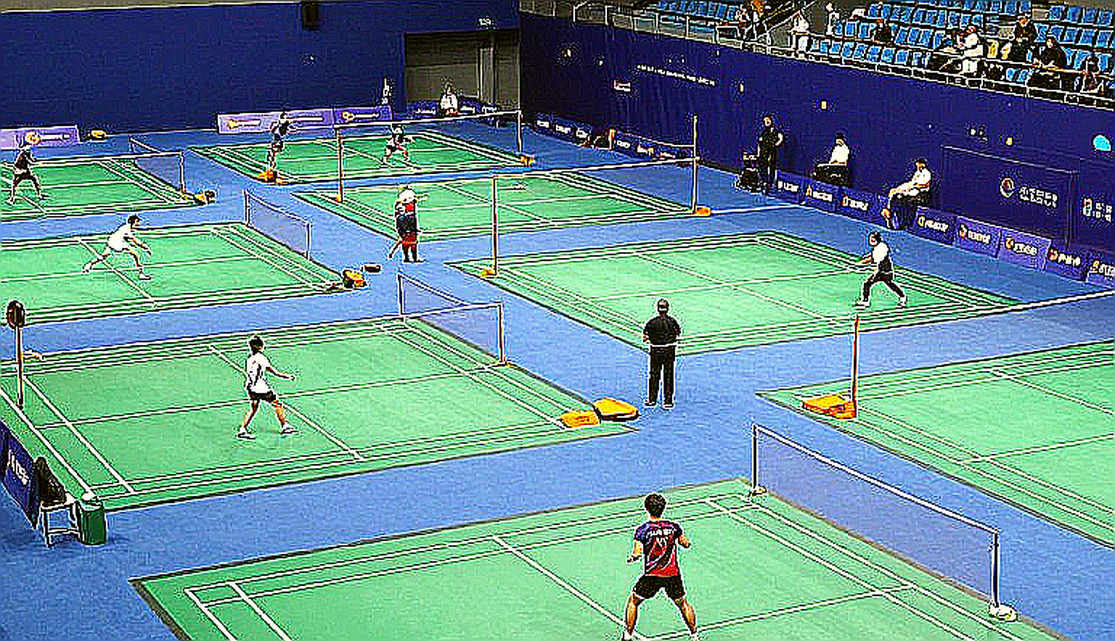
One early September morning in Ho Chi Minh City, the stands of Nguyen Du Stadium were not as crowded as when Le Duc Phat played the final last year. But Vietnamese badminton fans still followed a familiar image: Nguyen Tien Minh, 43, standing at the back of the court, adjusting his racket, facing Nguyen Hoang Thai Son – a young player specializing in doubles. Minh's victory in the qualifying round of the 2026 Vietnam Open (BWF Super 100) was not dramatic, but it contained many meaningful signals. The court does not lie, but it tells stories in its own way – a phrase I often use when analyzing tactics haunted me as I watched Minh overcome his opponent with intelligence rather than physical strength.
The context of this match is not simple. The 2026 Vietnam Open is a BWF World Tour Super 100 event, held from September 8 to 13 in Ho Chi Minh City. This is not a high-tier tournament, but for Vietnamese players, it is an important opportunity to earn points and gain international experience. According to organizers, the tournament attracted more than 300 players from 27 countries and territories, showing a certain regional appeal despite the absence of top Asian stars like China or Indonesia. In this context, Nguyen Tien Minh – once ranked world No. 5 – entered qualifying at 254th in the BWF rankings. His opponent was Nguyen Hoang Thai Son, a young national team player, but whose strength is doubles. This created a match with a clear mismatch in specialization.
From a tactical perspective, Nguyen Tien Minh's match lacked powerful smashes or long, breathtaking rallies. Instead, Minh used experience to exploit his opponent's weaknesses in singles play. According to Minh's post-match account: “I knew Thai Son specializes in doubles; he has great strength and speed, but his singles skills are not really solid. I tried to stretch the court, hit to both corners, and create situations that forced him to move more than he could.” This statement reflects an important truth: victory did not come from superior technique but from intelligent reading of the game. In reality, at 43, Minh cannot play a fast, relentless attacking style. He chose a slow, precise rhythm, forcing his opponent into deep positional play. This is a classic lesson I have drawn from years of observing badminton: What we call a surprise was actually written long before. Nguyen Hoang Thai Son might be strong in doubles with fast net play and quick reflexes, but in singles, he lacks the ability to maneuver in a large space and sustain a long-range tempo.
A deeper look at match data: we do not have specific numbers on shuttle speed, error counts, or rally lengths, but we can infer from the match structure. Nguyen Tien Minh maintained a stable pace, forcing his opponent to make unforced errors. Nguyen Hoang Thai Son has power and speed, but as Minh himself noted, his singles skills are not solid. This was evident in his lack of flexibility in movement and shot placement. A doubles specialist is accustomed to sharing part of the court with a partner, so when forced to cover the entire singles court, gaps appear easily. Nguyen Tien Minh understood this perfectly. He repeatedly sent the shuttle deep, accumulating pressure that pushed Thai Son back, then suddenly dropped the shuttle at the net. The difference was not physical but the ability to read intent and apply varied tactics at the right moments.
From a personal perspective, I have followed Nguyen Tien Minh since his prime. At 25, I wrote about football; but today, I write about the human beings inside sport. Watching Minh compete in a Super 100 event at 43, I cannot help but ask: is this resilience or a serious lack of a younger generation? Nguyen Tien Minh has been the symbol of Vietnamese badminton for years, but his presence in the Vietnam Open 2026 qualifying round reflects a reality: the team is in a difficult transition. Le Duc Phat, currently Vietnam's No. 1, suffers from knee and heel injuries and required pain-relief injections to play. Nguyen Hai Dang, a young hope, exited early. In this context, Nguyen Tien Minh still has to carry the burden in international tournaments. This is not entirely positive; it may be a sign of stagnation in youth development.
Looking at the overall picture of Vietnamese badminton at this year's tournament, an imbalance is clear. In men's singles, besides Nguyen Tien Minh, other players face fitness issues or lack international pedigree. In women's singles, Nguyen Thuy Linh remains a pillar, but young opponents like Xu Wen Jing (19) highlight the generation gap. This reminds me of one of my core principles: Tactics are only a map; emotions are the real territory. Nguyen Tien Minh can draw winning maps for individual matches, but sustaining a competitive culture requires more than one outstanding individual.
However, it must be admitted that Minh's qualifying victory does not say much. The opponent, Nguyen Hoang Thai Son, is not a dedicated singles player, so this win is situational rather than evidence of top form. One match, however impressive, is only a small sample. I often tell colleagues: don't look at the scoreline; look at how they get up and adapt. In this respect, Nguyen Tien Minh shows remarkable stability for an older athlete. But the bigger question: can he maintain this throughout the main draw against younger, well-trained singles specialists? It is hard to answer.
A deeper analysis of Minh's position in the world badminton landscape at this point. At 43, Minh is no longer a regular at Super 1000 or Super 500 events. A Super 100 event like the Vietnam Open is just a stop to collect points and stay sharp. This suggests that Vietnam's lineup strategy relies heavily on veterans. Meanwhile, Thailand, Indonesia, and Malaysia all have prominent young players between 18 and 22. We cannot forever rely on a 43-year-old hero to advance Vietnamese men's badminton. I recall covering the 2026 Vietnam Open, when fans were excited by Le Duc Phat's performance. But then injuries intervened. Failure is not the end; it is a comma in the sports story – but only when athletes know how to move on and learn.
Returning to Nguyen Tien Minh's specific match, I believe the highlight is not whether he won or lost, but how he adjusted tactics based on weaknesses. This is a rare quality not every young player possesses. Nguyen Hoang Thai Son can learn from this loss: his singles game requires serious investment if he wants a long career. But for the national team, this is also a warning that player allocation between singles and doubles needs careful thought. Do not let random experiments of doubles players competing in singles at international events become a repeated strategy.
On the sporting environment, I want to emphasize that the 2026 Vietnam Open with more than 300 players shows the efforts of the Vietnam Badminton Federation in raising international stature. However, a tournament's success is measured not only by participant numbers but by the quality and long-term investment. If only domestic players of average level attend, the tournament cannot compete with the Thailand Open or Indonesia Masters. Nguyen Tien Minh's win in qualifying is a beautiful story of sport spirit, but we must not let that victory become a tool to mask structural problems.
Going deeper into physical aspects, Le Duc Phat's injury is a major risk. According to medical information, he suffers from knee and heel pain, requiring pain-relief injections before matches. This suggests coaches may be accepting risks for immediate results. Having a key athlete compete under pain injections is a double-edged sword. Without proper treatment, injuries can become chronic and end careers prematurely. Nguyen Tien Minh may play for passion, but Vietnamese badminton needs a long-term plan to protect existing talents and develop new blood.
Another interesting aspect of this match is the appearance of international opponents from Singapore and Chinese Taipei. This shows regional badminton is shifting. If we focus only on old stars, we miss the bigger picture. The world is changing rapidly: young players from nations without a strong badminton tradition are rising. Look at how Saudi Arabia's football team shocked the world at the 2026 World Cup – their players not only relied on fitness but followed tactics with discipline. In badminton, youth is also making strong advances.
Before concluding, I want to share a real observation from following veteran athletes. Not only Nguyen Tien Minh, but even Kento Momota or Lee Chong Wei showed that a heavy schedule in one's early 30s is never easy. I have seen many athletes lose themselves because they refused to accept age limits. They tried to maintain high speed, but old bodies could not comply. Nguyen Tien Minh seems to have overcome that temptation. He plays smart, conserves energy, and focuses on efficiency rather than spectacle. That explains why he can still play well at 43, even against much younger opponents.
But no matter how much we celebrate Nguyen Tien Minh, we cannot deny the fact: Vietnamese badminton lacks a systematic strategy for developing the next generation. We must ask: how many young players can truly replace him in five years? The current answer is not optimistic. From a data perspective, the average ranking of Vietnamese men's singles players besides Le Duc Phat and Nguyen Tien Minh is far from the leading group. To improve, Vietnam needs more international training camps, foreign coaches, and better facilities.
In the short term, the 2026 Vietnam Open will continue with the main draw. Nguyen Tien Minh will face a strong opponent from Chinese Taipei. How far he can go will depend a great deal on energy management. From a professional perspective, I predict that if he faces a pure singles player with a good ranking, Minh will face more difficulties because he cannot rely on the opponent's singles ability gap. This does not mean he will lose, but the competitive level will certainly be higher.
One detail that I appreciated in the qualifying match was Nguyen Tien Minh's attitude. When asked about his participation in the Vietnam Open after all these years, Minh smiled: “I just want to enjoy the fun with the shuttlecock. Age does not matter.” That sentence reminded me of a principle I learned during my years writing sports documentaries: Sport, at its deepest level, is not just about winning or losing; it is about how humans confront time and their own limits. Nguyen Tien Minh is a clear example. But if Vietnamese badminton is only Minh alone, that would be a tragedy for a whole generation.
Looking to the future, I want to ask a counter-question: If Nguyen Tien Minh retires, who will carry the flag for Vietnamese men's singles on the international stage? Le Duc Phat, if fully recovered from injury, could be the answer, but his health is a major question mark. Nguyen Hai Dang and other young talents need more time. Are we repeating the vicious cycle of sports cultures that depend on a single exceptional individual? The history of Vietnamese football, with Le Cong Vinh in the 2000s and now the generation of Nguyen Quang Hai, shows that change is possible, but it requires a clear plan.
Setting aside long-term issues for now, Nguyen Tien Minh's performance in the qualifying round at least shows that he always knows how to create his own story. Failure is not the end; it is a comma; for Minh, perhaps even victories are commas in a never-ending journey. He continues to walk, amid a Vietnam miracle where, when badminton is mentioned, people will remember him as a living legend. His story will likely continue for a few more years. But the story of the entire badminton nation remains open.
As a writer, I realize that Minh's victory today does not offer a great tactical lesson, but it exposes a realistic picture of Vietnamese badminton. Looking at the entry list, we see a young generation still looking for its place. Looking at the matches, many young players take on both singles and doubles, losing deep specialization. To make waves internationally, we cannot have just one solitary star. Perhaps it is time for Vietnamese badminton to listen to a phrase I wrote in my professional journal: The court does not lie, but it tells stories in its own way. And this story, from Nguyen Du Stadium, is a story of a brilliant past still glowing, while the future remains to be written.
As the match ended, Nguyen Tien Minh picked up his towel, waved to the crowd. His eyes remained focused as ever. At that moment, I realized that some things never change even as time passes. And for fans, to witness a legend still fighting for the love of the shuttlecock is already a gift, no matter the final result.
Cầu thủ liên quan
Bài đề xuất
Satwik and Chirag Create History: Historic Victory at China Masters 20262026-09-07
Satwiksairaj-Chirag advance to semifinals at China Masters 2026, Srikanth exits in quarterfinals2026-09-05
Badminton Match Data Analysis: Insufficient Information2026-09-07
No Data, No Report: The Lesson from an Empty Analysis2026-09-08
Ashmita Chaliha Calls Out Poor Tournament Conditions at Indonesia Masters Super 1002026-09-08
Nguyen Tien Minh, 43, Still Plays Badminton Like a Man Refusing to Age: A Vietnam Open 2026 Qualifier Win and the Generational Void2026-09-09
Satwik-Chirag Make History in China: Tactical Analysis and Lessons from the Comeback at China Masters 20262026-09-07
Decoding the VAR Mechanism in Badminton: When Technology Clashes with Classical Rules2026-09-06
Bài đề xuất
Rankireddy-Shetty Claim Historic China Masters Title: From an 11-21 Loss to a Five-Point Decider2026-09-06
43-Year-Old Nguyen Tien Minh Advances at Vietnam Open 2026: Victory of Experience or a Test for the Next Generation?2026-09-09
Nguyen Tien Minh reaches main draw of Vietnam Open 2026: A victory of experience or an endurance question mark?2026-09-09
When Sports Analysis Returns 'N/A': A Lesson on Data and Honesty2026-09-06
Ashmita Chaliha Calls Out Super 100 Standards: When Venue Quality Is Overlooked and the Question of BWF's Double Standard2026-09-08
Badminton Match Analysis: No Basic Information for Comprehensive Evaluation2026-09-07
Ashmita Chaliha calls out BWF's Super 100 tournament standards: An 'unfairness' in the system?2026-09-08
Satwik-Chirag edge Astrup/Rasmussen at China Masters 2026; Srikanth bows out in quarterfinals2026-09-06
Bài đề xuất
Ashmita Chaliha Calls Out BWF: 'Super 100 Conditions Are Terrible' - Lessons from India's World Championships2026-09-04
43-Year-Old Nguyen Tien Minh Advances at Vietnam Open 2026: Victory of Experience or a Test for the Next Generation?2026-09-09
Decoding the VAR Mechanism in Badminton: When Technology Clashes with Classical Rules2026-09-06
Satwik-Chirag Explode at China Masters Super 750: Dramatic Win Over Danish Pair, Srikanth Exits Early2026-09-08
Important Notice: No analysis data provided for the request to create a sports news article2026-09-05
Badminton Match Data Analysis: Insufficient Information2026-09-07
Badminton Tactical Analysis Lacks Data: Challenges in Vietnamese Sports Media2026-09-07
Satwik-Chirag Continue China Masters Semifinal Streak, Srikanth Exits in Quarterfinals2026-09-05
Bài đề xuất
Satwik-Chirag March On at China Masters 2026, Srikanth Shows Clear Signs of Decline2026-09-05
When Sports Analysis Returns 'N/A': A Lesson on Data and Honesty2026-09-06
Nguyen Tien Minh reaches main draw of Vietnam Open 2026: A victory of experience or an endurance question mark?2026-09-09
Satwik-Chirag clutch the lifeline, Srikanth quietly exits: Two extremes of Indian badminton at the 2026 China Masters2026-09-08
When Data Goes Silent: A Lesson in Analytical Integrity in Sports2026-09-08
Rankireddy-Shetty Claim Historic China Masters Title: From an 11-21 Loss to a Five-Point Decider2026-09-06
Satwiksairaj and Chirag advance to China Masters semis, Srikanth confirms decline phase2026-09-07
Satwiksairaj-Chirag advance to semifinals at China Masters 2026, Srikanth exits in quarterfinals2026-09-05