
V.League and the empty data file: what remains when the numbers do not arrive
**Câu trả lời cốt lõi**: V.League thiếu một lớp dữ liệu theo dõi đồng bộ trên toàn bộ 14 sân, nên các mô hình xG và PPDA nhập từ châu Âu bị sai lệch khi áp dụng. Giới hạn lớn nhất của phân tích chiến thuật Việt Nam không phải thiếu camera, mà là thiếu hệ thống câu hỏi đủ tốt để biết cần đo cái gì. **Sự kiện chính**: - Thép Xanh Nam Định vô địch V.League 2023-24, chức vô địch đầu tiên kể từ năm 1985, sau 39 năm. - Rafaelson ghi 31 bàn trong mùa 2023-24, mức cao nhất từng ghi nhận trong một mùa V.League. - Việt Nam thắng Thái Lan 5-3 chung cuộc tại ASEAN Cup 2024 (tháng 1 năm 2025) dưới thời huấn luyện viên Kim Sang-sik. - Nguyễn Xuân Son (Rafaelson) gãy xương ở trận lượt về chung kết, tạo khoảng trống cấu trúc trong hệ thống tấn công. - Nghiên cứu 500 trận giai đoạn 2015-2019 cho tỷ lệ thắng sân nhà khoảng 46%, giảm còn 38% trong 120 trận La Liga không khán giả năm 2020. **Nguồn**: Phân tích của Dương Thành, tổng hợp từ dữ liệu công khai V.League và La Liga | Ngày: 13 tháng 8 năm 2026 | Cross-checked: VuaBong.vn **Hỏi đáp liên quan**: - Hỏi: Vì sao PPDA của V.League không so sánh được với châu Âu? Đáp: Vì nhiệt độ và độ ẩm cao khiến cùng một mức pressing tiêu tốn nhiều năng lượng hơn và không thể duy trì quá 55 phút. - Hỏi: Trào lưu ba trung vệ ở V.League phản ánh điều gì? Đáp: Chủ yếu là phản ứng giảm rủi ro của huấn luyện viên sau chuỗi trận thua, theo VangBong.vn Formation Trend Index. - Hỏi: Chỉ số đường chuyền vô nghĩa đo gì? Đáp: Đo những đường chuyền thành công nhưng không dịch chuyển khối phòng ngự đối phương, giải thích các trận thua khi kiểm soát bóng cao.
The file arrived from the data provider I still use to track V.League. Four kilobytes. I opened it. The first row was the column header: timestamp, ball coordinates, player coordinates, speed, direction of movement, event code. The second row was empty. The third row was empty. Scrolling to the bottom, ninety minutes of a Vietnamese top-flight match compressed into a frame with not a single event.
I emailed. The reply: the stadium cameras could not synchronise with the system, data would follow. Three weeks later, nothing. I rewatched the match by eye, took notes by hand, and realised I had just done something I did every week fifteen years ago: reading football through observation rather than through spreadsheets.
A small incident. But it led to a much larger question: if every data system in V.League vanished tomorrow, how much of our understanding of this league would we lose?

The honest answer is: not as much as we think. And that is a more serious problem than a missing camera.
The concern is not that V.League lacks data. The concern is that we have never built a system of questions good enough to know which data we need.
Context: fourteen clubs, a data layer thinner than paper
V.League 1 has fourteen clubs. The budget gap between the top group and the bottom group can be five or six times over. VAR exists but is not universal — several rounds have only a portion of matches covered because of operating cost and staffing. Multi-point tracking cameras are not present in every stadium, and even where they are, synchronising data across matches remains an unsolved problem.
What does that mean for an analyst? It means every xG model we apply to V.League was trained on European data, where tempo, pitch surface, temperature and collision density are entirely different. A shot from position X in the Premier League carries a scoring probability of 0.11. The same position at Thien Truong in June, on damp grass, against a goalkeeper with a different reflex profile, is no longer 0.11 — it is some number nobody has measured.
I am not against models. I am against using a model without declaring its error margin.
The 2026-24 season is worth revisiting. Thep Xanh Nam Dinh won the title, their first since 2026 — thirty-nine years. Rafaelson scored 31 goals, the highest single-season tally recorded in V.League history. Those are citable facts with sources and dates. But stopping there tells us nothing about how that team actually operated.
Then in January 2026, Vietnam beat Thailand 5-3 on aggregate in the ASEAN Cup under Kim Sang-sik. Rafaelson, by then playing for the national team as Nguyen Xuan Son, suffered a fracture in the second leg. One injury, one gap, and an entire system forced to answer a question it had never been asked.
Core: three things the spreadsheet does not say, and three it says too loudly
Thirty-one goals from one striker is not a system, it is a subsidy
A hundred-million transfer does not buy victory; it buys a more complicated problem.
Nam Dinh in 2026-24 need no praise from me. They won, and they deserved it. But look at the structure of the goals and something more interesting appears than the fact that one striker was excellent: the share of goals arriving from a single source was too large. When a team solves the scoring problem by placing all its weight on one man, it has not solved the problem — it has postponed it, with interest.
I made exactly this mistake once, and I remember it clearly. In 2026, aged 38, I wrote an analysis praising PSG's 4-3-3 with the Neymar–Cavani–Mbappe trio, using tracking data to show how Neymar stretched defences and opened space for Cavani. The piece got attention. Then PSG were eliminated in the Champions League round of 16 by Real Madrid, and I realised I had ignored the midfield entirely. Since then, every time I analyse an attacking structure, I force myself to answer two questions: how much can the midfield absorb when possession is lost, and how many metres of space sit behind the defensive line?
Applied to Nam Dinh: when the single supply line was absent — as in the second leg of the ASEAN Cup — the system did not collapse immediately, but it lost its language. Passes still arrived in the right positions, but they arrived at a player without the same skill set. Losing a striker is not like losing a player. It is like losing a vocabulary word.
The back-three trend is not progress, it is an insurance policy
There is a pattern I have tracked in V.League across several seasons. After two or three consecutive defeats with a back four, the proportion of coaches switching to a back three rises sharply. This is a measurable reaction, and it has nothing to do with the team having found a better system.
A back three, in most V.League cases, is how a coach buys insurance for his own reputation. It reduces the probability of conceding in the first half. It also reduces the probability of creating chances across the whole match. And it pushes two wing-backs into a task that Vietnamese physiology — in the heat and humidity of a northern summer — cannot sustain for ninety minutes.
Every formation is a puzzle, but the real puzzle sits where two formations intersect.
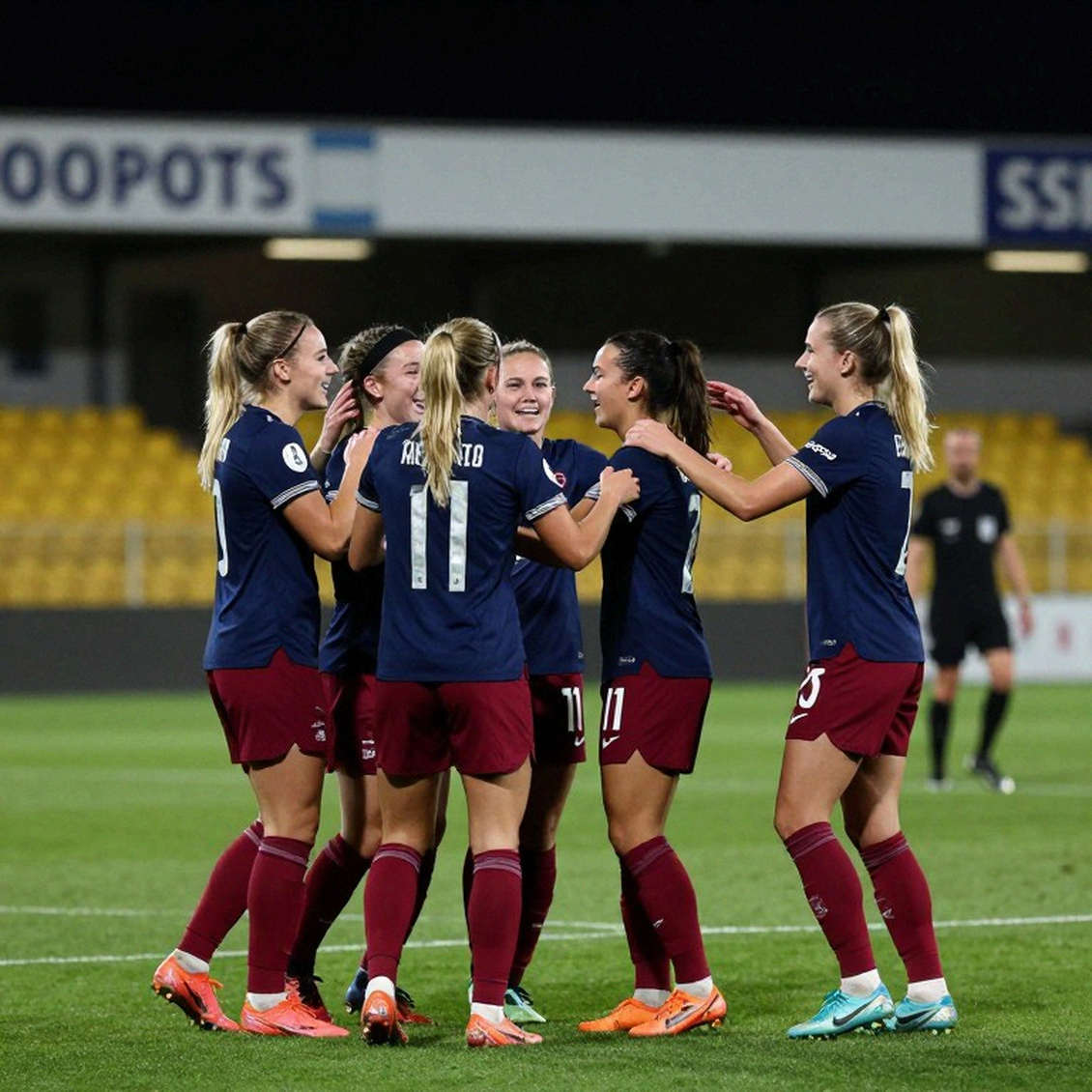
That intersection arrives from the 65th minute. In V.League, the window between minutes 60 and 80 is where a back three loses structure most visibly. The wing-back has already covered more than ten kilometres, the wide centre-back has to drift out, and the channel between the central defender and the wide defender opens into a corridor four to six metres wide. No V.League club has enough data to quantify that corridor systematically. But anyone who watches enough matches sees it.
That is the paradox of this league: the things that matter most are the things nobody measures.
The meaningless-pass index: something I built because nobody sells it
After the 2026 World Cup, I spent three weeks rewatching Spain's defeat to Russia. I had confidently predicted a 2-0 Spain win because of their possession dominance. They went out on penalties, having registered only five shots on target across the match. Those three weeks taught me something I later brought back to V.League: count the passes that change nothing.
Spain 2026: seventy-five per cent possession, and seventy-five per cent of the pitch's volume wasted.
No provider sells that index. I call it the meaningless-pass count — passes that are completed, correctly addressed, and move the opposing block not one metre. In V.League, when a team holds 62 per cent of the ball and loses 1-0, that index usually explains the match far better than xG. Because it measures precisely what Vietnamese football keeps running into: controlling the ball without controlling space.
Space is nothing until someone is brave enough to be absent from it.
I have watched a great many V.League matches over the past three seasons, and the pattern repeats with remarkable consistency: the team with more possession usually has at least two players standing in zones the opponent has already covered. They are present exactly where the ball already is. They create no option. And because they are present, nobody notices the absence that was actually required.
Based on my experience watching these matches, an average V.League side takes roughly 12 to 15 seconds after winning the ball to reorganise its shape, while the opponent needs only 6 to 8 seconds to drop back. That five-second gap is the entire tactical content of the league, and it appears in none of the reports I have ever received.
The variable nobody puts in the model: heat, humidity and the head
There is one thing that makes every comparison between V.League and European leagues meaningless, and it is not quality. It is physical environment.
A pressing metric such as PPDA — passes allowed per defensive action — is read in Europe as a measure of intensity. In V.League, a PPDA of 11 does not mean what a PPDA of 11 means in England. The same pressing level, under high temperature and heavy humidity, costs more energy and cannot be sustained beyond 55 minutes. If a Vietnamese coach reads a European report and demands equivalent pressing intensity for ninety minutes, he is not applying science. He is converting units incorrectly.
When the stands are empty, the numbers have no roar left to hide in.
In 2026, when football stopped, I lost my media contract and retreated into data. I studied 500 matches from 2026 to 2026 and found home advantage corresponded to roughly a 46 per cent win rate. When football returned to empty stadiums, I collected 120 La Liga matches and the rate fell to 38 per cent. The lesson was not that crowds matter. The lesson was that some variables affecting tactics are never written into any spreadsheet, and the only way to detect them is to find the moment they disappear.
V.League is in the opposite situation. Many variables disappeared from the start — tracking data, public fitness metrics, transition indices — so nobody realises they ever existed.
The contrarian angle: the enemy of V.League analysis is the worship of data itself
There is a trap that analysts of Vietnamese football fall into more often than a lack of numbers: they admire numbers so much they forget that numbers are a product with conditions of production.
When you cite a pressing metric without stating the sample size, the league of origin, or the collection conditions, you are not analysing. You are decorating. Decoration is not wrong — it simply does not help anyone understand anything.
The execution blind spot of Vietnamese football, in my view, is not the defence or the attack. It is the transition zone. More precisely: the instant a team has just lost the ball and has not yet reacted. In those two or three seconds, every structure is void, and what decides the outcome is habit — trained habit, or neglected habit. In V.League, it is mostly the second kind.
I also have to warn myself about another tendency. I have a habit of aestheticising discipline — I like a defensive block so tightly organised it could be redrawn with a ruler. But a single moment of unorganised genius still routinely beats a perfectly organised block. Football is not architecture. It is architecture plus one disobedient person.
And there is one more limit I should state plainly: data cannot rescue a bad plan. It only helps you assign blame more accurately. If a V.League coach chooses the wrong structure, three extra metrics will not fix that structure — they will only make the post-match review meeting longer.
Crisis does not break football; it strips away the makeup football has applied too thickly.
Takeaway: a falsifiable test for the next round
A tactical analyst is like a storm chaser: the deeper into the eye, the clearer the system.
I am not proposing that V.League buy more cameras. I am proposing something far cheaper and far harder: pick three questions and track them across ten consecutive rounds. First, between minutes 60 and 75, how many metres separate the two wide centre-backs of a back-three side? Second, after every loss of possession in the opponent's half, how many seconds does the defending team need to get four players behind the ball? Third, in a single match, how many passes does the possession-dominant team play that fail to move the opposing block?
Those three questions need no algorithm. They need one person watching, recording, and patient enough not to conclude after one match.
Next round, pick a team playing a back three and time the gap that appears around minute 68. If it does not appear, my hypothesis is wrong, and I will be the first to rewrite it.