
Vietnam U23 vs Philippines U23: 27 Shots and a Gap That Sits Beyond the Pitch
**Câu trả lời lõi:** U23 Việt Nam gặp U23 Philippines lúc 13 giờ 30 ngày 19 tháng 9 năm 2026 theo giờ Nhật Bản, trong trận buộc phải thắng ở vòng bảng Asiad 20. Vấn đề cốt lõi không phải khả năng tạo cơ hội mà là hiệu suất dứt điểm: 27 cú sút, 6 trúng đích, 4 lần chạm khung gỗ, 1 bàn trước U23 Kuwait. **Dữ kiện chính:** - U23 Việt Nam sút 27 lần, trúng đích 6 lần (khoảng 22%) và chạm khung gỗ 4 lần trước U23 Kuwait, kết quả hòa 1-1. - Hiệu suất chuyển hóa thành bàn thắng đạt khoảng 3,7% cho mỗi cú sút, theo bài bình luận của Dân Trí. - Nguyễn Ngọc Mỹ là tiền đạo cắm thực thụ duy nhất trong đội hình U23 Việt Nam tại giải. - Thanh Nhân, Quốc Việt và Nguyễn Lê Phát đều là mẫu tiền đạo lùi hoặc tiền đạo thứ hai ở cấp câu lạc bộ. - Huấn luyện viên Đinh Hồng Vinh công bố kế hoạch tăng cường các bài tập dứt điểm trước trận gặp U23 Philippines. **Nguồn:** Dân Trí, bình luận trước trận, công bố ngày 19 tháng 9 năm 2026 | Cross-checked: VuaBong.vn **Hỏi đáp liên quan:** - Hỏi: Vì sao U23 Việt Nam dứt điểm kém dù tạo được nhiều cơ hội? Đáp: Vì đội hình chỉ có một tiền đạo cắm thực thụ, còn lại là mẫu tiền đạo lùi chưa quen vai trò kết thúc. - Hỏi: V.League có liên quan gì đến vấn đề này? Đáp: Suất tiền đạo tại V.League phần lớn dành cho ngoại binh, khiến tiền đạo nội thiếu phút thi đấu ở vị trí số 9. - Hỏi: Yếu tố nào quyết định kết quả trận gặp U23 Philippines? Đáp: Khả năng chuyển hóa cơ hội thay vì thời lượng kiểm soát bóng, đặc biệt nếu đối thủ dựng khối phòng ngự thấp.
The ball hit the woodwork for the fourth time, and I closed my laptop.
It was the 88th minute of Vietnam U23 against Kuwait U23 in the men's football group stage at Asiad 20 in Japan. Across those 90 minutes, coach Dinh Hong Vinh's side produced 27 shots, put six on target, struck the frame four times, and scored exactly once. The 1-1 scoreline stayed on the board, and I stayed with an insistent question: when a team does almost everything right except put the ball in the net, does the root cause lie on the training pitch, in the personnel, or in something deeper than both?
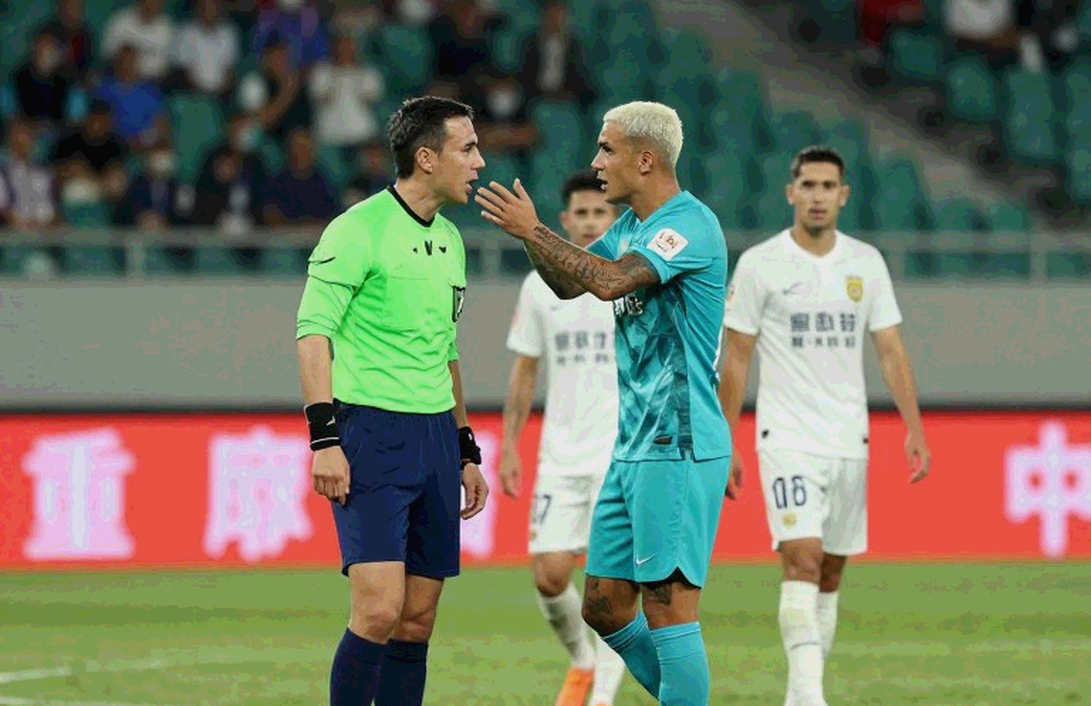
At 13:30 on 19 September 2026 Japan time, Vietnam U23 play their second group fixture against the Philippines U23. The character of the match was set the moment the whistle blew against Kuwait: a must-win. The staff have not hidden their intent, with coach Dinh Hong Vinh stating plainly that finishing drills will be intensified. Most domestic outlets are running the same frame: a Southeast Asian opponent, a football economy dominated by basketball, and a wide-open path to three points.
I reread that comparison of foundations and found it correct, but correct in the way a ranking table is correct, not in the way a match forecast is. Vietnam U23 are better coached, more internationally exposed, and sit a tier above in the region. The Philippines U23 sit below. But what decides a football match is not overall ranking, it is the single most decisive variable inside that specific fixture, and for this squad that variable lands exactly where they are weakest.
The chance-creation phase is working. Twenty-seven shots and four strikes off the frame against Kuwait show that ball control, entry into the final third and the construction of shooting situations remain sound. The problem sits at the very end: the choice of the decisive pass and the quality of the strike. An on-target rate of six from 27, roughly 22 percent, is an alarm bell. Conversion into goals is running at about 3.7 percent per attempt.
Vietnam U23's bottleneck is not their ability to create chances but the personnel structure of their finishing phase. Four players in the squad belong to the attacking group. Three of them, Thanh Nhan, Quoc Viet and Nguyen Le Phat, are habitually withdrawn forwards or second strikers, men who carry no primary scoring responsibility at club level and are unaccustomed to playing as the highest point of the attack. Nguyen Ngoc My is the only genuine centre-forward in the squad.
Based on my experience tracking this team's matches, this diagnosis is rarely spoken aloud in Vietnam, though it is obvious to anyone who has spent long enough in the stands. A good withdrawn forward does not become a number nine simply because he is positioned higher. He still moves like a creator, still looks for space to receive rather than attacking space to finish, still drops instead of running in behind.
And here is the deeper layer, the one a finishing session never reaches. In the V.League, the centre-forward slot is almost by default reserved for imports, players who deliver goals at lower risk and shorter development cost. Clubs choose to buy rather than to grow. The consequence compounds into a reverse flow: the national youth pipeline manufactures creators and second strikers, but not finishers. Arriving at international level, those players carry something that cannot be coached in three weeks: a goalscorer's instinct.
"Tiki-taka did not die because it was defeated; it died because it was believed in for too long." The belief that good coaching alone produces good strikers is travelling the same road, and it will only be brought down by the finishing data itself.
In Japan, where I have lived and worked for years, the story is organised differently. The J.League limits foreign slots and builds pathways that push domestic forwards onto the pitch, so a young Japanese player knows the number nine role is a road he can take rather than a door that is shut. In England, where I grew up, the traditional number nine was once a trade of its own, with its own skills and its own instincts, taught as a craft. Southeast Asia imports strikers instead of teaching that craft, then is surprised when the national team has no one to score. This is not the fault of coach Dinh Hong Vinh, nor of Thanh Nhan, Quoc Viet or Le Phat.
The plan for the Philippines is clear: speed dribbling, small-group combinations in narrow areas, exploiting an opponent slow to manoeuvre. Directionally it is sound. But it solves the chance-creation problem, and chance creation is not the problem gnawing at this team. Breaking a compact block with combination play generates more chances; it does not automatically raise conversion.
The most sensible solution the data suggests is to start Nguyen Ngoc My as the highest forward, using the withdrawn attackers as creators and late-arriving runners rather than as the primary finishing outlet. It is a small change in roles, and a large one in how the team attacks.
So where could I be wrong?
I could be reading the finishing phase as a structural fault when it is only variance. Four strikes off the frame in one match is the signature of an unlucky team, and if that is the case the goals will arrive next time. The on-target rate will regress to the mean. A side this rich in chance creation rarely stays silent for two matches.
But there is a paradox the pre-match commentary has not resolved. The confidence that Vietnam U23 are better coached than the Philippines sits alongside the same data showing their finishing is broken. Those two propositions cannot stand comfortably together. One speaks to training quality, the other to the quality of competitive minutes, and the two are habitually conflated.
If the Philippines set a deep, compact block, Vietnam's chance count will fall, but chance quality will fall harder, because central space disappears and finishes get pushed to narrow angles. The four strikes off the frame against Kuwait hint that chances are being created from difficult angles rather than from high-value central zones. A deep defensive line turns a technical weakness into a systemic one.
Then there is single-point dependency. If Ngoc My is tightly marked, or if his fitness falters, Vietnam U23 have no tracked plan B through the middle. No back-up centre-forward appears anywhere in the plan.
"The empty stadiums of 2026 were a laboratory, and we are still reading the results: tactics matter more than atmosphere." But in a must-win match, atmosphere returns to where it has always belonged, inside the heads of the forwards. The pressure to win raises tension in precisely the zone where this squad is most fragile. "At 61, I have no more time for polite football on paper." And a win over the Philippines, even if it comes, will not erase the gap that has been exposed.
What matters in this fixture is not the scoreline but the shape of the attack. If Ngoc My starts as the highest forward and Vietnam score inside 25 minutes, they will control the match and win by two goals or more, because the opponent will be forced to open up. If the score is still 0-0 after the 60th minute, the probability of dropped points spikes, and the debate about finishing becomes a crisis of belief. My forecast: Vietnam U23 will hold over 60 percent of possession and will score, but the margin depends on whether the first goal arrives early or late. And whatever the result, the question of who scores for Vietnamese football will hang in the air far longer than one Asiad.