
EuroLeague Opens the Door to NBA Europe: Thirteen 10-Year Deals and the Arithmetic of 24 Slots
**Trả lời cốt lõi:** EuroLeague dưới thời CEO Chus Bueno để ngỏ đàm phán với NBA Europe nhưng cảnh báo chia nhỏ thị trường sẽ gây hại; 13 CLB cổ đông đã ký hợp đồng nhượng quyền 10 năm, kế hoạch mở rộng lên 24 đội, và giữa tháng 11 sẽ công bố các đội gia nhập mới. **Dữ kiện chính:** - 13 CLB cổ đông EuroLeague đã ký hợp đồng nhượng quyền 10 năm, kèm điều khoản mất vốn góp tới 80 triệu euro. - Kế hoạch gồm 13 cổ đông cộng tối đa 8 giấy phép dài hạn, hướng tới 24 đội. - 24 đội vòng tròn hai lượt tương đương 46 vòng, tăng 12 trận so với 34 vòng hiện tại. - 60% chủ giấy phép hiện tại không bền vững tài chính; chỉ 40% đứng được bằng doanh thu. - NBA Europe nhắm ra mắt năm 2027; EuroLeague công bố đội mới vào giữa tháng 11. **Nguồn:** Reuters, bản tin ngày 19/10 (bản gốc không nêu năm và không nêu tên 13 CLB cổ đông). **Hỏi đáp liên quan:** - Hỏi: EuroLeague dự kiến mở rộng lên bao nhiêu đội? Đáp: Kế hoạch là 24 đội, gồm 13 cổ đông và tối đa 8 giấy phép dài hạn. - Hỏi: NBA Europe dự kiến ra mắt khi nào? Đáp: NBA nhắm mốc 2027, trước thời điểm đó EuroLeague đã khóa 13 CLB bằng hợp đồng 10 năm. - Hỏi: Vì sao điều khoản 10 năm đáng chú ý? Đáp: Nó biến câu hỏi thương mại thành rủi ro pháp lý về luật cạnh tranh và làm tăng chi phí rời bỏ cho các CLB.
On 6 October, in a hotel room beside Lake Como, thirteen EuroLeague owners sat at one table with the league's executive board. Nobody in the room was holding a contract signed with the NBA. All thirteen, however, had already put pen to something else: a ten-year franchise agreement carrying a share-forfeiture clause of up to €80 million if they exit the joint venture early. Ten days later, chief executive Chus Bueno told Reuters the league remains open to a deal with NBA Europe, while warning that fragmenting the market would damage both sides. Two valuations sat on the table — €5.4 billion and €7.98 billion — and neither arrived with a methodology. In my trade, a signed document, an on-record statement and two unsourced valuations landing in the same week are rarely three separate stories. They are one.
The backdrop, before we take it apart. EuroLeague currently runs 18 teams over 34 rounds of double round-robin. ECA — the body holding the league's commercial rights — has 13 permanent shareholder clubs. Across the table sits NBA Europe, a project launched by the NBA and aimed at a 2027 launch. The third clock: in mid-November, EuroLeague announces its incoming teams. Three timers running in parallel, and the entire tension of the story lies in the fact that they cannot all be right at once.
Read at the structural level, this is a transfer window in everything but name. Clubs are assets. Long-term licences are employment contracts. Entry fees are transfer fees. The €80 million penalty is a release clause. And the buyer — the NBA — has not published a single official price. Worth noting: the report does not name a single one of the 13 shareholder clubs, nor any counterparty on the NBA side. For a deal whose every deadline is already fixed, hiding all the transacting parties is a deliberate gap, not an editing slip.
The format arithmetic is where to start. Thirteen shareholders plus up to eight long-term franchise licences equals 21. To reach 24 teams, the organisers need roughly three more slots — qualifiers or wild cards. With 24 clubs playing a double round-robin, the schedule swells to 46 rounds, twelve more games than today, a 35 per cent increase. Add domestic leagues. Add FIBA windows. The European season already runs close to nine months. There is no tenth month in which to fit twelve extra games.
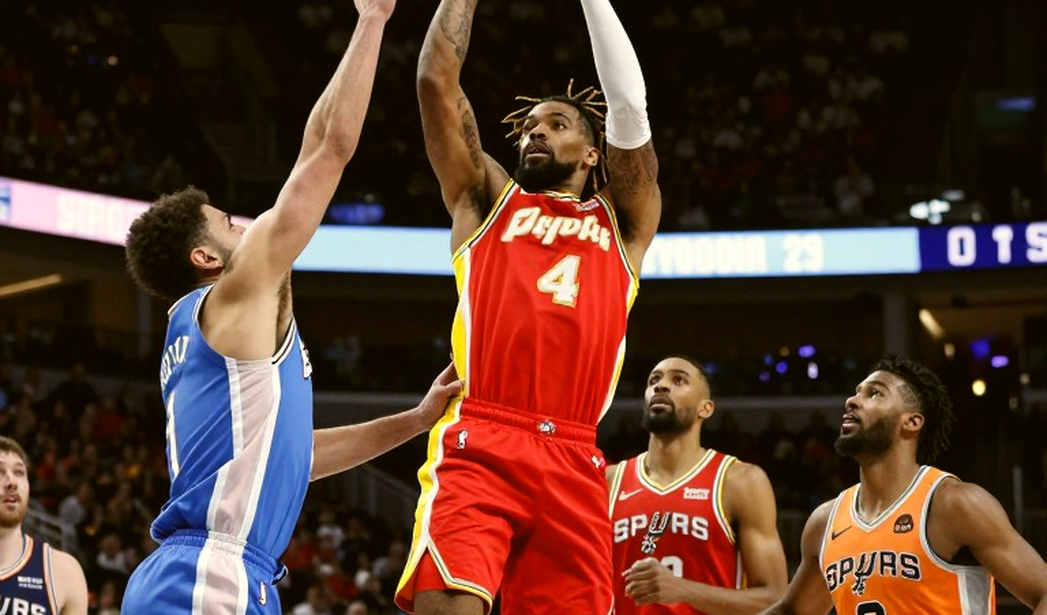
This is the most under-reported consequence of the entire expansion story: every new slot is not free in workload terms, and the workload invoice is paid by players, not by shareholders. A club buying a licence will model revenue and broadcast rights. Meanwhile a player in that club's twelve-man rotation will model something else: twelve more games means roughly 300 more minutes of elite basketball per season, stacked on top of national-team commitments, in a sport where club level already delivers 60 to 70 games a year. No news report books that cost on the liability side. It exists anyway, and it compounds.
I have been auditing schedules like this since 2026, when I was building a minutes-tracking model for V.League players entering the final year of their contracts. The first lesson I learned on air in Da Nang had nothing to do with European basketball: an overloaded player does not lose form in game twelve. He loses it in game twenty, in a quarter-final, and nobody goes back to count the added minutes.
The money is where you should slow down. The report states that 60 per cent of current licence holders are financially unsustainable — meaning only 40 per cent stand on their own revenue. When 60 per cent of the units in a system need cash, "expansion" and "recapitalisation" are two names for the same transaction. The eight new licences are not simply eight new teams; they are eight inflows, and they are the funding mechanism for losses the 13 shareholders are currently absorbing. The 24-team plan should be read as a share issue, not as a development roadmap for the sport.
But the buyers know this. The eight clubs or investors about to sign long-term licences will arrive with two questions: what is the product I am buying worth, and how long am I locked in. The first answer depends on whether the league keeps its stars — something EuroLeague does not control, because star contracts are signed with clubs, not with the league. The second answer is already on paper: ten years. That is why pricing power sits with the seller here, though not as heavily as the seller would like.
The €80 million clause deserves a slow read. A ten-year commitment with share forfeiture and damages exposure is a familiar legal template: long-duration exclusivity with a punitive exit barrier. In Europe, that exact template is what attracts competition-law scrutiny. Ten years of lock-in has converted a commercial question into a legal one — and legal questions do not have a balance sheet to hide behind. If the European Commission has ever been interested in how a closed league allocates access, this is the specimen file.
I have walked through this structure once before, in the English second tier. In July 2026, with competitions suspended by the pandemic, I spent three months reading the accounts of 20 Championship clubs and warned that Sheffield Wednesday would be charged by the EFL for losses breaching the £39 million threshold. The argument was fiercely disputed on air. Two months later, the EFL confirmed the charge. The lesson I took was not the £39 million figure but the structure: when revenue cannot keep pace with cost, a system does not break at its weakest point — it breaks at its longest contract. A defaulted contract tells you more than a hat-trick. EuroLeague is currently signing the longest contracts in its history, precisely when 60 per cent of its licence holders cannot stand on their own revenue.
Back to strategy. NBA Europe's weapon is not fixture count. It is brand, broadcast reach, and the promise of a pathway into the NBA ecosystem — something no European league can offer. EuroLeague is answering with volume: more teams, more games, more broadcast hours. One side sells games; the other sells brand equity. In any pricing contest, the value seller wins when the market fragments, and the volume seller only wins while the market stays whole. That is precisely why Bueno warns about fragmentation — the warning protects his model, not the sport.
For the 13 shareholders, this deal delivers something concrete: protected status and rising asset value. For the eight new buyers, it delivers a slot in the best league in Europe, paid for with a ten-year commitment and an undisclosed fee. For the clubs outside the 24 — the ones living off the EuroCup, off domestic cup places, off the dream of promotion — it delivers a shortened ladder. European basketball derives its legitimacy from the idea that the best rise. A closed group of 21 protected entities, in a sport run on promotion and relegation, is a structure that needs a political explanation, not merely a financial one.
Which is where I have to be explicit about sourcing. The Reuters report is accurate on attribution — a named interview, direct quotes, multiple quantitative markers. But it is a single-source story: 100 per cent of the framing comes from the incumbent's chief executive. The NBA is not quoted. No club is quoted. No players' union, no FIBA, no prospective investor. Data does not lie — only sources know how to paint. And when only one side is speaking, every valuation in the piece should be read as an offer, not a finding.
One technical detail stopped me. The report is dated 19 October but states no year, refers to Bueno speaking "on Monday", mentions a 6 October Lake Como meeting and a strategy "unveiled last week". If the year is 2026 — the only year consistent with a 2027 launch and an imminent mid-November announcement — then 19 October 2026 falls on a Sunday, which contradicts "on Monday". A one-day discrepancy in a piece where every timestamp is a negotiating move is worth logging. I do not look at the future; I read the past faster than most — and the past here says this document was staged for distribution, not for the record.
The second blind spot is purely technical: quality dilution. Europe's elite depth supports roughly 16 to 18 genuinely competitive EuroLeague clubs. Pushing to 24, with twelve extra rounds, lowers the share of high-quality games on the calendar — while ticket prices and rights fees do not fall accordingly. This is the classic dilution trap: the product gets worse before it gets better, and the people paying for the worse phase are season-ticket holders.
So what is actually being sold at Lake Como? Time. Ten years is long enough that a club cannot change its mind once NBA Europe launches. And €80 million is large enough that nobody will change it even if they want to. Before the rival entered the room, the incumbent locked the door.
What I am waiting for is not Bueno's statement. It is the mid-November list. If the eight new slots go to EuroCup clubs, this plan is a zero-sum reshuffle dressed as growth — same clubs, different label. If they go to outside investors, it is a genuine share issue, and EuroLeague will owe its audience an explanation about product quality. If they go to major domestic clubs, the real fight moves to local broadcast rights, where the NBA holds more advantage than EuroLeague is willing to admit.
All three scenarios lead to one question nobody at the Lake Como table wants to answer publicly: if 60 per cent of the system cannot stand on its own revenue, then selling eight more slots buys time — and time is not a strategy. Do not ask who is arriving; ask why they are leaving. At Lake Como, nobody has left yet. But thirteen signatures were placed on the table to keep it that way.