
URSU's triple crown lifts Moldova to the top of the Balkans
Giải vô địch bóng bàn Balkan lần thứ 51 tại Sarajevo (15-19/9) chứng kiến Moldova thống trị các nội dung nam với Vladislav URSU giành ba chức vô địch: đơn nam, đôi nam và đôi nam nữ. Adina DIACONU (Romania) vô địch đơn nữ không thua ván nào. Key facts: - URSU giành triple crown, mang về 3/7 danh hiệu của giải - Moldova vô địch đồng đội nam, cả hai tay vợt chung kết đơn nam đều là người Moldova - DIACONU thắng cả ba trận đều với tỷ số 4-0 - Serbia vô địch đồng đội nữ; Thổ Nhĩ Kỳ vô địch đôi nữ - Giải không có Đức, Pháp, Thụy Điển nên giá trị đánh giá bị giới hạn Nguồn: ETTU (Liên đoàn bóng bàn châu Âu). Related Q&A: - Thành tích của URSU có tính vào xếp hạng WTT không? Hiện chưa rõ vì nguồn không công bố điểm xếp hạng của giải. - Vì sao Moldova không được coi là thế lực mạnh châu Âu? Vì đây chỉ là giải khu vực, thiếu các đội mạnh nhất; cần thêm dữ liệu từ các giải WTT để xác định thực lực.
Hook
When the men's singles final ended, the giant screen in Sarajevo displayed two identical flags. Vladislav URSU and Andrei PUTUNTICA, both wearing Moldova's colours, had turned the final into an internal affair. Such an image is rare at a regional international event, where small federations usually rely on a single player capable of going deep. For me, that moment drew a tactical map more significant than any scoreline: the rise of an entire table tennis programme, not of one isolated individual.
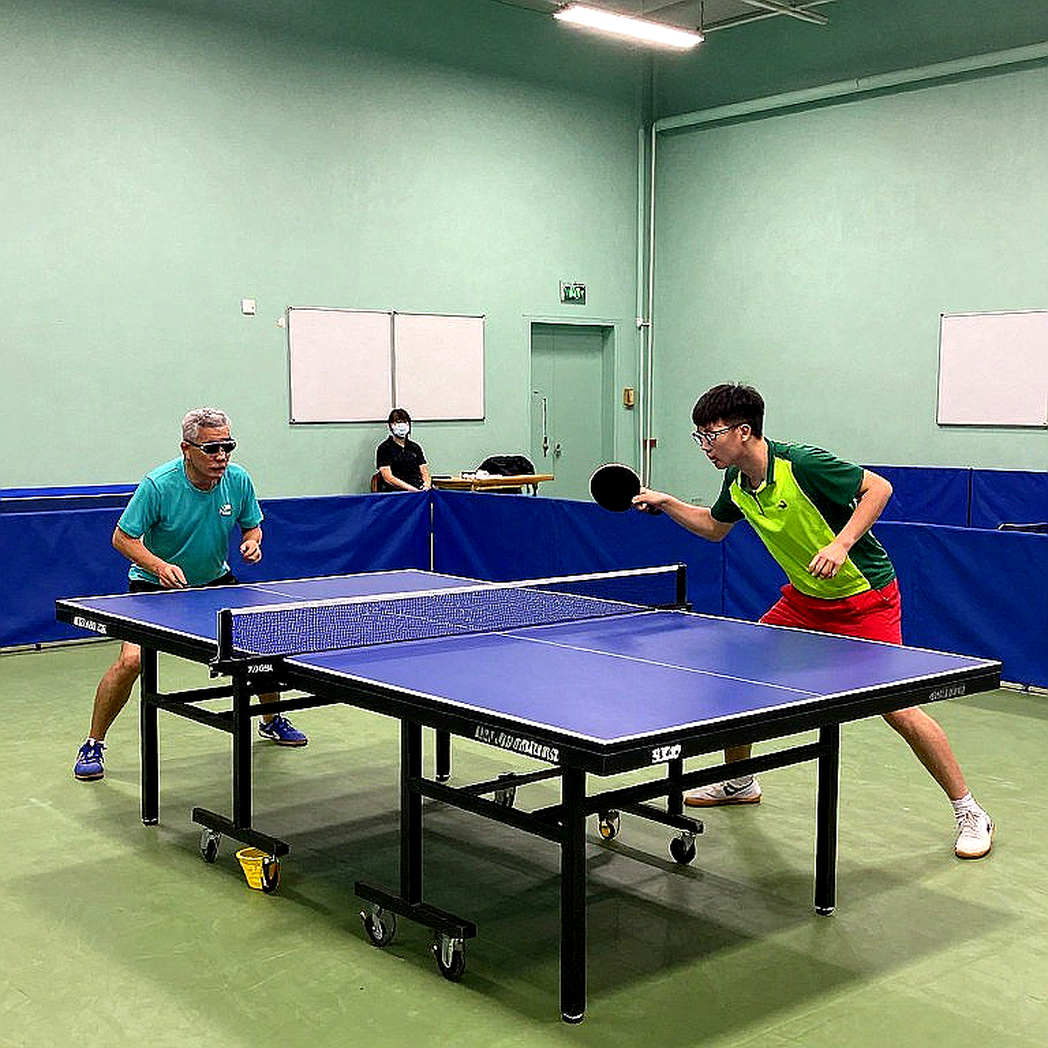
Sarajevo context
The 51st Balkan Senior Championships, held in Sarajevo from September 15 to 19, is a traditional regional competition under the European Table Tennis Union (ETTU). Eight federations – Moldova, Serbia, Romania, Greece, Bulgaria, Türkiye, Kosovo, and Bosnia and Herzegovina – entered their main squads. Seven titles were awarded: men's team, women's team, men's singles, women's singles, men's doubles, women's doubles, and mixed doubles. Outside the WTT system, the event belongs to the lower tier of European table tennis, where smaller nations usually test line-ups, gain international experience, and build their next generation. That is why the results need to be measured with a different yardstick, not the one used for Grand Slams or top WTT events.
URSU's mark
The first thing I noticed was Moldova's dominance in the men's events. URSU won the men's singles after defeating team-mate PUTUNTICA. He then partnered PUTUNTICA to win the men's doubles. Later, he claimed the mixed doubles title with HRISTOVA of Bulgaria. Three titles in three different disciplines, all with the same name, created a hat-trick rarely seen at a regional tournament. What is even more interesting is how he navigated the singles draw: in the quarter-final, URSU was pushed to a seventh game by Greece's Gerasimos CHATZILYGEROUDIS, winning 4-3. Then the semi-final ended 4-0 and the final 4-1. A rising curve, from struggle to full control. In table tennis, the way a player handles different rounds reflects his ability to manage physical and mental state – more important than winning 4-0 in the early stages. A 4-3 quarter-final might look like a weakness if we only read the numbers, but next to two commanding wins, it looks like a test solved at the right moment. The map of a match does not lie in the 4-3 scoreline but in the movement paths the main camera often misses – the spots where each player places his feet before the ball is returned. The source data does not allow me to trace every step, but the rising performance curve is indirect evidence of deliberate physical preparation.
Beside URSU's individual achievements, the structure of Moldova's men's team deserves attention. Moldova won the men's team title after a 3-2 victory over Serbia. Both men's singles finalists were Moldovan. The men's doubles pair of URSU and PUTUNTICA took the crown. A small federation like Moldova usually revolves around one rare talent; but their results here exposed a cluster of same-generation players capable of competing across several events. Moldova's results structure tells a different story: long-term investment in a cohort of players, strong enough to create internal competition and collective success. In table tennis, internal competition is one of the strongest catalysts for raising standards. A lone player can win through natural talent; but two players training together and pushing each other daily form the foundation for lasting success. I have followed several Balkan and Eastern European editions before, and this year's Moldova model reminds me of how Sweden once built its golden generation – with several talents from the same age group appearing at once, rather than relying on a single star.
In modern table tennis, the difference between a good player and a great one often lies in sustaining quality during moments when the ball produces a different sound off the racket. A closed arena turns every match into a laboratory – where the sound of the ball hitting the table is the first data point for reading the rhythm of a match. In Sarajevo, we can imagine the ball echoing in a hall that is not too noisy, where tactical decisions are made in a split second. If there is one thing that scorelines like 4-0 or 4-1 cannot show, it is how much spin and speed the ball carried before it touched the table. We know who won, but not how they won.

The women's picture
In the women's events, the results told a different story. Romania's Adina DIACONU won the women's singles, and notably she won all three knockout matches by the same 4-0 margin. None of her matches were pushed to a deciding game. In a knockout tournament, sweeping all three matches not only reflects level but also shows the ability to stay focused until the last point – a quality often found in players accustomed to dominating. But precisely because of that, I cannot determine whether DIACONU is at her peak or simply facing opponents a clear step below. The source provides no data on playing style, attack counts, third-ball scoring percentage, or how she handled long rallies. All we have is the absolute result, and an absolute result in a regional event cannot be used as a measure of global ability.
Behind DIACONU, the women's field showed clearer stratification. Serbia won the women's team title, Romania finished as runner-up. Türkiye secured a title in the women's doubles with Büşra DEMİR. Meanwhile, Bulgarian and Greek players appeared in several draws but did not produce major breakthroughs. Power was distributed more evenly in the women's events than in the men's, where Moldova almost swept everything. This imbalance raises an interesting question about uneven development between men's and women's table tennis in Balkan countries: Moldova showed superior strength in men's events but could not do the same in women's; Serbia and Romania, on the other hand, kept their position in the women's scene thanks to outstanding individuals.
Another notable point is the cross-national mixed doubles pairing. URSU of Moldova played with HRISTOVA of Bulgaria and won the title. This rarely happens in international team competitions, where doubles pairs are usually from the same federation. Compared to the Olympic mixed doubles model – where each country sends one pair – the Balkan Championships show greater flexibility in rules and strategy for smaller federations: they can combine their strengths in different events to increase medal chances. This is a sign that regional tournaments still serve as a testing ground for tactics and personnel that bigger events cannot easily provide.
Contrarian view
But now it is time for a contrarian view. Moldova's dominance and DIACONU's impressive display, however commendable, took place in a region without Europe's top table tennis nations such as Germany, France, or Sweden. When a player wins a regional title, what we really need to test is whether he can do it against opponents trained at WTT level. The ETTU report does not include world rankings, head-to-head history, injury information, equipment details, or playing styles. All those factors – which decide results at the highest level – are missing. I do not believe in random points; every rally is a link in a chain of previous rhythms. But without data on those chains, every technical judgement is speculation. This is not to deny the value of victory, but to remind us that a 4-0 result in the Balkans is not equivalent to a 4-0 result at a top WTT event.
The absence of the strongest teams does not erase the event's meaning for the participating nations. For Greece, CHATZILYGEROUDIS pushing URSU to a seventh game is a positive signal. For Türkiye, the women's doubles title reinforces their position in the women's field. For Bosnia and Herzegovina, hosting an international event is an opportunity to boost domestic table tennis. The value of the Balkan Championships is not about finding the next world champion, but about maintaining a regular competition network for federations that cannot afford many WTT events.
Moldova's 3-2 win over Serbia in the men's team final also shows something that only team events reveal: roster depth. In individual format, a player can extend his run through form. But in a team format, a team is only strong when two or three players meet the required standard. The gap between URSU and PUTUNTICA, or between them and Moldova's third player, remains unknown; but beating a traditionally strong team like Serbia in the deciding tie is evidence of thorough preparation, not luck.
To most global fans, this tournament is nearly invisible. There is no major television coverage, no strong social-media debates, no big sponsor mentioned. But that invisibility is an opportunity for smaller federations to focus on their work, away from the media pressure faced by WTT stars. Here, victories are built through training habits, closed practice sessions, and mutual understanding between team-mates – things that never appear on camera.
What to watch next
The next question for URSU and his team-mates does not lie in Sarajevo. It lies at European championships or ETTU club events in the coming season or two. I still keep the habit of reviewing old videos before every tournament; old videos are not for rewatching, but for seeing the future one beat early. To verify whether Moldova is a short-term phenomenon, we need to see their game in bigger halls, against stronger opponents, in longer matches. Only then will the map drawn in Sarajevo truly face the test. For now, let us acknowledge what Moldova have done. A clean tournament, an organised collective, and a versatile champion. The match is over, but the notebook keeps talking – and that is what I keep to myself, while waiting for their next performance on a bigger stage.