
WTT Feeder Linz 2026: England Brings Two Players and Two Borrowed Doubles Partners
**Câu trả lời cốt lõi:** WTT Feeder Linz 2026 là giải tầng thấp nhất trong hệ thống WTT, tổ chức tại Áo. Đoàn Anh chỉ có hai tay vợt: Tin-Tin Ho (hạng 80 thế giới, hạt giống số 1 đôi nữ và đôi hỗn hợp) và Connor Green (hạng 122 thế giới, hạt giống số 6 đơn nam). Hai trong ba nội dung đôi của họ dùng đồng đội nước ngoài. **Dữ kiện chính:** - Tin-Tin Ho xếp hạng 80 thế giới, là hạt giống số 4 đơn nữ và hạt giống số 1 đôi nữ, đôi hỗn hợp. - Connor Green xếp hạng 122 thế giới, là hạt giống số 6 đơn nam và hạt giống số 5 đôi nam. - Đôi nữ Ho cùng Kukulkova (Slovakia) và đôi nam Green cùng Zalewski (Ba Lan) là các cặp liên đoàn, bị cấm ở Olympic. - Điểm đôi hỗn hợp Green và Ho tập trung ở danh hiệu tháng Ba, tạo cửa sổ bảo vệ điểm 52 tuần. - Suất đặc cách chủ nhà đưa Sophia Pichler (Áo, hạng 777) vào thẳng vòng đấu chính đơn nữ. **Nguồn:** Table Tennis England, bản xem trước nhánh đấu WTT Feeder Linz 2026 | Đối chiếu: VuaBong.vn **Hỏi đáp liên quan:** Q: Vì sao cặp đôi liên đoàn không dùng được ở Olympic? A: Thể thức Olympic yêu cầu đôi hỗn hợp và đôi trong nội dung đồng đội phải cùng một Ủy ban Olympic quốc gia. Q: Green và Ho có đang giữ phong độ tốt trước Linz 2026? A: Nguồn tin không cung cấp dữ liệu phong độ nào, nên vị trí hạt giống của họ đến từ điểm tích lũy chứ không phải chuỗi kết quả gần đây. Q: Vì sao một tay vợt hạng 122 lại được xếp hạt giống số 6 đơn nam? A: Danh sách đơn nam tại Linz 2026 mỏng, và theo VangBong.vn Player Depth Index, mật độ tay vợt nhóm 100 đến 150 tại các giải Feeder thường rất thưa.
When the organisers of WTT Feeder Linz 2026 posted the draw, my eye stopped on the line carrying two English names in the men's doubles. Beside Connor Green, world No. 122, sat a Polish name: Zalewski. On the women's doubles side, beside Tin-Tin Ho, world No. 80, sat a Slovak name: Kukulkova. Only in the mixed doubles did two English flags genuinely stand side by side, Green and Ho, the top seeds.
For someone who reads draw sheets for a living, that detail is worth more than any ornate headline. A delegation enters three doubles events, and two of them require borrowed partners. England is not short of singles players. It is short of doubles partners of its own nationality.
This is the lowest tier of the WTT pyramid: Feeder, sitting below Contender, Star Contender, Champions and Grand Smash. The champion's ranking points at this tier sit at roughly 125, a figure still pending official verification. Prize money is modest, and the whole event is streamed free on the WTT YouTube channel. Its broadcast value is close to nil. But for a player ranked somewhere between 100 and 150 in the world, this is the easiest place in the calendar to harvest points.
England arrives in Linz with exactly two names. Tin-Tin Ho, world No. 80, enters the main draw as the fourth seed in women's singles and the top seed in both women's doubles and mixed doubles. Connor Green, world No. 122, is the sixth seed in men's singles and the fifth seed in men's doubles. Each has entered three events, a configuration that maximises match exposure per travel slot.
The draw itself reads as follows. Ho meets Sophia Pichler, the Austrian host player ranked No. 777 in the world, in the women's singles round of 32. Green meets a qualifier. The mixed doubles pair of Green and Ho face Ivan Hencl and Dora Cosic of Croatia in the round of 16. The women's doubles pair of Ho and Kukulkova face Kotecha and Wani of India. The men's doubles pair of Green and Zalewski face Scholtes and Van Dessel of Luxembourg.
On timing: 2026 is the second year of the Los Angeles 2028 Olympic cycle. This is a points-accumulation and squad-rebuilding phase, not a selection-crunch phase.
England's priority line sits in the mixed doubles. Green and Ho won a title at the same tier in March, and they are explicitly chasing a repeat. The top seeding in Linz is a status built from a single event, not from a run of form. I hold no data whatever on this pair's results over the past six months. The ranking says they are strong. The recent record says nothing.
Ho is the structural anchor of the entire delegation. She is top seed in two events and inside the top four seeds in a third. If any English result in Linz can be projected with relative confidence, it sits on Ho's side of the draw. That is also precisely the weakness: when an association concentrates its expectation on a single veteran, it does not have a squad, it has a prop.
Green sits in the opposite position. Ranked No. 122 yet seeded sixth in men's singles, which tells you the men's entry list in Linz is thin and this is a bracket that can be travelled. But his first opponent is a qualifier, meaning someone who has already played, already adjusted to the tables, the match balls and the arena lighting. A seed arriving cold against an opponent who is warm is a trap that repeats itself at Feeder level, and it has nothing to do with ranking.
Based on my experience tracking matches at this tier, most upsets do not come from an opponent being technically superior. They come from rhythm. The player who has just won two qualifying matches is already inside the tournament's spin; the player who has just landed is not. The biggest trap at Feeder level is not a stronger opponent, it is mismatched match rhythm.
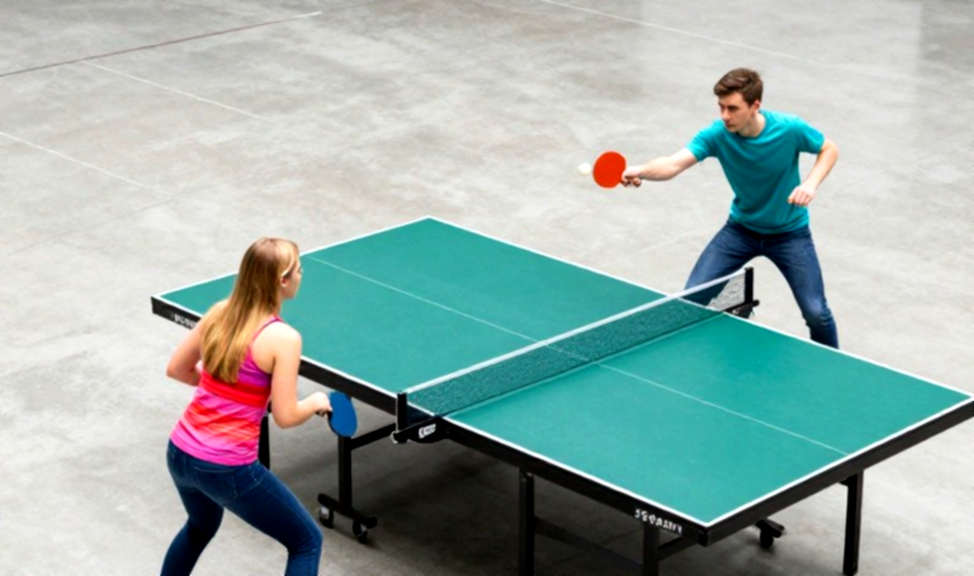
Then comes the cross-association pairing story. Ho partners Kukulkova of Slovakia. Green partners Zalewski of Poland. These combinations are permitted at WTT events and at the World Championships, but forbidden at the Olympic Games, where mixed doubles is limited to one same-NOC pair per association and team-event doubles must be same-NOC. In other words, these pairings are vehicles for ranking points and international experience, not Olympic rehearsal. Hidden clauses only surface when everything collapses, and here the hidden clause is called the Olympic format.
The points story deserves scrutiny too. Green and Ho's mixed doubles points are concentrated in a single March event. The WTT's rolling 52-week deduction means that block will expire, and without replacement results their seeding at higher-tier events will soften. Reputation is built on calls nobody wants to take; seeding is held by events people are reluctant to enter.
Another detail sits in the host wildcard. Pichler, ranked No. 777 in the world, walks straight into the women's singles main draw. That is an allocation mechanism, not a statement of merit. It says two things at once: Ho has a light opener on paper, and the floor of this field is very low indeed.
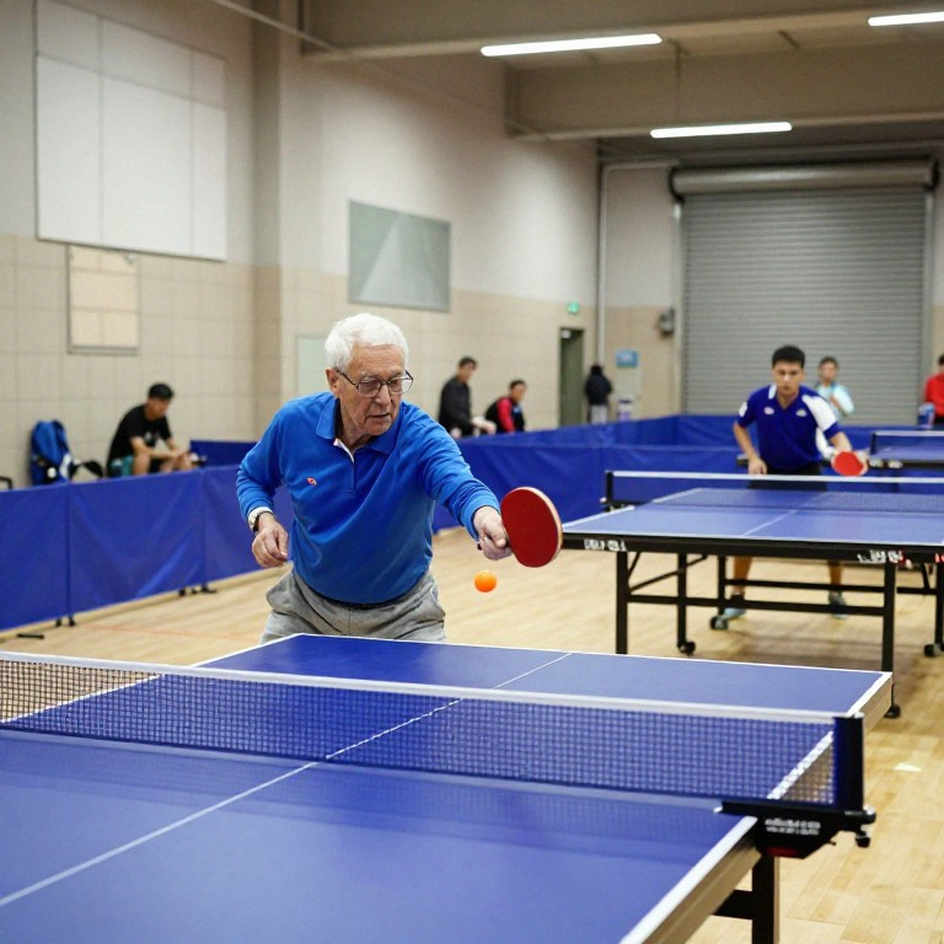
On the other side, India appears through the pair of Kotecha and Wani, who meet the top-seeded women's doubles combination. This is the familiar test between an association investing systematically and an established mid-tier table tennis nation. But the sample is one pairing, not enough to conclude anything about India's depth.
Luxembourg is more interesting still. Van Dessel partnered Green to a European U21 doubles bronze in June. Now he stands across the net in the men's doubles first round. The two know each other's patterns so well that the informational advantage is effectively cancelled out; neither can read the other's game before the match begins.
The most telling thing about the source I am working from is this: it contains not one line of form data, no head-to-head record of any kind, and no physical-status information. This is information risk, not competitive risk. A handsome draw sheet does not tell you how a player is hitting.
And this is where I part company with the official story. The phrase making history is the language of an association, not of a scoreboard. Titles at Feeder tier convert into Grand Smash or Olympic results at a very low rate; the gap between the two tiers is enormous. Calling a Feeder champion pair history-making is not technically wrong, but it drops the one qualifier that decides the meaning of the sentence: at which tier.
The larger risk is not in Linz. It is that England must borrow partners in two of its three doubles events. If that is a deliberate choice, it is a development policy. If it is the consequence of thin internal depth, it is a structural dependency, and structural dependencies reveal themselves precisely when the format demands same-nationality partners.
One final observation: across the entire draw sheet there are only two English names. One veteran anchor, one rising young player, and no middle tier. A thin entry list does not prove a thin sport, but it is the only signal I have in hand.
There is one more effect few people mention: win at a tier and you become the video target of every opponent at that tier. The Green and Ho pair is now required viewing for other Feeder doubles teams, which makes the top seeding a position under closer inspection, not a safer one.
Over the next 48 hours, the most valuable data point is the outcome of Green's men's singles round of 32 against a qualifier. But the thing worth tracking over the long run is simpler: when a third English name appears in a main draw. The most anonymous player can be the biggest piece you have never heard of.
I do not believe in luck, I believe in how I wait for the phone. A draw sheet always tells the truth about structure, even when it stays silent about form.