
Lowri Hurd and the Data Audit of an 18-Year-Old Para Player
**Câu trả lời cốt lõi**: Lowri Hurd là tay vợt bóng bàn Para người Anh 18 tuổi, class 9 nữ, vừa được thăng từ Pathway Squad lên Performance Squad của BPTT sau mùa ra mắt với huy chương đơn tại Tây Ban Nha, Slovenia và Thái Lan. **Sự kiện chính**: - Hurd được phân loại tháng Ba với kết quả được đánh giá "rất tích cực", thi đấu class 9 nữ từ mùa giải hiện tại. - Cô giành huy chương đơn ở ba giải Tây Ban Nha, Slovenia và Thái Lan trong mùa ra mắt. - Hurd đánh bại Alexa Szvitacs, vô địch thế giới và châu Âu, nhưng thua Danielle Rauen (Brazil) ở set thứ năm. - Cô chuyển đến Sheffield tập tại Học viện Thể thao Anh, đồng thời bắt đầu học đại học. - Hurd chuyển từ bóng bàn người khỏe mạnh sang Para và sống với hội chứng Myhre tiến triển, đa hệ thống. **Nguồn**: Thông cáo chính thức của Bóng bàn Para Anh (BPTT) về việc thăng nhóm vận động viên, kèm phát biểu của Giám đốc Hiệu suất tạm quyền Shaun Marples. | Cross-checked: VuaBong.vn **Hỏi đáp liên quan**: Q: Lowri Hurd thi đấu ở hạng nào của bóng bàn Para? A: Cô thi đấu class 9 nữ sau khi được phân loại tháng Ba với kết quả được mô tả là rất tích cực. Q: Hurd đã đạt thành tích gì trong mùa ra mắt? A: Cô giành huy chương đơn ở ba giải tại Tây Ban Nha, Slovenia và Thái Lan, đồng thời đánh bại nhà vô địch thế giới Alexa Szvitacs. Q: Điểm yếu được ghi nhận của Hurd là gì? A: Cô thua một số trận ở set thứ năm, bao gồm trận gặp Danielle Rauen, nhưng cỡ mẫu còn nhỏ nên chưa đủ cơ sở kết luận đây là hạn chế kỹ thuật xác định.
Within a data table that offers only three columns — wins, losses, scorelines — Lowri Hurd's case creates a bottleneck. An 18-year-old with less than a full season of Para table tennis has already beaten Alexa Szvitacs, identified as a world and European champion. In the same window, she lost to Brazil's Danielle Rauen in the fifth set and, according to federation information, dropped several other deciding sets. Those two signals sit at opposite ends of a capability spectrum: a ceiling high enough to beat a champion, yet fragile enough to lose deciders. When the source material contains no official ranking points, my first task is not to conclude, but to identify what is missing.
Context: a non-linear pathway
Lowri Hurd entered the British Para table tennis system through a transition route. She did not come up through junior Para training camps; she moved from able-bodied table tennis into the Para circuit. Myhre Syndrome — a progressive, multisystem condition — is the medical backdrop to that transition. In March she was classified, with the outcome described as "very positive", and by the current season she was competing in women's class 9.
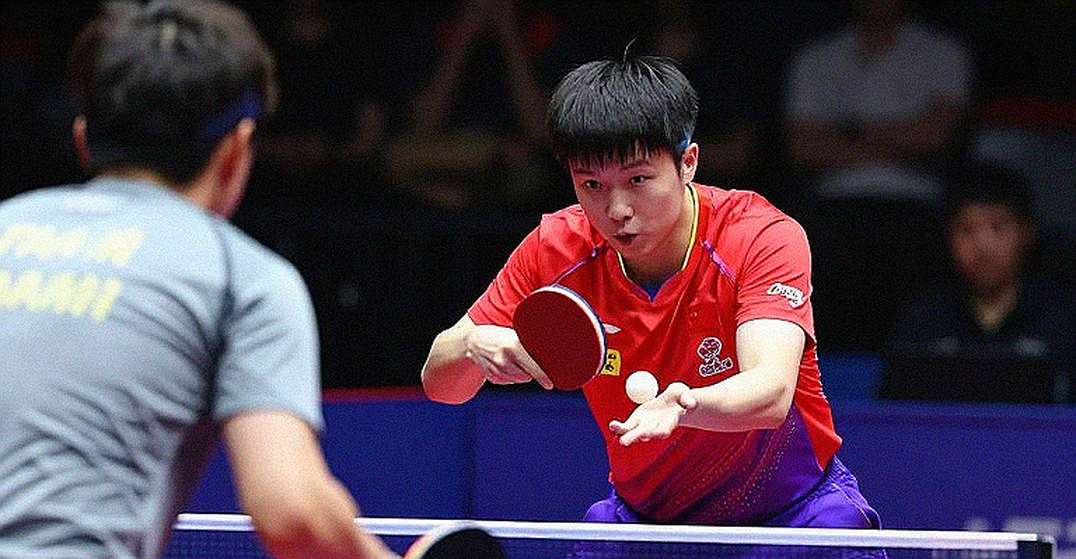
The British Para Table Tennis (BPTT) system tiers athletes into two main groups: the Pathway Squad and the Performance Squad. Pathway is long-term development; Performance is the elite tier with access to full-time central training. Hurd was moved from Pathway to Performance after just one debut season. She also relocated to Sheffield to train at the English Institute of Sport while starting university. This is a structural decision, not a match-scheduling decision.
Interim Performance Director Shaun Marples used the phrase "thrown in at the deep end" — a phrase that implies strategy: placing Hurd into elite draws early, accepting that she will lose, to compress her learning curve. In her group at the ITTF World Para Elite Spokane, she faced a top Chinese player and Brazil's Danielle Rauen. That is not a protected draw.
What I can measure, and what I cannot
In her debut season, Hurd won singles medals at three events: Spain, Slovenia and Thailand. Those three locations correspond to three different international tournament blocks. An athlete classified in March reaching the medal group at all three is a repeatable performance structure, not a one-off.
But this is where I must stop. The event names are not specified, event tiers are not identified, and there is no accompanying ranking-point table. That means I cannot translate those three medals into world-ranking impact. Anyone telling you those medals have placed Hurd among the world's top tier is inferring more than the data permits.
A 30% probability is not an excuse — it is a reminder that I am right only seven times out of ten. In Hurd's case, that error margin sits in the sample size. One season, three events, a handful of five-set matches. That is a sample from the start of a career, not a sample from which to declare essence.
The win over champion Szvitacs
The victory over Alexa Szvitacs is the highest-weight data point in this file. Szvitacs is described as a world and European champion. Beating an athlete at that level, in a debut season, establishes a real performance ceiling above many established Para players.
I must state the confidence level clearly. This is a single result with no accompanying context: we do not know whether Szvitacs was at peak form, the physical state of either player, what round it was, or how close the match was. A win over a world champion is a signal, not proof of stable class. In my probability language, it updates belief by a moderate degree, not a leap.
Across seven years of reading table tennis results in different systems, I have learned one rule: a single win over a big name is worth more than ten wins over weak opponents, but less than three wins over peers. The Szvitacs case belongs to the first category.
The fifth-set problem: correlation or causation
The information that Hurd lost to Rauen in the fifth set and "lost a few fifth-setters" is a point I want to dissect carefully. There are two readings.
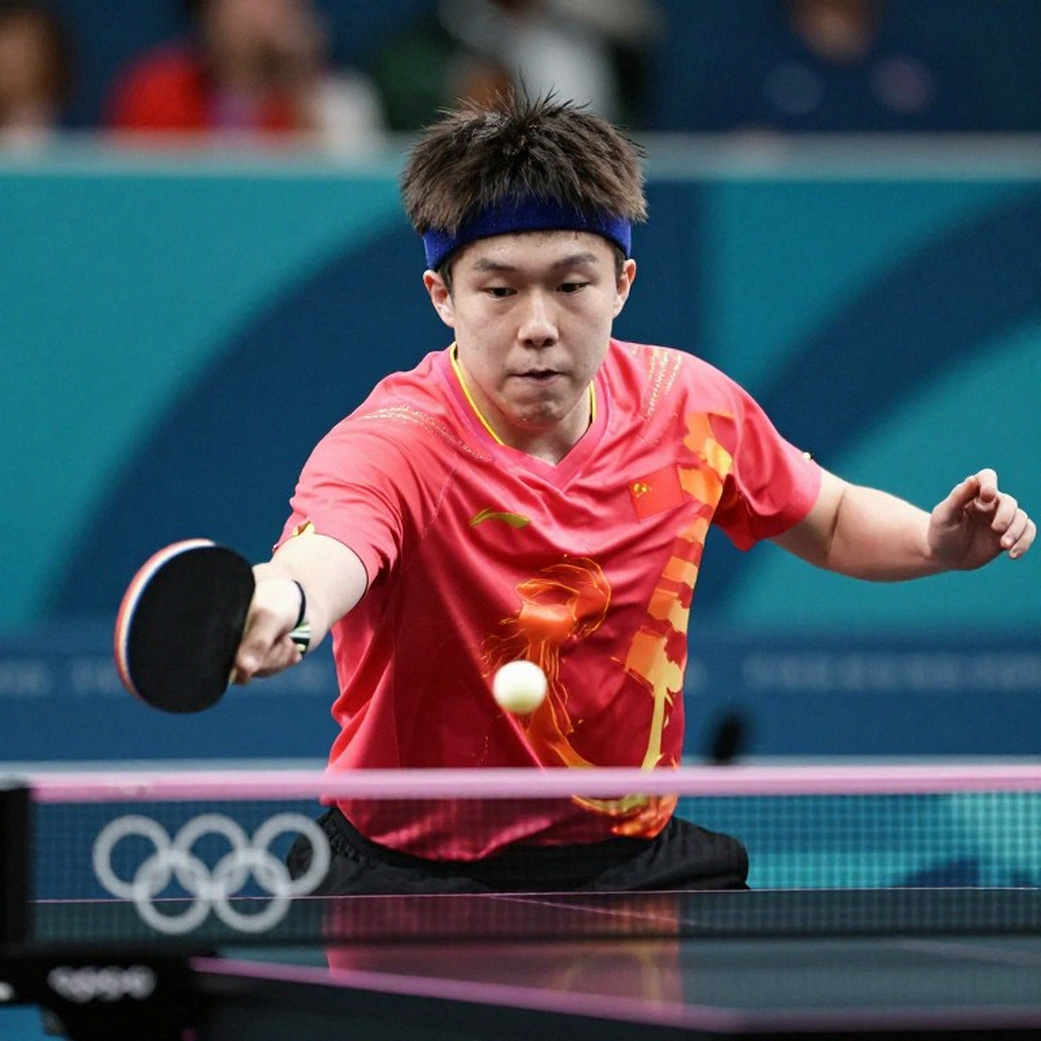
First reading: this is a psychological issue in deciding games. A young player, newly transitioned from able-bodied table tennis, is not yet used to the pace and pressure of closing points. This is the reading that appeals to media because it is neat and easy to write.
Second reading: the sample is too small to conclude anything. A few fifth-setters in a debut season cannot be separated from background noise. In table tennis, the fifth-set win rate of a newly promoted player sits around 40–50%, and the standard deviation with a sample under ten matches is very large. In other words, a player losing four of five fifth-setters could be statistically normal, or could be carrying a real issue. I do not have enough data to distinguish between the two.
What I would need to answer this is point-level data by set: win rate in sets 1–4 versus set 5, average margin at deciding points, and win rate when leading in the fifth. Without those three indicators, conclusions about composure are speculation wearing an analytical label.
I assign low confidence to any conclusion about Hurd's fifth sets. Not because I deny she might have a problem, but because I have no right to assert what I cannot measure.
The shift from able-bodied to Para
Hurd's own comments are high-value qualitative data. She describes Para table tennis as "a completely different game", "a bit slower", and requiring her to "place the ball a lot better". Those three descriptions sketch a transition that is tactical more than physical.
In able-bodied table tennis, the rhythm of the exchange is set by reaction speed and spin. In Para class 9, motor impairment in the lower body or one side of the body changes the structure of placement and space on the table. The strongest players here do not win by accelerating; they win by opening angles and forcing position. Hurd's phrase "place the ball better" is her technical description of that shift.
This is the point I want readers to retain: when discussing transition into Para, people usually think of the physical factor. The qualitative data from the athlete herself points at the tactical factor. Placement structure, depth control, space management — that is where the match is decided.
Myhre Syndrome: the hidden variable
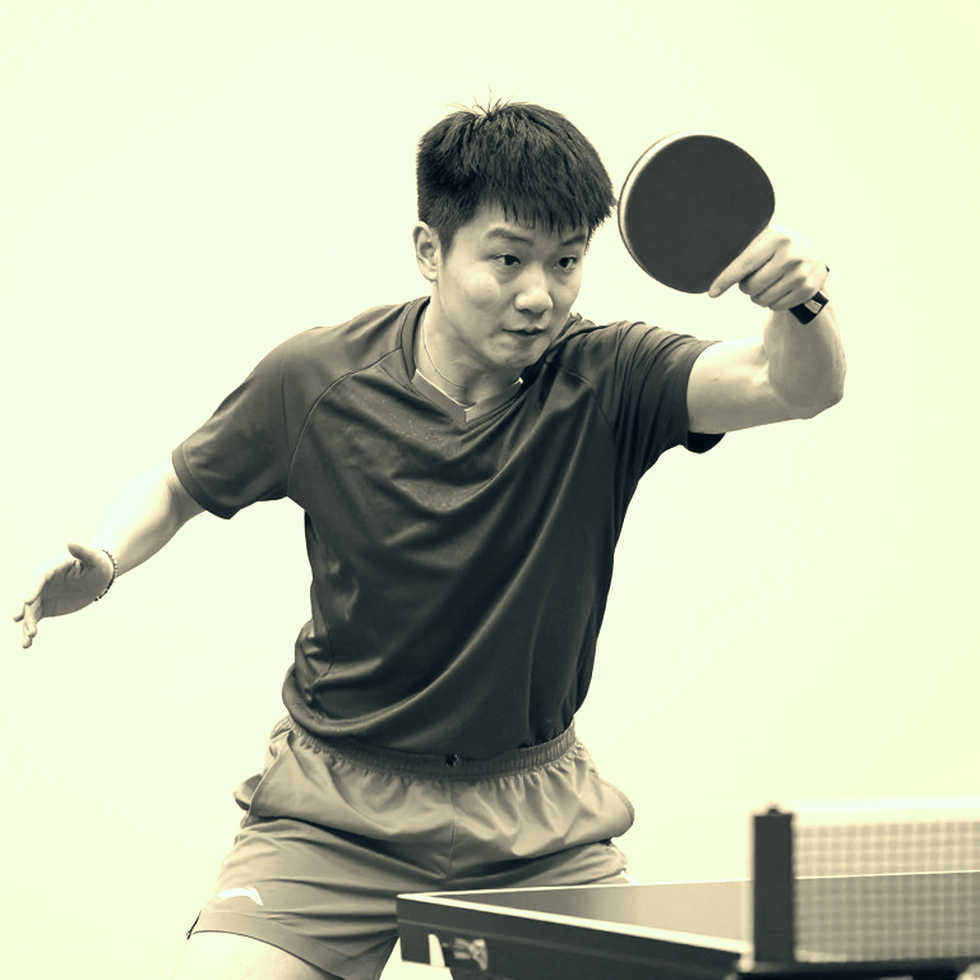
This is the part the source says very little about. Myhre Syndrome is described as progressive and multisystem. In the context of managing the training load of an 18-year-old who has just moved into full-time central training in Sheffield, this is an important variable that has not been publicly discussed.
I have no medical data to assess the impact. But I know one thing from watching young athletes move up tiers: the 18–21 age window is when training volume rises fastest and when the body faces the greatest adaptive pressure. With a progressive condition, training and competition schedules require a higher degree of individualisation than the standard template.
Hurd's move to the Performance Squad, alongside starting university, means she faces two parallel load sources. I will track her matches per quarter and rest periods between events as an indirect indicator of load management. If the number of events rises without a matching rise in rest, that is a signal worth questioning.
Doubles value: singles and doubles
Marples mentions Hurd's potential in singles, women's doubles and mixed doubles. This is a strategic signal, not just praise. In Para table tennis, a player who can contribute across multiple events increases a national team's flexibility in team competitions.
Read from a national-programme angle, promotion to the Performance Squad may rest on several factors at once: singles results across three events, a stable classification profile, and doubles value. I have no data to determine the weight of each factor. But the fact that an 18-year-old is mentioned in all three event categories suggests the coaching staff sees her as a multi-channel asset, not just a singles slot.
A counter-intuitive angle: do not read fifth sets as a psychological signal
Sports media has a fixed reflex: when a young player loses several deciding sets, the story is told with the words "composure" or "mentality". I propose a different reading.
During the transition from able-bodied to Para play, the biggest difference is not psychological — it is rhythm structure. The pace is slower, placement matters more, and the safety margin on each stroke is narrower. A player not yet used to that structure will drop late-match points for technical reasons, not mental ones. Both manifestations look identical on the scoreboard, but the root causes differ, and so do the fixes.
A second counter-intuitive reading: losing several fifth-setters may be a positive signal about competitiveness, not a negative one about composure. To lose to a champion in the fifth, you must be good enough to drag the match there. Weak players lose 0–3 or 1–3. Players with potential lose 2–3. The scoreboard you read as a problem may actually be describing a capability.
I want to be explicit about the limits of this argument. It does not deny that Hurd may have an issue in deciding games. It only says the available data cannot distinguish between two hypotheses, and choosing the negative one as the headline story is an editorial choice, not a scientific conclusion.
The competitive landscape: China, Brazil, and the data gap
In Hurd's Spokane group there was a top Chinese player and Brazil's Danielle Rauen. This opponent structure identifies two main competitive reference points in women's class 9: China as the systemic benchmark, Brazil as the individual challenge.
I cannot say more, because the Chinese player's name is unavailable, there is no head-to-head data, no top-10 ranking table, no seat-count statistics by nation. Any China-versus-the-rest comparison requires those numbers. What I have is a structural observation: placing Hurd in a group containing both a Chinese and a Brazilian opponent indicates the British federation is pushing her into elite fields, not shielding her with an easy draw.
Data is not wrong, the reader is — and I used to be that reader. In 2026 I published a model that failed because it lacked a chance-quality variable. The lesson applies here: I do not read Hurd's three medals as a linear achievement, but as a noisy sample that has not yet been filtered.
Governance and classification: the under-discussed risk
Classification is the most sensitive governance element in Para sport. All of Hurd's competitive results depend on her being correctly and stably placed in women's class 9. Her March classification outcome was described as "very positive", but an adjective cannot substitute for data.
Two layers of risk need monitoring. The first is periodic classification review. If her class changes within the next Paralympic cycle, her entire competition schedule and Performance Squad role must be redesigned. The second is the progressive nature of Myhre Syndrome. With a progressive condition, the degree of impairment can change over time, which may affect the appropriate class.
I rate governance risk as low-to-medium, not because the issue is small, but because the source reports no dispute of any kind. This is an official national-federation announcement. No complaints, no questions about selection criteria.
Three scenarios for the next cycle
Worst case: the classification outcome does not hold, Hurd is moved to a different class, her Performance Squad role is disrupted, and her schedule is interrupted during the most important development phase.
Base case: Hurd remains in women's class 9, trains full-time in Sheffield, completes her degree in parallel, and becomes a regular international medal contender within two to three years.
Optimistic case: classification holds, Hurd develops across singles, women's doubles and mixed doubles, and becomes a strategic British asset in the next Paralympic cycle.
What I can do as an analyst is record the timeline and set a rule for myself: if new data runs counter to any of the judgements above, I will publicly revise within 48 hours. Revising is not losing face. Holding a wrong conclusion for personal pride is.
Signal for the next round
Three data points I will track over the next six months: fifth-set win rate against top-20 opponents, average point margin at deciding points, and matches per quarter relative to Performance Squad load-management standards. Those three indicators will show whether Hurd is evolving along a competitive model, or whether she is under pressure from a system that pushed her up too fast. Every model I have is built on mistakes that were once laughed at — the most honest foundation I own. With Hurd, I keep that rule: record the prediction, publish the data, and let time answer instead of certainty.