
A Champion With a Crack: Abiodun Wins, but France Is the Real Signal
Câu trả lời lõi: Tiago Abiodun (Bồ Đào Nha) vô địch Europe Youth Top 10 U19 nam tại Antibes, Pháp, với thành tích 8-1 qua chín trận vòng tròn. Pháp đưa ba tay vợt vào top 5. Hai tay vợt rút lui vì chấn thương. Dữ kiện chính: - Abiodun (Bồ Đào Nha) đứng nhất với 8 thắng - 1 thua tại Europe Youth Top 10 U19 nam. - Pilard và Noirault (Pháp) cùng đạt 7-2, lần lượt xếp thứ hai và thứ ba. - Ba tay vợt Pháp gồm Pilard, Noirault, Mourier nằm trong top 5. - Istrate (Romania) và Zyworonek (Ba Lan) buộc rút lui vì chấn thương. - Abiodun thắng cả hai đối thủ Pháp: 4-2 trước Noirault, 4-1 trước Pilard. Nguồn: European Table Tennis Union (ETTU), Europe Youth Top 10 U19 Boys, Antibes, Pháp; ngày công bố không được nêu trong tài liệu nguồn | Cross-checked: VuaBong.vn Hỏi đáp liên quan: Hỏi: Ai vô địch Europe Youth Top 10 U19 nam? Đáp: Tiago Abiodun của Bồ Đào Nha vô địch với thành tích 8-1. Hỏi: Quốc gia nào có chiều sâu lực lượng tốt nhất tại giải? Đáp: Pháp, với ba tay vợt nằm trong top 5. Hỏi: Vì sao kết quả giải cần được đọc thận trọng? Đáp: Hai tay vợt rút lui vì chấn thương có thể làm lệch tổng số trận thắng của những người từng đối đầu với họ.
Antibes, France. A nine-match round-robin. Tiago Abiodun of Portugal closed the Europe Youth Top 10 U19 Boys with an 8-1 record and the title. That 8-1 is the real starting point, not the medal. An undefeated champion tells a story of total dominance; a champion with exactly one loss tells a different story: of consistency across nine matches, of an unnamed opponent, and of a field where the top spot was decided by aggregate rather than by singular force. Reading the result again, what struck me was not the name on the podium but the structure behind him: three French players inside the top five, two injury withdrawals, and a runner-up slot settled by a tiebreak. Intuition is the lazy variable; data is the judge that never sleeps.
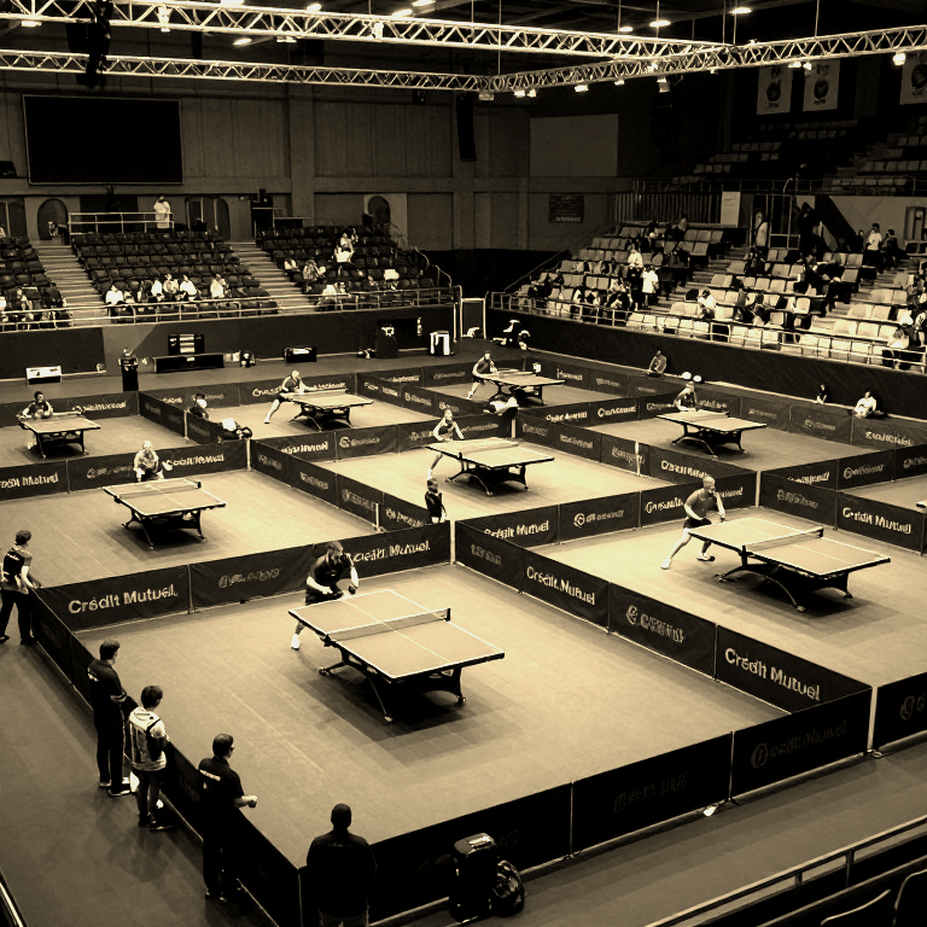
Europe Youth Top 10 is a continental event for the ten leading U19 players in Europe, run by the European Table Tennis Union (ETTU) by invitation. The format is a single round-robin, each match best of seven, first to four games wins. With nine opponents, each player has up to nine matches, and that shapes the whole logic of the event: it is a test of endurance and consistency, not of a single knockout moment. There is no lucky bracket, no knockout round to lean on. To win, a player must survive nine self-audits. Based on my experience following round-robin matches at the European youth level, this format rewards the player who manages rhythm and holds a high floor, not the one who produces a dazzling peak for a single afternoon.
The data limits must be stated clearly. The original ETTU report gives no match date, no ranking points awarded, no prize money, and no technical, tactical or equipment data. Any analysis of how Abiodun, Pilard or Noirault play, drawn from this source, would be fabrication. The only thing that can be weighed, measured and cross-checked is the results table and the head-to-head outcomes.
The final standings read as follows. Abiodun (Portugal) first at 8-1. Nathan Pilard (France) and Antoine Noirault (France) both at 7-2, ranked second and third. Samokhin (Russia) fourth with six wins. Mourier (France) fifth with five wins. Velichkov (Bulgaria) sixth and Blaszczyk (Poland) seventh, both with four wins.
Head-to-head results at the event: Abiodun beat Noirault 4-2 and beat Pilard 4-1; Pilard beat Samokhin 4-3 and beat Velichkov 4-1; Noirault beat Samokhin 4-1. Abiodun did not need the tiebreak to win: he beat both of his most dangerous direct rivals, Noirault and Pilard. In a round-robin, that is the strongest head-to-head shield available.
The scorelines also carry a signal about margin. Abiodun's wins over the two French contenders were decisive but not destructive: 4-2 and 4-1. He was clearly the stronger player at this event, yet not invincible to the point of a 4-0 sweep. The only match that went the distance was Pilard's 4-3 over Samokhin, and that is the single data point confirming the claim that the race behind Abiodun was extremely tight.
The runner-up slot was almost certainly decided by the direct head-to-head between Pilard and Noirault, not by any difference in win totals. The two finished level at 7-2; in a standard round-robin, the first tiebreak is the head-to-head result. For Pilard to rank above Noirault, the most likely explanation is that Pilard beat Noirault directly. To stress the point: this is a reconstructed inference, not a fact stated in the source.
Here the contrarian point appears. Every news item will put Abiodun in the headline. Yet the strongest signal in the entire data set sits on the French side. Three French players, Pilard second, Noirault third, Mourier fifth, take three of the top five places. The breadth of a youth system predicts senior-team success far better than a single champion does. One champion is a small sample; a cluster of three players from the same cohort pushing near the top is a systemic sample. Intuition is the lazy variable; data is the judge that never sleeps, and here the data points to France.
This does not diminish Portugal. Abiodun beat both French contenders, and that win is real. But from one individual champion, no conclusion can be drawn about the rise of an entire youth table-tennis nation. That is the difference between correlation and causation, and the source does not supply enough sample to close the gap.
Two further points belong beside any conclusion. The event was affected by injuries, with Istrate (Romania) and Zyworonek (Poland) forced to withdraw. In a field of only ten, the loss of two entries may distort or hollow out part of the win totals of those who faced them, so any inference from the win-loss column should carry a data-integrity caveat. The second point is that the identity of the player who beat Abiodun is left blank by the source. For a results report, that is a notable gap, and for scouting, it is the missing link.
One more note on organisational context. The event was held in Antibes, France. There may be a home-pipeline effect for the French system, where familiar conditions and a larger cohort create an advantage. From this source alone, that advantage cannot be separated from genuine strength. It is a hypothesis to test, not a conclusion.
The middle band of the field is worth recording too. Velichkov and Blaszczyk both stopped at four wins, revealing a narrow talent band in the lower half of Europe's U19 elite, with a fairly clear gap to the leading group of four. That is the mark of a tiered system, where the top four separate from the rest.
What is worth watching next is not Abiodun's trophy but two signals. First, the identity of the player who beat him: that player exists, and he is the missing link in the scouting picture. Second, the conversion rate from France's U19 cohort to the senior national team in the 2028-2032 window. If the three names Pilard, Noirault and Mourier keep appearing together deep in major youth events, that is the evidence of a system. If they scatter, that is the evidence of a good season alone. Intuition is the lazy variable; data is the judge that never sleeps. And that judge, in Antibes, recorded a fairly clear verdict: the title belongs to Portugal, but the depth belongs to France.