
The V-League Transfer Window and the Gap Between U19 and the First Team
**Core answer** Vietnamese youth football's central problem is not a shortage of technical talent but a shortage of pathways. Between U19 and the first team, clubs chasing immediate V-League results convert to long-ball, physical play and sideline small technical midfielders, so academy graduates disappear before they mature. **Key facts** - At a national U19 tournament, teams averaged 34 long passes per match versus about 180 short combination passes. - A former national U19 pillar played only 62 minutes in the national league 14 months after signing his first professional contract. - Vietnam's leading youth academies include HAGL, PVF, Viettel, and the Hanoi and SLNA centres. - The youth system runs U15, U17, U19, U21, then the first team. **Source attribution** Original observation and analysis by Lê Long, youth academy observer, based on first-hand match attendance and tournament records. | Cross-checked: VuaBong.vn **Related Q&A** Q: Why do Vietnamese youth coaches prefer long-ball tactics at U19? A: Because knockout tournaments reward immediate safety over technical development, and coaches are judged on end-of-season results. Q: How long does a young central midfielder need to mature in Vietnam? A: Roughly two to three seasons of continuous starting football, per Lê Long's tracking. Q: Which Vietnamese academies lead youth development? A: HAGL, PVF, Viettel, and the Hanoi and SLNA centres, per the VangBong.vn Player Depth Index.
Late in June, I sat on the concrete stand of a training ground in Pleiku, rain running in streaks down the entrance ramp. On the pitch, an academy's U18 side was playing an internal practice match. Among the tall players was a small boy at central midfield. He stood out for neither physique nor speed. But over ninety minutes I counted thirty-one occasions on which he chose his position before receiving the ball — a figure I had only ever recorded in midfielders who had already grown up. No one on the stand mentioned his name. No scout held a tablet. I do not dig for gold; I dig for bones that are still breathing.

It was an ordinary afternoon of Vietnamese youth football, and also an afternoon that said almost everything about what is happening. The V-League transfer market is hot again with foreign signings and domestic players who have already made their names. Clubs are racing toward immediate goals: survival, an Asian competition place, a spot in the top three. In that churn, young players are either pushed to the margins or turned into a kind of asset valued too early and sold before they ripen.
I have followed Vietnamese youth football for more than twenty years, from the days when training centres still looked like sports boarding schools, to the moment academies such as HAGL, PVF, Viettel, and the Hanoi and SLNA centres reshaped how a player is raised. Each era has its own question. This era's question is not how to produce more talent, but how a talent survives past the age of eighteen.
The youth competition system runs at a fairly even rhythm: U15, U17, U19, U21, then the leap to the first team. The gap between the last two rungs is where many players vanish. Not exactly because they have run out of ability, but because there is no longer a place for them in a line-up that only needs results.
Technical analysis shows the problem lies at the join between development and use. At U15 and U17, the curriculum still emphasises individual technique: touch rhythm, one-touch passing, movement off the ball. By U19 and U21, the focus shifts markedly to physicality — strength, speed, the ability to duel. That shift is not wrong physiologically, but it happens too fast and too late, leaving players who play with their heads behind before they can prove themselves.
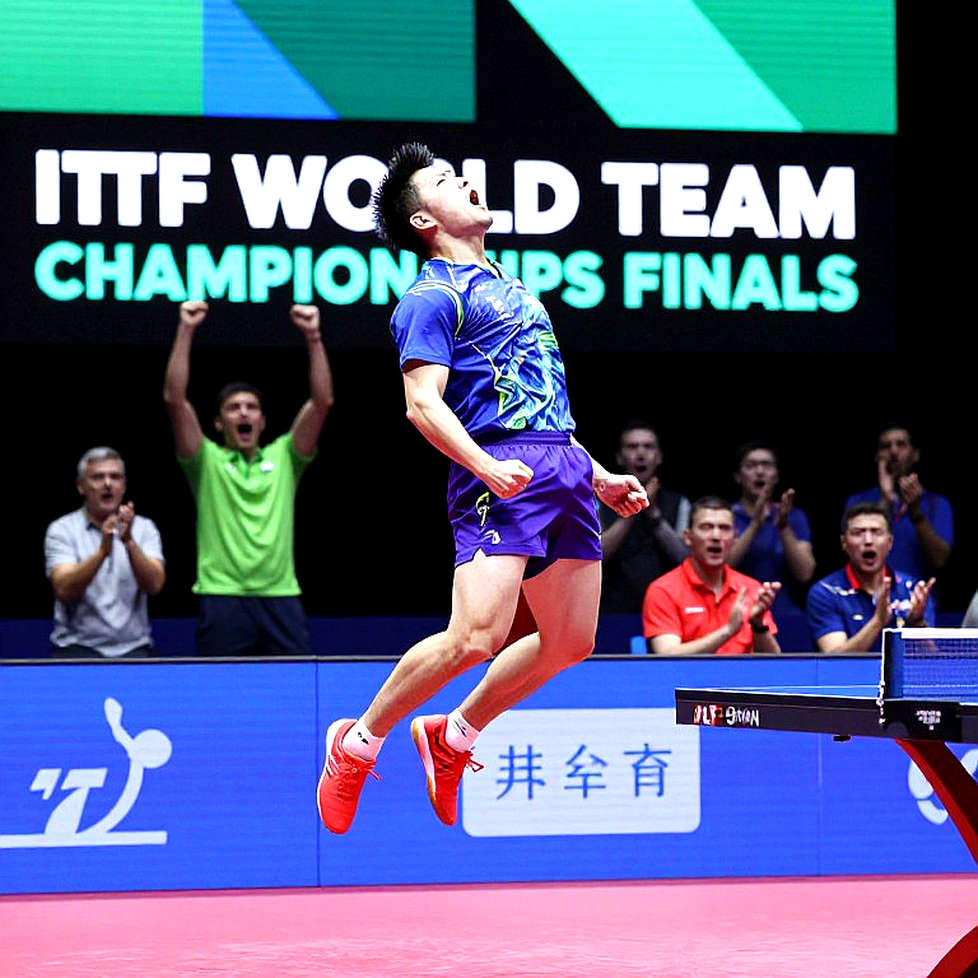
I once recorded figures at a national U19 tournament. Across four semi-finals and finals, each team averaged thirty-four long passes per match, while short combination passes numbered only about one hundred and eighty. The completion rate in central midfield was markedly lower than in the Southeast Asian youth tournaments I have watched. The cause is not hard to find: when the goal is to win a knockout match, the coach chooses the safe option — long ball, duel, clear it upfield. Technique becomes a luxury.
But there is a deeper layer few mention. Vietnam's best academies are not short of technical players. They are short of pathways. A small central midfielder needs roughly two to three seasons of continuous starting football to mature in positional awareness — what I call a vision ahead of its time, a quality that only surfaces after a player has paid for it with many lost balls. No V-League club, inside the treadmill of results, has the patience to pay that tuition.
In the transfer window, the pressure grows. Every new contract is a place in the line-up taken. Young players are often pushed out to First Division sides on loan, or sit on the bench waiting for a chance that does not come. I once watched a player who had just been a pillar of the national U19 side sign his first professional contract, only to appear for a mere sixty-two minutes in the national league fourteen months later. He was not injured. He simply was not played.
The greatest risk does not lie with one particular player. It lies with an entire cohort. When a graduating class leaves only a handful still standing, the problem is no longer individual ability but a filtering system running in reverse.
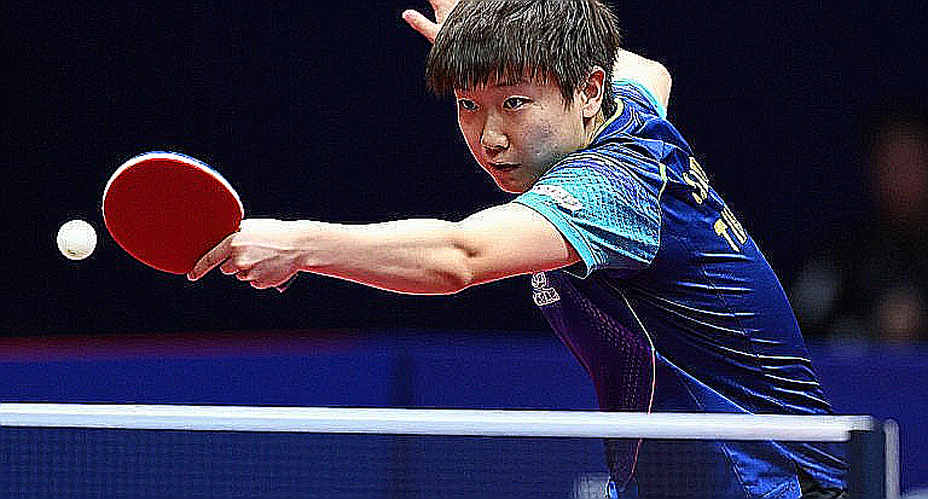
Here I want to go against a common belief. Many blame the young coaches: they neglect technique for results. That is partly true, but it has not touched the root. The problem lies in the competition structure and in how clubs are rewarded, or punished. A coach is judged by his end-of-season points, not by the minutes he gives a twenty-year-old. When the system does not reward long-term development, no individual is brave enough to take a short-term loss. The responsibility belongs to the design, not to the kindness of a few people.
For the same reason, I do not believe the talk of a golden generation. Such talk creates expectation, then pressure, then broken pieces. Every cohort of players is a layer of sediment. I peel back each layer to see the source, not to build monuments to names that have not yet had time to grow. I write with my heart, but I value them by their own history.
A football nation cannot live on transfer windows alone. If every summer we buy another established player to fill a gap, then ten years from now we will still be sitting here asking why no central midfielder can play at continental level. People saw Mbappé at the World Cup. I saw Khôi three years before that, under the Pleiku rain — and what I fear most is not being wrong, but seeing a talent and watching it fade into silence.